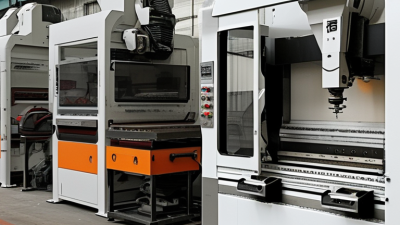
7 Tips for Choosing Window Manufacturing Machines
Choosing the right Window Manufacturing Machines can shape your factory’s speed, quality, and long-term stability. The decision is rarely as simple as buying the fastest CNC unit. A machine that performs well in a showroom may struggle with your actual profiles, production volume, or staff skills. Small details matter, including cutting accuracy, welding consistency, software compatibility, dust control, and maintenance access.
Dr. Joseph Lstiburek, a recognized building-science and enclosure expert, once said, “Windows are holes in walls.” That simple observation carries practical weight. Every frame must be manufactured precisely, because weak joints or poor fitting can affect comfort, water resistance, and energy performance. In my experience, manufacturers often focus too heavily on speed. That can be a costly mistake. A slower machine with stable tolerances may produce fewer defects and less material waste.
This guide presents seven practical tips for evaluating Window Manufacturing Machines. It considers product materials, automation levels, output requirements, operator training, safety features, service support, and total ownership costs. It also examines details that are easy to overlook, such as blade changes, calibration routines, noise levels, and spare-part availability. There is no perfect machine for every workshop. A compact fabricator may need flexibility, while a large plant may prioritize integrated automation. Your first choice may still prove imperfect. That is why careful testing, supplier verification, and honest production data should guide the final investment.
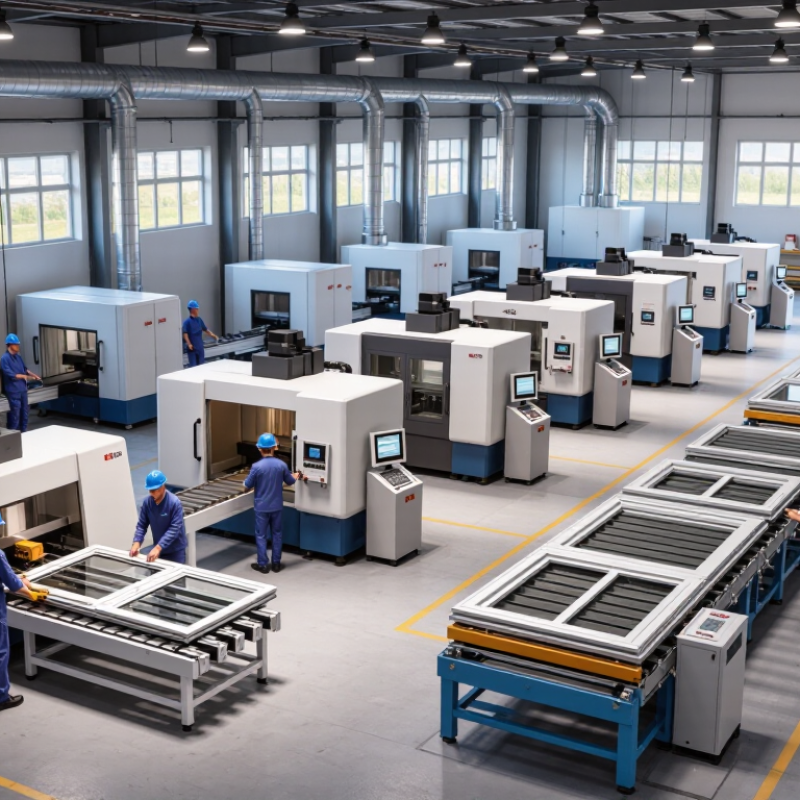
Understanding Window Manufacturing Requirements
Choosing machinery starts with the window, not the machine catalogue. Define frame materials, profile sizes, glazing types, production volume, and regional performance requirements. The U.S. Department of Energy reports that windows can cause 25–30% of residential heating and cooling energy use. Therefore, airtight seals, accurate cutting, and consistent glazing deserve careful attention. A fast line may still produce costly defects if tolerances are unclear.
Tip 1: Match machine capacity to real demand. Record daily orders, product variation, changeover time, and expected growth. The International Energy Agency identifies building efficiency as a major energy priority, so manufacturers should also measure material waste and electricity use. Do not size equipment only for peak ambition. That approach often creates idle capacity.
Tip 2: Check process compatibility. Confirm whether the equipment supports the required profile geometry, glass thickness, hardware positions, and sealant method. Request sample production before purchasing.
Tip 3: Calculate quality control needs. NFRC performance procedures show how small differences in air leakage, heat transfer, and solar gain affect window ratings. Your inspection system should measure these factors consistently.
Tip 4: Review maintenance access, operator training, spare parts, and software support. A perfect spreadsheet cannot predict every maintenance delay. That is why a short factory trial and a written acceptance test remain practical safeguards.
Evaluating Machine Types and Production Capabilities
Choosing window manufacturing machines starts with the product mix, not the price tag. A workshop making standard uPVC frames needs different equipment from an aluminum curtain-wall line. Compare cutting, welding, corner cleaning, glazing, and inspection capacity as one connected system.
The 2024 International Federation of Robotics report recorded 541,302 industrial robot installations worldwide in 2023. That figure shows automation is expanding, but it does not prove automation fits every factory. Start small.
Check each machine type against material behavior. Double-head saws suit repeat aluminum cuts, while CNC machining centers offer broader profile and drilling options.
For uPVC, welding and corner-cleaning accuracy often determine visible quality. Ask for measured cycle times, not catalog claims.
Record changeover minutes, reject rates, spindle utilization, and operator steps during a live trial. I would also test the smallest and largest planned profiles. Average samples can hide problems.
Production capability needs a realistic bottleneck study. If a saw cuts 1,200 profiles daily but glazing handles 700, the line produces 700. Include shift length, maintenance, scrap, and seasonal orders.
The U.S. Department of Energy reports that windows can account for 25%–30% of residential heating and cooling energy use, making airtight fabrication important.
Specify tolerance data, air-leakage testing, and traceable inspection records. Leave expansion space. A perfect forecast is unlikely. Recheck assumptions after three months of actual production.
Comparing Material Compatibility and Processing Precision
Choosing window manufacturing machines starts with material compatibility, not advertised speed. Aluminium, uPVC, timber, and composite profiles react differently under cutting, drilling, and routing. Aluminium needs rigid clamping and controlled tool wear. uPVC needs clean cuts without melting or surface distortion. Timber demands stable feeding, especially when moisture levels change.
Precision matters at every joint. A small cutting error can create visible gaps, uneven glazing pressure, or difficult hardware installation. The ISO 230-2 standard provides methods for evaluating machine positioning accuracy and repeatability. Buyers should request measured results, not only catalog claims. Check tolerance data across repeated cycles. One perfect sample proves little.
Look closely at the details.
Ask suppliers to test your actual profile, corner geometry, and reinforcement layout. Inspect the cut face under bright light. Measure diagonal differences with calibrated tools. The International Energy Agency’s Buildings 2023 report states that buildings consume about 30% of global final energy, making airtight windows increasingly important. Poorly aligned frames can weaken sealing performance and create costly rework. That link is easy to underestimate.
A machine may process aluminium well but struggle with recycled uPVC or laminated timber. Tool changes, dust extraction, coolant control, and software settings also affect consistency. In my experience, operators often trust automation too quickly. Material batches still vary. Leave room for adjustment, verification, and occasional human judgment.
Assessing Automation, Safety, and Operational Efficiency
7 Tips for Choosing Window Manufacturing Machines
Assessing Automation, Safety, and Operational Efficiency
Start by defining your actual production needs. Measure frame sizes, daily volume, material types, and acceptable defect rates. A machine with advanced automation may reduce labor, but it can also create expensive downtime when settings are misunderstood.
Check how the machine handles cutting, drilling, routing, and assembly. Ask for a live demonstration using materials similar to yours. Inspect sensor placement, emergency stops, guarding, noise levels, and access points. Safety should be visible, not hidden in a manual. Confirm that operators can safely clear jams and perform routine maintenance.
Test changeover time between different window profiles. Small delays become serious losses during a busy shift.
Review energy use, compressed-air demand, software controls, and waste levels. Reliable monitoring should show cycle time, faults, and maintenance warnings clearly. Speak with experienced operators, not only sales representatives. Their comments often reveal awkward controls or difficult cleaning areas.
Training matters as much as machine capacity. Provide practical instruction and keep operating procedures near the control panel. Document common faults and response steps.
Perfect efficiency is unlikely. I have seen well-designed systems lose output because workers lacked confidence during adjustments.
Before purchasing, compare total operating cost over several years, including tooling, service, training, and rejected materials. Leave room for honest reassessment.
Reviewing Maintenance Needs, Support, and Total Cost
7 Tips for Choosing Window Manufacturing Machines
Reviewing Maintenance Needs, Support, and Total Cost
A low purchase price can hide expensive maintenance. Check lubrication points, filter access, belt replacement, calibration, and cleaning time. Ask for a written maintenance schedule, not a sales promise. The U.S. Department of Energy’s Operations and Maintenance Best Practices Guide reports that preventive maintenance may reduce costs by 12–18% compared with reactive work. That difference matters when a window line runs daily.
Request service-response times, technician coverage, spare-parts availability, and remote troubleshooting options. Then examine the training package. Can your operators clear a fault without waiting for outside help? Deloitte Insights has estimated that predictive maintenance can reduce downtime by 30–50%, although results vary by factory data quality and equipment age. Avoid treating that figure as a guarantee.
Calculate total cost over five years. Include electricity, tooling, software, consumables, labor, planned stoppages, and discarded profiles. Compare the machine’s hourly output with its realistic uptime, not its brochure speed. One overlooked detail is compressed-air demand. It can quietly increase operating costs. Our first spreadsheet was wrong because we ignored setup waste. Recheck those assumptions with production records. Choose equipment with accessible components, clear manuals, documented service history, and measurable support commitments. Cheap support is rarely cheap.
7 Tips for Choosing Window Manufacturing Machines - Reviewing Maintenance Needs, Support, and Total Cost
| Tip | Evaluation Dimension | Practical Benchmark | Why It Matters | TCO Consideration |
|---|---|---|---|---|
| 1. Match the machine to your production profile | Material compatibility, product dimensions, production volume, and process sequence | Confirm the machine supports the required profile materials, glass or panel sizes, tolerances, and daily output before purchase. | A machine that is oversized may increase capital and energy costs, while an undersized machine can create bottlenecks and overtime. | Include tooling, fixtures, changeover equipment, and future capacity needs—not only the purchase price. |
| 2. Review preventive-maintenance requirements | Lubrication, cleaning, calibration, wear components, and maintenance frequency | Request a written maintenance schedule showing daily, weekly, monthly, and annual tasks, along with expected service hours. | Clear procedures help reduce unplanned downtime and improve consistency of cutting, machining, welding, or assembly operations. | Calculate labor time, lubricants, filters, blades, drills, seals, sensors, and other recurring consumables over the expected service life. |
| 3. Assess serviceability and spare-parts access | Access to service points, component standardization, diagnostics, and parts availability | Prefer designs with accessible service panels, clear fault codes, documented part numbers, and commonly available electrical and pneumatic components. | Shorter troubleshooting and replacement times can reduce production losses during a breakdown. | Estimate inventory costs, shipping, import duties where applicable, and the financial impact of parts with long lead times. |
| 4. Verify technical support and response procedures | Remote support, on-site service, documentation, communication channels, and escalation process | Obtain written service coverage, normal response times, remote diagnostic options, and on-site support terms before signing the contract. | Fast access to qualified assistance is especially important when a single machine controls a critical production step. | Include service contracts, travel charges, emergency labor rates, software support, and training fees in the ownership budget. |
| 5. Compare energy, air, and facility requirements | Electrical load, compressed-air demand, extraction, cooling, floor space, and environmental conditions | Use measured or rated power and air-consumption data at the intended operating cycle; confirm voltage, phase, pressure, and flow requirements. | Installation limitations can delay commissioning or require additional infrastructure upgrades. | Add electrical installation, air-compressor capacity, ventilation, extraction, heating or cooling, and ongoing utility consumption. |
| 6. Evaluate automation, safety, and operator training | Guarding, emergency stops, safety circuits, software usability, setup time, and training requirements | Check conformity with applicable workplace-safety requirements and request operator, maintenance, and programming training plans. | Effective training reduces setup errors, material waste, unsafe interventions, and dependence on one experienced operator. | Account for commissioning, training, software licenses, upgrades, safety equipment, and lost production during the learning period. |
| 7. Calculate total cost of ownership before deciding | Purchase price, installation, labor, maintenance, utilities, downtime, financing, and residual value | Compare at least a five-year ownership model using the same production volume, operating hours, labor rates, energy prices, and maintenance assumptions. | The lowest initial quotation may become more expensive if it requires more labor, service, consumables, or downtime. | Use: TCO = purchase price + installation + training + maintenance + utilities + consumables + downtime costs − residual value. |
Related Posts
-
China Top Window Manufacturing Equipment Manufacturers?
-
How to Choose Window Manufacturing Equipment?
-
7 Tips for Choosing Aluminium Window Fabrication Machines
-
2026 Best Wood Window Manufacturing Equipment to Buy
-
Exploring Unique Features and Applications of Top Aluminium Machinery for Global Buyers
-
Global Buyers Discover High-Quality Chinese Aluminum Window Machinery: A New Era of Manufacturing Excellence