7 Tips for Choosing Aluminium Window Fabrication Machines

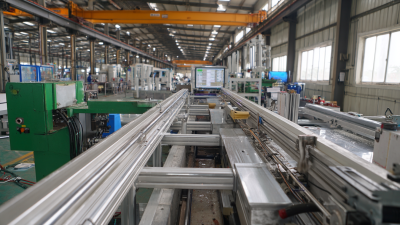
Choosing Aluminium Window Fabrication Machines is a practical decision, not merely a purchasing exercise. The right machine must match your profiles, workshop space, production volume, and staff skills. A compact fabricator may need a precise double-head saw, reliable corner crimping equipment, and a CNC machining centre for repeated drilling patterns. A high-volume manufacturer may require automated cutting, routing, punching, and barcode-based production control. Small details matter.

Measure twice.

Manufacturing quality expert W. Edwards Deming said, “Quality comes not from inspection, but from the improvement of the production process.” His principle remains highly relevant here. Examine cutting accuracy, spindle performance, clamping pressure, software compatibility, operator safety, and after-sales support before comparing prices. Ask suppliers to process your own aluminium profiles, not only demonstration samples. Check the cut surface, corner alignment, cycle time, noise level, and material waste. A machine that looks impressive in a showroom may struggle with your thermal-break profiles.

These seven tips will help you assess Aluminium Window Fabrication Machines with greater confidence. Consider machine capacity, precision, automation, maintenance access, energy use, training, and long-term support. Experience has taught many fabricators that the cheapest option can become expensive after repeated downtime. Still, premium automation is not always the answer. It may exceed your current demand or require skills your team does not yet have. That is an uncomfortable point worth admitting. Choose equipment that supports consistent quality today while leaving room for realistic growth tomorrow.
7 Tips for Choosing Aluminium Window Fabrication Machines

Define Your Aluminium Window Production Requirements

Before choosing aluminium window fabrication machines, define what your workshop must produce. Record the usual frame widths, profile shapes, glass sizes, and daily output. A small residential window differs greatly from a large sliding system. Measure your current orders, not your ideal future orders.

Tip: Build a simple production sheet. Include cutting length, drilling points, corner joints, and acceptable tolerances. This information helps you compare machine capacity with real work. Check whether the machine supports your common profile dimensions. Extra capacity sounds useful, but unused features can increase cost and training time.

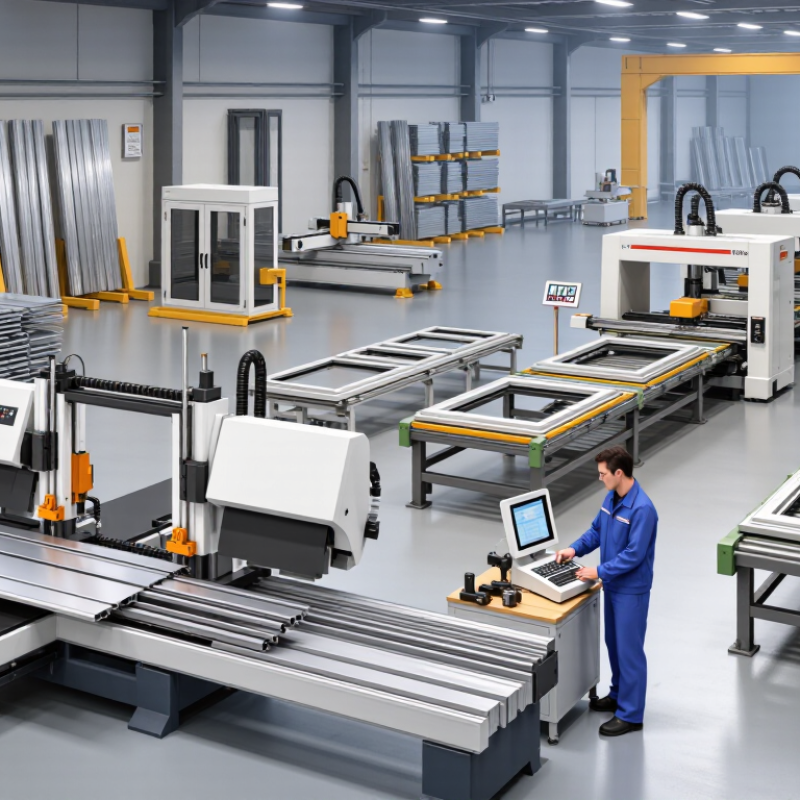
Think about the complete workflow. Cutting, end milling, routing, corner crimping, and inspection should connect smoothly. Leave enough floor space for profile storage and safe movement. Ask how many operators are needed per shift. A machine may run quickly, yet slow down the workshop during setup or tool changes. I once underestimated storage space. The production line looked efficient, but profiles blocked the working path.

Tip: Test a sample profile before purchasing. Observe cut accuracy, surface marks, noise, chip removal, and adjustment time. Request clear maintenance instructions and documented performance data. Reliable suppliers should explain limitations, spare-part availability, and operator training. Do not rely only on attractive output figures. Real production includes rejected pieces, urgent changes, and tired operators. Your requirements should include those imperfect conditions.

7 Tips for Choosing Aluminium Window Fabrication Machines

Define Your Aluminium Window Production Requirements

Before selecting fabrication equipment, define the profile size, cutting angles, material thickness, required accuracy, daily output, automation level, and available utilities. These typical planning ranges help manufacturers compare machine capabilities with real production needs. Actual specifications should be confirmed against the chosen aluminium system and project standards.

Compare Machine Types and Their Fabrication Capabilities

Choosing aluminium window fabrication machines starts with the profile, not the price. A double-head saw suits repeated straight cuts and improves length consistency. A copy router handles locks, drains, and hardware openings. CNC machining centres add drilling, milling, and multi-axis work. However, advanced control cannot repair poor tooling or inaccurate profiles.

Compare each machine by capability. Ask whether it supports thermal-break profiles, large sash dimensions, automatic feeding, and barcode-based job tracking. Corner crimping machines are valuable for repeatable frame assembly. End milling equipment prepares mullions with cleaner joints. According to the U.S. Department of Energy, windows can account for 25% to 30% of residential heating and cooling energy use. Therefore, weak joints and inaccurate cuts deserve serious attention. Energy performance begins with fabrication quality.

Check measured output, not brochure speed. A 2023 report from Grand View Research identified growing demand for aluminium windows, driven partly by durability and energy-efficiency requirements. That growth may justify automation, but only when order volume supports it. Review cut tolerance, setup time, scrap rates, and operator training. Short trials reveal more. One overlooked issue is maintenance access. A machine can appear efficient until a blocked chip channel stops production. I would also compare manual, semi-automatic, and fully automated lines against your actual profile mix. More automation is not always better. Sometimes, a simpler saw and reliable crimper produce fewer costly mistakes.

Evaluate Precision, Speed, and Automation Features

7 Tips for Choosing Aluminium Window Fabrication Machines

When choosing aluminium window fabrication machines, examine precision before impressive output claims. Check whether cut lengths stay within 0.5 millimetres across repeated samples. Inspect corner joints, drilling positions, and profile surfaces under bright workshop lighting. Ask for a live demonstration using your own aluminium sections. A clean first sample proves little. Run at least ten cycles. Measure every result. Also review blade stability, clamping pressure, and the machine’s ability to handle different profile sizes. These details often reveal weaknesses hidden by polished presentations.

Speed matters, but only when accuracy survives production pressure. Compare complete cycle times, including loading, tool changes, and adjustment delays. A machine that cuts quickly but needs frequent corrections may reduce daily output. Listen for unusual vibration during fast operation. It can affect surface quality and shorten tool life. Request maintenance records and operator feedback from a working factory, not only a showroom. Real evidence matters. Still, no test predicts every workshop condition. Dust, staff training, and inconsistent material can change performance.

Automation features should remove repetitive work without making repairs difficult. Look for automatic measuring, profile recognition, error alerts, and simple program storage. Remote monitoring can help, but clear local controls remain essential when connectivity fails. Check how quickly operators can adjust settings safely. Poorly designed software creates new delays. I have seen teams overvalue touchscreens and undervalue reliable sensors. That mistake is expensive. Leave room for manual correction, because unusual profiles and urgent orders will eventually appear. Also confirm training quality, spare-part access, and documented safety procedures before purchase.

7 Tips for Choosing Aluminium Window Fabrication Machines - Evaluate Precision, Speed, and Automation Features
Tip Evaluation Dimension Practical Data Benchmark Importance What to Check Before Purchase Best Suited For
1 Cutting Precision Target positioning accuracy of approximately ±0.1–0.2 mm; typical cutting-angle accuracy should be within ±0.1°–0.2° when properly calibrated. High Request test-cut records using the aluminium profile sizes and wall thicknesses that will be processed. Check diagonal dimensions, angle consistency, burr formation, and repeatability. High-quality doors, windows, curtain-wall components, and repeat production.
2 Processing Speed and Cycle Time Compare complete cycle time rather than motor speed alone. A practical benchmark for automated sawing is often about 8–20 seconds per cut, depending on profile size, blade diameter, feeding, and clamping. High Measure loading, clamping, cutting, unloading, and setup time. Ask for output data based on the exact profile geometry and cut list required by your workshop. Medium- to high-volume fabrication and standardized product lines.
3 Automation and CNC Functions Look for programmable length control, automatic material feeding, barcode or job-list input, automatic angle adjustment, and recipe storage for commonly used profiles. High Confirm the number of stored programs, supported file formats, data-transfer methods, password controls, and whether the machine can operate in semi-automatic mode during smaller jobs. Mixed orders, frequent size changes, and operations seeking lower manual input.
4 Profile Compatibility and Working Capacity The machine should cover the required profile width, height, wall thickness, length, and cutting-angle range. Common double-head saw systems offer angle adjustment around 45°–90°, but the actual range must be confirmed. High Compare the machine's maximum cutting dimensions with your largest thermal-break, sash, frame, and reinforced profiles. Check blade diameter, spindle power, clamping clearance, and minimum cut length. Workshops processing several aluminium-system profiles.
5 Clamping, Feeding, and Surface Protection Independent pneumatic clamping, adjustable pressure, stable profile support, and protective contact surfaces help reduce movement, dents, and scratches. Air requirements commonly fall near 0.6–0.8 MPa, subject to machine design. High Run coated, anodized, and thermal-break profiles through a sample test. Inspect clamp marks, profile deflection, chip evacuation, and the stability of long or narrow sections. Visible architectural profiles and coated or anodized aluminium products.
6 Safety, Dust Control, and Operator Ergonomics Prioritize guarded blades, interlocked access doors, emergency-stop controls, two-hand or equivalent safe-start functions where applicable, chip containment, and clear operator access. High Review the risk assessment, safety documentation, guarding layout, noise level information, extraction provisions, maintenance access, and operator training requirements. All production environments, especially multi-shift facilities.
7 Maintenance, Service, and Total Cost of Ownership Evaluate blade life, lubrication intervals, air consumption, electrical load, spare-part availability, software support, calibration requirements, and expected installation costs—not only the purchase price. Medium to High Obtain a written list of consumables and recommended service intervals. Confirm local technical support, response times, warranty coverage, commissioning, and the cost of replacement sensors, clamps, and blades. Businesses prioritizing predictable uptime and long-term operating costs.
Evaluation Note: Actual performance depends on profile alloy, cross-section, blade specification, operator skill, machine calibration, material handling, and factory conditions. Use the benchmarks as comparison points and validate them with production samples before making a final decision.

Check Compatibility, Safety, Maintenance, and Technical Support

7 Tips for Choosing Aluminium Window Fabrication Machines

Check compatibility before comparing cutting speed. Measure your aluminium profiles, wall thickness, maximum length, and required cutting angles. The machine should accept your existing tooling and electrical supply. Ask whether its control system works with your production software. A small mismatch can create expensive delays. Test sample profiles, not just a demonstration block. Shortcuts here often return later.

Safety needs practical inspection. Look for enclosed cutting zones, reliable guards, emergency stops, and clear operator controls. Confirm that dust and metal chips can be collected without blocking visibility. Operators still need training, suitable protective equipment, and a documented risk assessment. Do not treat a safety label as proof of safe operation. I have seen access panels ignored because daily output seemed more urgent. That choice deserves reconsideration.

Maintenance access affects real production more than glossy specifications. Check how easily technicians can reach blades, clamps, filters, and lubrication points. Request a maintenance schedule with calibration intervals and expected consumable life. Keep simple records of noise, vibration, cutting accuracy, and fault codes. Technical support should include clear manuals, training, spare-part availability, and defined response times. Ask who handles urgent failures after installation. A fast reply is useful, but local technical competence matters more. Leave room for doubt: promised support can weaken after delivery, so obtain service terms in writing.

Assess Total Cost, Energy Use, and Long-Term Value

7 Tips for Choosing Aluminium Window Fabrication Machines

Assess Total Cost, Energy Use, and Long-Term Value

In real fabrication workshops, the purchase price is only the visible part of the cost. Tip 1: calculate installation, tooling, training, maintenance, and spare parts before comparing quotations. Tip 2: estimate downtime honestly. A machine standing idle can erase a small price advantage within months. Tip 3: check service response times and local technical support. Written promises matter, but repair records matter more.

Tip 4: compare energy use during cutting, drilling, and standby periods. Ask for measured data, not attractive estimates. Efficient motors and shorter cycles can reduce monthly bills, especially in high-volume production.

Tip 5: inspect the machine’s control system and safety features. Clear diagnostics can help operators find faults before they become expensive failures.

I have seen teams overlook this detail. They later depended on guesswork.

Tip 6: evaluate accuracy over several years, not only on the first test piece. Request sample results, repeatability data, and references from comparable workshops.

Tip 7: consider future work. Adjustable tooling, compatible software, and modular upgrades may protect your investment when product designs change.

A cheaper machine can look sensible today, but its long-term value may be weak. Review warranty limits, consumable costs, training quality, and expected service life. Leave room for uncertainty; production rarely follows the spreadsheet perfectly.

Optimized by Optimole