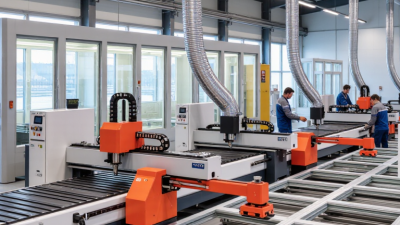
China Best Window Machinery Manufacturers?
Choosing China’s best Window Machinery manufacturers takes more than comparing prices or polished factory videos. The right partner should match your profile, production volume, and tolerance for downtime. A line built for high-volume aluminum windows may not suit a workshop making custom PVC frames. Small details matter: saw-cut consistency, welding alignment, control-system clarity, and how quickly a technician can diagnose a fault.
W. Edwards Deming, a manufacturing quality expert, offered a useful principle: “Quality comes not from inspection, but from improvement of the production process.” His work was not specific to window machinery, but the principle fits the buying decision. Look for evidence in machine tests, documented specifications, operator training, and real service arrangements—not promises alone. Ask manufacturers to demonstrate a complete cycle using your profile dimensions. Watch the blade stop, the clamp hold, and the display report each setting. Then check whether spare parts and remote support are realistically available in your region.
There is no universal winner. A reputable supplier can still be the wrong fit if its software, tooling, or service response falls short of your needs. Some comparisons also rely too heavily on catalog specifications; that is an imperfect shortcut. This guide examines Chinese manufacturers through practical criteria, including product range, customization, quality controls, technical support, and total ownership cost. The aim is a better shortlist, not a blind endorsement.
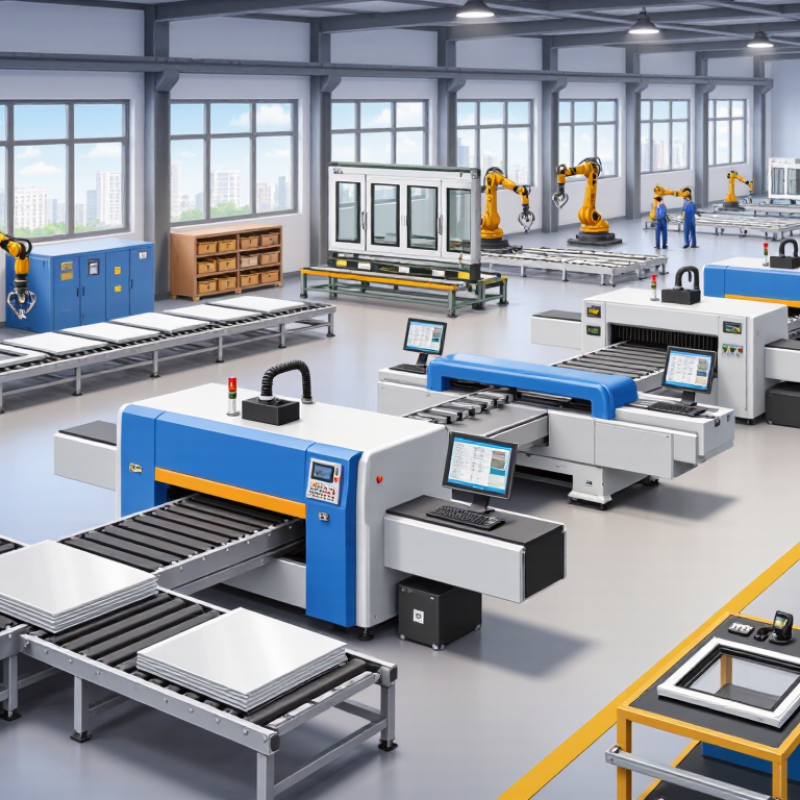
Overview of China's Window Machinery Industry
China Best Window Machinery Manufacturers?
China’s window machinery industry serves a wide range of fabricators, from small workshops to high-volume production plants. Common equipment includes profile cutting saws, corner-cleaning machines, drilling units, and automated assembly lines. Many suppliers offer configurable systems for different window materials and production layouts. Digital controls can improve repeatability, but operators still need training and routine checks. Small details matter.
The industry benefits from established component supply networks and broad manufacturing capacity. Buyers can compare equipment options across different levels of automation and output. However, specifications on paper do not always show how a machine performs during a full shift. Noise, setup time, spare-part availability, and local technical support deserve close attention. A factory visit or live production test can reveal practical limits. Even then, one test may not reflect every material or workload.
Tips: Request a sample run using your own profiles, and confirm the cutting tolerance in writing. Ask how quickly common wear parts can be supplied. Leave room in the budget for installation and operator training; these needs are easy to underestimate.
Main Types of Window Manufacturing Machines
China Best Window Machinery Manufacturers?
Main Types of Window Manufacturing Machines
Window production uses several machine groups, each handling a specific stage. Profile cutting saws trim aluminum or uPVC sections to measured lengths, often creating paired mitres for frame corners. CNC machining centers drill handle holes, mill drainage slots, and shape hardware pockets from digital job data.
Accurate stops and sharp blades matter; even a small angle error can leave visible gaps after assembly. Details show.
Welding machines join uPVC frame sections, while corner-cleaning units remove excess weld material for a neater finish. Aluminum production often uses corner crimpers, end-milling machines, and copy routers to prepare and join profiles. Glazing-bead saws cut retaining strips to fit each sash, and glass-handling equipment helps workers position heavy panes steadily.
No single layout suits every workshop. Production volume, profile design, and available floor space all affect machine selection. Buyers should check cutting capacity, repeatability, safety guards, and service support, then test sample profiles before committing.
One practical caution: a fast machine can still create delays if changeovers are awkward or operators need lengthy setup.
Leading Chinese Manufacturers and Their Specialties
Chinese window machinery manufacturers are best compared by specialty, not by a single ranking. Some focus on aluminum profile lines, supplying double-head saws, corner crimpers, and precision end mills for thermal-break frames. Others make uPVC equipment for cutting, welding, and cleaning frame corners. Their value depends on matching machine capacity to daily output, profile dimensions, and available floor space. Ask to see a full-cycle demonstration. A brochure cannot show whether a saw holds its angle throughout a shift.
Another group specializes in insulating-glass production, with washing, spacer assembly, and sealing equipment. Automation-focused makers may connect cutting, machining, and material handling with CNC controls and conveyors. Check spare-part lead times, operator training, electrical compatibility, machine guarding, and local service access. Ask for references from factories with similar profiles and production volumes. No supplier is perfect. A faster line may require more maintenance, while a lower purchase price may come with slower support. Test your own profiles before choosing; sample materials can behave differently.
China’s Window Machinery Manufacturers: Common Equipment Specialties
Typical process functions associated with major types of window-fabrication machinery
A value of 1 indicates a process commonly associated with that machine type; 0 means it is not usually its primary function. CNC profile machining centers can combine milling, routing, and drilling. Actual capabilities vary by machine configuration. This is a process comparison, not a ranking of manufacturers or a market-share dataset.
Key Technologies and Quality Standards
Reliable window machinery is defined by repeatable accuracy, not impressive specifications alone. A double-head saw should hold its cutting angle across repeated cycles, while CNC equipment must position profiles consistently. Ask for measured spindle runout, sample-cut results, and calibration records. See the marks yourself.
ISO 9001:2015 provides a framework for documented quality control, while ISO 12100 guides machinery risk assessment. These standards do not guarantee perfect output; setup, operator training, and maintenance still matter. The International Energy Agency reports that buildings account for about 30% of global final energy consumption. That makes accurate fabrication relevant: poor frame joints or inconsistent processing can undermine product performance, though machinery is only one part of the chain. A useful factory audit checks inspection frequency, tool-wear limits, and traceability for each production batch. Yet paperwork can look better than the workshop. Compare records with actual cut samples, and revisit tolerances after extended production runs.
How to Compare and Select a Manufacturer
Choosing a window-machinery manufacturer starts with your real production mix. List the profiles, materials, cutting angles, and daily shift hours you need. Ask each supplier to process your own sample profiles, not just demonstrate a standard setup. Compare finished cuts, changeover time, safety features, and the operator’s workload. Brochure speed alone can mislead.
Check how performance claims are measured. ISO 230-2:2014 describes tests for positioning accuracy and repeatability of numerically controlled machine axes. Request test records for the configuration you plan to buy. ISO’s 2023 Survey recorded 1,265,216 ISO 9001 certificates worldwide. That makes certification a useful screening point, not proof of machine accuracy or strong service. Ask to see the certificate’s scope and confirm who handles installation, training, and spare parts.
Compare total operating costs, including tooling, maintenance, shipping, and expected downtime. Ask for a written response-time commitment and a list of commonly replaced parts. A factory visit can help, but one polished demonstration cannot predict every service delay. This is easy to underestimate. A scorecard helps keep comparisons fair, yet it cannot capture every practical detail on your shop floor.
China Best Window Machinery Manufacturers? - How to Compare and Select a Manufacturer
| Comparison dimension | What to compare | Evidence to request | Practical selection guidance |
|---|---|---|---|
| Product and process fit | PVC, aluminum, or other profiles; cutting, milling, welding, corner cleaning, drilling, or assembly operations. | A written machine configuration and a demonstration using your profile sections and process steps. | Confirm the proposed machine covers your actual materials, profile shapes, and production sequence. |
| Capacity and work envelope | Maximum profile dimensions, cutting length, spindle or tool range, clamping capacity, and supported workpiece orientations. | Technical drawings, machine specifications, and a test with the largest and smallest parts in your production range. | Check usable capacity—not just headline maximums—and allow for fixtures, tools, and handling clearance. |
| Accuracy and repeatability | Positioning, cut or machining tolerances, repeatability, and consistency across repeated production cycles. | Acceptance-test method, measured sample parts, and stated tolerances with measurement conditions. | Agree on measurable tolerances for your parts before ordering; compare test results under the same conditions. |
| Output and cycle time | Cycle time per operation, setup time, changeover time, and expected output for your product mix. | Timed production trial that includes loading, clamping, machining, unloading, and normal tool changes. | Use tested cycle times for your process rather than theoretical speeds or figures that exclude handling. |
| Controls and software | Control language, program creation, recipe storage, data import/export, updates, and operator interface. | Software demonstration, sample programs, supported file formats, and documentation for backups and updates. | Verify language, usability, and compatibility with your design or production workflow before purchase. |
| Automation and integration | Manual or automated loading, conveyors, material storage, labeling, and connection to upstream or downstream equipment. | Layout drawing, interface requirements, and a list of included, optional, and customer-supplied equipment. | Assess the whole production cell, including floor space, utilities, material flow, and operator access. |
| Safety and compliance | Guarding, emergency stops, interlocks, electrical protection, operating instructions, and requirements in the destination market. | Risk assessment, electrical drawings, safety instructions, and applicable conformity documentation. | Confirm applicable legal requirements for the installation country and verify documentation with a qualified local adviser. |
| Installation and training | Commissioning method, installation responsibilities, operator and maintenance training, and training language. | A commissioning plan, training agenda, site-readiness checklist, and itemized service quotation. | Clarify travel, accommodation, interpreter, utilities, and customer-preparation costs in advance. |
| After-sales service and parts | Technical support hours, response process, remote diagnostics, spare-parts availability, and service coverage in your region. | Support terms, recommended spare-parts list, escalation contacts, and examples of service documentation. | Ask how faults are diagnosed and which parts are locally available; distinguish response time from repair time. |
| Warranty and service terms | Warranty duration, covered components, exclusions, claim process, and responsibility for labor and freight. | Full warranty terms and a written description of the claim and replacement-parts process. | Compare the scope and enforceability of coverage, not just the stated warranty period. |
| Total cost of ownership | Machine price, shipping, duties, installation, tooling, utilities, consumables, maintenance, and expected downtime. | Itemized quotation, shipping terms, payment schedule, recommended consumables, and maintenance requirements. | Compare the full delivered and operating cost over your planned ownership period, not purchase price alone. |
| Factory verification and references | Manufacturing capability, quality checks, machine testing, and experience with comparable processes and production volumes. | Live factory or video inspection, factory acceptance test records, and customer references where available. | Verify the supplier, machine configuration, and test results independently before making the final payment. |
Suggested evaluation method: score each shortlisted supplier from 1 (weak) to 5 (strong) against the same requirements, then weight the criteria by your production priorities.
Related Posts
-
How to Choose Window Manufacturing Equipment?
-
2026 Best PVC Window Welding Machine for Global Buyers?
-
Exploring Innovative Alternatives to the Best Door Manufacturing Machine for Your Factory Needs
-
China Top Window Manufacturing Equipment Manufacturers?
-
Best Aluminium Manufacturing Machines for Global Buyers?
-
Essential Tips for Choosing an Aluminium Door Making Machine?