
What Are the Top 10 Thermal Break Machine Manufacturers?
A Thermal Break Machine can shape the consistency, strength, and finish of thermally broken aluminum profiles. For manufacturers, choosing one is not just a matter of comparing price tags. Die compatibility, clamping pressure, cutting accuracy, production speed, and after-sales support all affect daily work. A small alignment error can leave a visible gap in a profile joint. That detail matters.
W. Edwards Deming, a respected manufacturing and quality expert, is often quoted as saying, “Quality is everyone’s responsibility.” His principle fits this equipment: dependable output relies on machine design, operator skill, and routine maintenance working together. Yet no single specification tells the whole story. A fast machine may not suit every profile, and an impressive brochure cannot replace a careful factory review.
This guide introduces ten Thermal Break Machine manufacturers and the factors buyers can use to compare them. It considers product range, customization, technical support, operating needs, and the clarity of available information. The aim is practical, not absolute. There is no perfect shortlist for every workshop. Some comparisons may still leave questions; that is worth acknowledging. Before making a decision, verify current specifications, request sample processing where possible, and discuss the actual profiles your production line must handle.
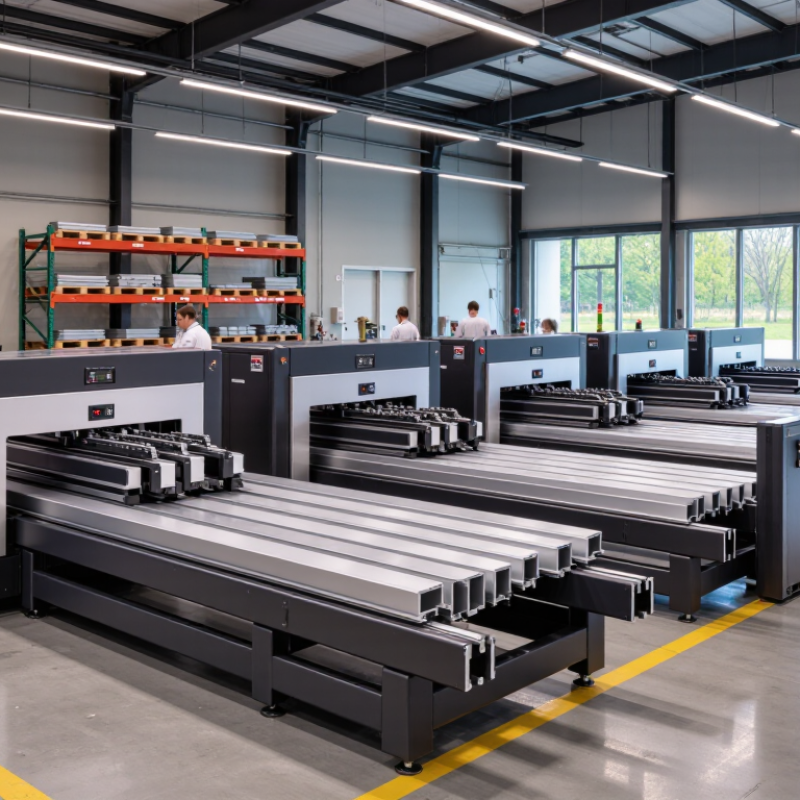
What Is a Thermal Break Machine and How Does It Work?
What Is a Thermal Break Machine and How Does It Work?
A thermal break machine joins the two sides of an aluminum profile while keeping a low-conductivity strip between them. This strip, often made from reinforced polyamide, limits heat transfer through the frame. The machine does not eliminate heat loss. It helps reduce it. First, operators place the strip into prepared grooves in the aluminum sections. Then, feed guides and rollers align the parts and press the metal edges firmly around the strip.
During crimping, shaped rollers deform the aluminum lips to grip the insert. Consistent pressure and alignment matter: uneven joining can cause gaps, weak retention, or a twisted profile. A practical quality check includes inspecting the joint and testing sample sections for pull-out strength. One point deserves attention: a profile may look neat but still have an unreliable connection, so appearance alone is not enough.
Tips: Match roller geometry and pressure to the specific profile, and check alignment before a production run. Keep grooves clean; small chips can affect the joint. Record settings and inspect samples regularly. If results vary, pause and review the setup rather than simply increasing pressure. Too much force can damage the aluminum or strip.
What Are the Top 10 Thermal Break Machine Manufacturers? - What Is a Thermal Break Machine and How Does It Work?
This brand-neutral guide explains ten practical capabilities to compare when evaluating thermal break machine manufacturers. It also summarizes how these machines join insulating strips to aluminum profiles. No company names or unsupported manufacturer rankings are included.
| No. | Comparison dimension | Factual detail | Why it matters |
|---|---|---|---|
| 1 | Machine purpose | A thermal break machine mechanically joins a low-conductivity insulating strip to aluminum profile sections used in thermally broken windows, doors, and façades. | It helps create a barrier between the interior and exterior aluminum sections, reducing direct heat transfer through the frame. |
| 2 | Typical strip material | Polyamide is widely used for thermal barrier strips. PA66 reinforced with glass fiber is a common material choice for structural aluminum systems. | Strip material and dimensions must be compatible with the profile design and the system supplier’s specifications. |
| 3 | Profile preparation | Before assembly, serrations or knurls are typically formed in the aluminum pockets that will grip the insulating strip. | Correct preparation supports mechanical engagement between the aluminum and the strip. |
| 4 | Strip insertion | The insulating strip is positioned in the prepared pockets of the aluminum profiles before the profiles are joined. | Consistent positioning helps maintain the intended thermal barrier and assembled profile geometry. |
| 5 | Rolling and crimping | Assembly machines use rollers to deform the aluminum around the strip, locking the components together through a mechanical connection. | Roller setup and pressure must suit the profile and strip; incorrect settings can affect the joint and finished dimensions. |
| 6 | Common machine stations | A production setup may include profile knurling equipment, strip insertion equipment, and a rolling or crimping machine. | Understanding which stations are included makes equipment quotations easier to compare. |
| 7 | Single- and double-profile processing | Machine layouts vary: some process one profile assembly at a time, while other designs can process paired profile sections in a coordinated operation. | The suitable layout depends on the profile system, production plan, available floor space, and required handling method. |
| 8 | Profile compatibility | Roller tooling, profile dimensions, strip geometry, and machine adjustment ranges determine which profile systems can be processed. | Request compatibility checks against actual profile drawings and strip specifications rather than relying on a general machine description. |
| 9 | Quality control | Assembly quality can be checked through dimensional inspection and mechanical testing, using procedures appropriate to the relevant profile system and standards. | Documented inspection helps verify that the finished assembly meets project and system requirements. |
| 10 | Manufacturer evaluation | Compare demonstrated profile compatibility, tooling and setup support, operator training, spare-parts availability, safety provisions, and after-sales service. | These verifiable factors provide a more reliable basis for selection than an unsubstantiated “top manufacturer” ranking. |
Exact machine configurations, approved strip materials, process settings, and quality requirements vary by profile system. Confirm them with the system documentation and equipment supplier before production.
Related Posts
-

Discover the Innovations in Window Making Equipment Transforming the Industry
-

Top Aluminium Door Machines for 2026 What to Look For?
-
Top Aluminium Window Machinery for Global Buyers in China?
-

Unlocking the Advantages of State-of-the-Art Window Fabrication Equipment for Global Buyers
-
Revolutionizing Efficiency: The Latest Innovations in Window Making Equipment for Global Buyers
-
China Top Door Manufacturing Machine Manufacturers Guide