| Production Process |
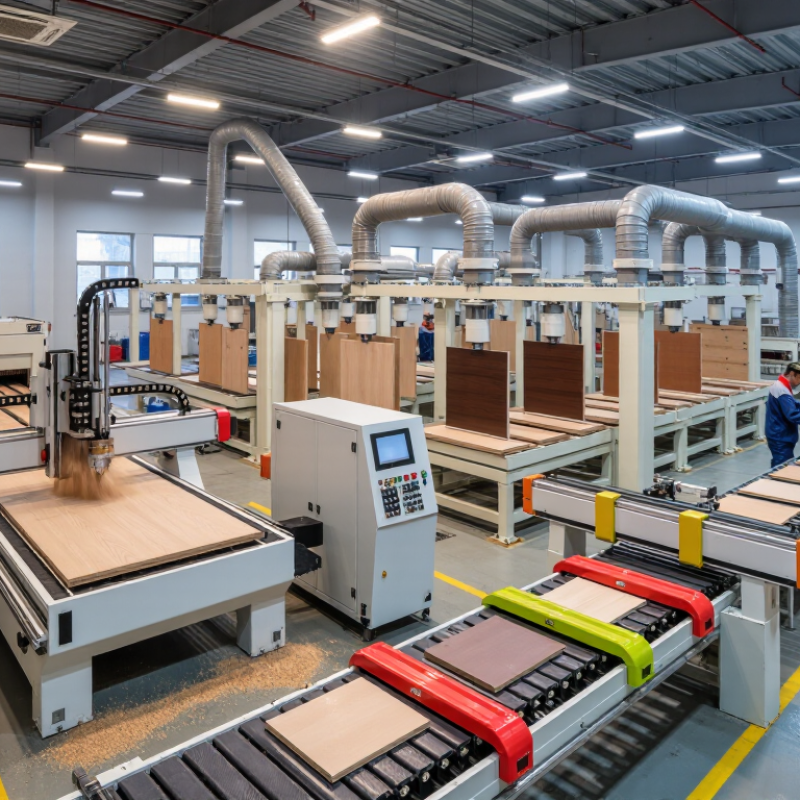
CNC Router for Door Panels |
Used for drilling, routing, carving, lock-body preparation, and profile cutting on wood, MDF, plywood, and similar board materials. Common systems use 3-axis or 4-axis interpolation and vacuum workholding. |
Confirm the working area, spindle power, tool-holder type, maximum material thickness, dust-collection ports, software compatibility, and positioning accuracy required for the door design. |
Requires a level foundation, stable electrical supply, compressed air where applicable, dust extraction, tool-setting procedures, and operator training for workholding and tool changes. |
| Production Process |
Panel Saw or Beam Saw |
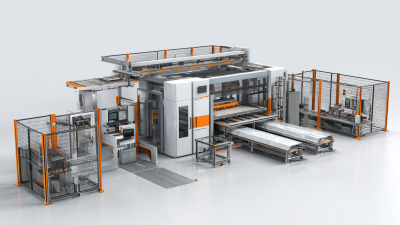
Designed for straight, repeatable cutting of boards and panels. Key specifications include blade diameter, cutting height, cutting length, feed method, and automatic positioning capability. |
Check whether the machine accepts the planned panel dimensions and material types. Request cutting-tolerance information based on the actual board thickness and production speed. |
Installation needs adequate loading and unloading space, a flat floor, dust extraction, blade alignment, and safety training for handling large panels. |
| Production Process |
Edge-Banding Machine |
Applies edge tape to panel edges using processes such as pre-milling, gluing, end trimming, rough trimming, fine trimming, scraping, and buffing. |
Verify compatible edge materials, tape thickness range, minimum panel dimensions, glue system, warm-up time, and the availability of replacement trimming tools. |
Needs suitable adhesive handling, temperature control, regular cleaning of glue pots or glue application systems, and adjustment training for different panel thicknesses. |
| Production Process |
Door Assembly and Clamping Press |
Provides controlled pressure during the bonding or assembly of door components. Selection depends on door size, frame construction, pressure direction, and required cycle time. |
Confirm maximum door dimensions, pressure range, platen flatness, hydraulic or pneumatic requirements, and whether the machine supports the intended adhesive curing process. |
Requires safe access around moving platens, pressure-system inspection, alignment checks, and documented procedures for loading, clamping, and unloading. |
| Production Process |
Sanding Machine |
Used to achieve a consistent surface before coating or finishing. Important factors include sanding width, abrasive belt size, feed speed, sanding thickness range, and dust extraction volume. |
Test the machine with the actual door material and target surface finish. Check abrasive availability, belt replacement time, thickness adjustment, and surface consistency across the panel. |
Requires properly sized dust collection, belt tracking adjustment, routine cleaning, and periodic inspection of rollers, bearings, and abrasive components. |
| Production Process |
Spray Booth or Finishing System |
Supports primer, paint, lacquer, or other coating operations. Performance depends on airflow, filtration, lighting, workpiece dimensions, and the coating material used. |
Verify local fire, ventilation, environmental, and occupational-safety requirements before purchase. Confirm compatibility with water-based or solvent-based coatings. |
Installation may require dedicated ventilation, filtration, fire-protection measures, controlled lighting, and approved handling and storage procedures for coatings. |
| Capacity Planning |
Rated Capacity and Real Throughput |
Rated output is normally based on defined material, dimensions, feed speed, operator count, tooling, and work pattern. Real throughput is reduced by loading, setup, inspection, cleaning, and maintenance time. |
Ask for a test run using representative door components. Compare cycle time, changeover time, reject rate, and labor requirements instead of relying only on the advertised maximum speed. |
Plan material flow, buffer areas, operator positions, and preventive-maintenance downtime before finalizing the production layout. |
| Electrical Requirements |
Power Supply and Controls |
Industrial equipment supplied for China commonly uses three-phase power, often 380 V and 50 Hz, but the exact voltage, phase, frequency, control voltage, and protection requirements must be confirmed from the machine data sheet. |
Match the machine nameplate and electrical schematic with the destination factory supply. Confirm main breaker size, grounding, cable specification, transformer requirements, and permitted voltage fluctuation. |
A qualified electrician should complete connection and grounding. Electrical changes should be documented and tested before commissioning. |
| Factory Layout |
Space, Material Flow, and Foundation |
Total space includes the machine footprint, access aisles, loading and unloading zones, maintenance clearance, control cabinets, dust collection, and material storage. |
Obtain a dimensioned layout drawing, machine weight, access-door requirements, lifting points, and foundation or anchoring instructions before shipment. |
Prepare the floor, lifting equipment, ventilation, compressed-air lines, dust-collection ducting, and safe routes for moving full-size door panels. |
| Safety and Compliance |
Guarding, Emergency Stops, and Risk Assessment |
Machines should include appropriate guarding, interlocks where required, emergency-stop devices, warning labels, operating instructions, and safety-related control functions. |
Review the risk assessment, electrical documentation, safety-device list, and conformity documents applicable to the destination market. Do not treat a general certificate as proof that every configuration is compliant. |
Complete a site risk assessment, operator safety training, emergency-stop testing, and lockout or isolation procedures before production starts. |
| Software and Automation |
Control System, CAD/CAM, and Data Transfer |
Automated machines may use CNC control software, barcode or label input, nesting software, parameter libraries, and network or removable-media data transfer. |
Confirm file formats, post-processor compatibility, language options, backup procedures, user permissions, remote-support method, and ownership of generated programs. |
Keep controller parameters, software licenses, machine backups, and version records in a secure location. Train at least two employees to reduce dependence on one operator. |
| Quality Control |
Acceptance Testing |
Acceptance should cover dimensions, repeatability, surface quality, drilling or routing position, cycle time, safety functions, noise or dust performance where relevant, and finished-product consistency. |
Define measurable acceptance criteria in the purchase contract. Use representative materials, tools, door sizes, and production programs during factory and site acceptance tests. |
Record test results, corrective actions, spare-part lists, training completion, and unresolved issues before signing final acceptance. |
| Commercial Terms |
Total Cost of Ownership |
Purchase price is only one cost. Other costs may include tooling, blades, abrasives, adhesive, software, shipping, installation, training, utilities, dust extraction, spare parts, and downtime. |
Request an itemized quotation showing machine configuration, optional equipment, consumables, warranty scope, exclusions, delivery terms, installation fees, and payment milestones. |
Budget for commissioning resources, operator wages during training, preventive maintenance, consumables, and critical spare parts for the first operating period. |
| Delivery |
Packaging, Shipping, and Documentation |
Large machines may be shipped in separate crates or modules. Shipping documentation should identify the machine, components, accessories, electrical parts, tools, and manuals. |
Check packing method, moisture protection, crate dimensions, gross weight, lifting points, insurance responsibility, and the list of included accessories before dispatch. |
Inspect packaging at arrival, photograph damage, verify crate contents, and store electrical and precision components in suitable conditions until installation. |
| Installation |
Commissioning and Calibration |
Commissioning normally includes mechanical leveling, electrical connection, pneumatic setup, lubrication, software configuration, tool calibration, test cutting, and safety verification. |
Clarify whether installation is performed by supplier technicians, local technicians, or the buyer. Confirm travel, accommodation, labor, translation, and commissioning responsibilities in writing. |
Do not begin normal production until calibration records, safety checks, trial products, and operator training have been completed and signed off. |
| After-Sales Support |
Warranty Coverage |
A warranty should clearly identify the covered machine assemblies, duration, response process, exclusions, replacement-part policy, and conditions related to unauthorized modifications or improper use. |
Request the warranty in the sales contract rather than relying on informal statements. Check whether labor, travel, freight, remote diagnosis, and on-site repair are included. |
Keep maintenance records, service reports, photographs, alarms, and operating data to support warranty claims and speed up fault diagnosis. |
| After-Sales Support |
Technical Response and Remote Service |
Effective support should provide a defined communication channel, troubleshooting procedure, alarm-code guidance, electrical diagrams, spare-part identification, and remote diagnostic capability where available. |
Ask for service hours, target response time, supported languages, escalation contacts, and the process for sending videos, log files, drawings, or controller backups. |
Assign an internal service coordinator and maintain a machine history file containing serial information, software versions, repairs, adjustments, and replaced parts. |
| After-Sales Support |
Spare Parts and Consumables |
Common wear items include cutting tools, saw blades, sanding belts, bearings, belts, filters, glue-related components, sensors, fuses, and pneumatic seals, depending on machine type. |
Obtain a recommended spare-parts list with part numbers, interchangeability information, lead times, storage conditions, and current prices. |
Keep critical low-cost and long-lead-time parts on site. Use approved specifications for replacement electrical, pneumatic, cutting, and safety components. |
| Training |
Operator and Maintenance Training |
Training should cover startup and shutdown, program loading, tooling, setup changes, quality checks, alarm handling, cleaning, lubrication, and safe isolation. |
Define the number of trainees, training duration, language, training location, practical exercises, and the documents supplied with the machine. |
Use competency checklists and refresher training after software changes, process changes, incidents, or extended periods of non-use. |
| Supplier Evaluation |
Capability and Reference Verification |
A suitable manufacturer should demonstrate stable machine design, documented quality control, traceable components, technical documentation, and experience with comparable door materials and workflows. |
Request anonymized production samples, factory acceptance records, references for similar applications, service-process examples, and evidence of regular model updates. |
Evaluate long-term support capacity, not only initial price. A clear spare-parts and service structure can reduce production interruption after installation. |
| Final Checklist |
Pre-Order Confirmation |
The final specification should include machine model configuration, dimensions, power, utilities, accessories, tooling, software, output expectations, safety equipment, documentation, delivery terms, and service obligations. |
Confirm every critical requirement in a signed technical agreement before payment or production release. |
Do not approve shipment until the agreed configuration, test results, packing list, manuals, and outstanding corrective actions have been reviewed. |