Why Choose a Single Pole Transformer for Global Projects?
Why Choose a Single Pole Transformer for Global Projects?
Global power projects face different climates, grid standards, installation practices, and maintenance capabilities. A Single Pole Transformer can provide a practical answer when distribution systems require compact, independent units. Its separate pole-mounted design simplifies replacement, reduces transport weight, and supports phased expansion in remote areas.
Martin Heathcote, author of The J&P Transformer Book, has stated, “A transformer is only as good as the system in which it operates.” This principle remains highly relevant to international projects. Engineers must examine voltage levels, loading patterns, grounding methods, insulation performance, and local weather conditions. A unit designed for a dry inland site may struggle near saltwater. A small detail matters.
Single Pole Transformer solutions can also reduce civil-work demands. Crews may need less foundation space, fewer lifting resources, and shorter installation windows. These advantages become valuable when roads are narrow or construction equipment is limited. Standardized components may support easier procurement across several countries.
However, this option is not automatically the best choice. Single-pole systems can create concerns about phase balance, fault exposure, and maintenance access. Project teams should verify utility requirements before selecting a configuration. They should also review surge protection, wildlife safety, spare-unit planning, and long-term inspection costs.
Experience shows that a low purchase price can hide expensive operational weaknesses. Reliable selection requires field data, qualified engineering review, and realistic maintenance planning. The right transformer is not merely compact. It must remain safe, serviceable, and dependable under local conditions.
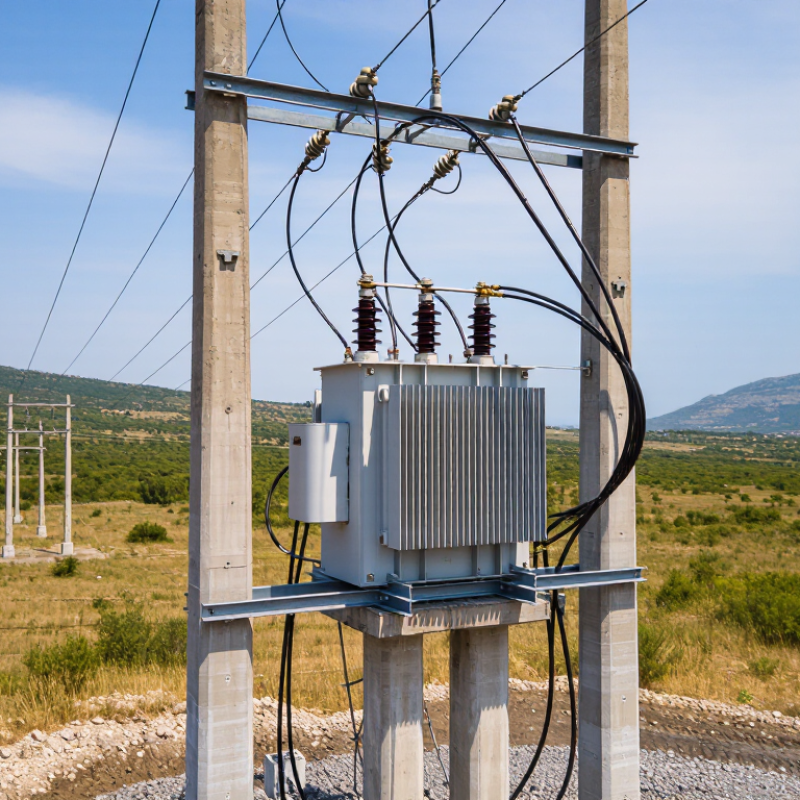
Single Pole Transformers: Definition and Core Operating Principles
A single pole transformer is typically a single-phase distribution transformer mounted on one utility pole. It reduces medium-voltage electricity to a safer service voltage for homes, workshops, or small commercial loads. The enclosure contains primary and secondary windings around a laminated magnetic core. Simple structure matters in remote installations.
Its operating principle is electromagnetic induction. Alternating current enters the primary winding and creates a changing magnetic field in the core. That field induces voltage in the secondary winding. The turns ratio controls the output voltage. More primary turns usually mean lower secondary voltage. A fuse or protective link can interrupt faults, while a grounding connection helps control dangerous fault currents.
Practical selection requires more than checking voltage. Engineers should verify frequency, rated power, insulation level, climate exposure, and local installation rules. Salt air, dust, heat, and freezing conditions can shorten service life. Pole strength and safe clearance also need field inspection. In my experience, project teams sometimes focus on price and overlook future load growth. That assumption can fail. A transformer operating near its limit may run hotter, lose efficiency, and require earlier replacement. Terminology also varies between regions; “single pole” may describe the mounting arrangement, not the electrical phase. Confirming drawings and utility requirements prevents costly misunderstandings. Safety procedures must guide transport, mounting, testing, and energization. Small details matter.
Key Advantages for International Power Distribution Projects
Why Choose a Single Pole Transformer for Global Projects?
International power distribution projects demand equipment that is practical, adaptable, and easy to maintain. A single pole transformer supports compact installation beside roads, rural feeders, and temporary construction zones. Its smaller footprint can reduce civil work, transport effort, and installation time. Field experience also shows that simpler access can speed up inspections after storms or overload events.
The IEA reports that global electricity demand may grow by an average of 3.4% annually between 2024 and 2026. This growth increases pressure on local distribution networks. Single pole transformers can help utilities extend service gradually, especially where demand is scattered. They also support modular planning, allowing additional units when villages, farms, or industrial sites expand. Useful flexibility.
The IEA’s Electricity Grids and Secure Energy Transitions report estimates that annual grid investment must exceed 600 billion dollars by 2030. Cost control therefore matters. However, a single pole design is not automatically the best choice. Engineers must check fault levels, wind exposure, grounding, oil containment, and national safety rules. Voltage and frequency requirements also differ across markets. A design that works well in one region may need serious adjustment elsewhere. Data from the IEA Electricity 2024 report supports rising demand, but local load surveys remain essential before procurement.
Installation, Safety, and Maintenance Considerations
Why Choose a Single Pole Transformer for Global Projects?
Installation, Safety, and Maintenance Considerations
For global projects, a single pole transformer can simplify installation and reduce space requirements. Its compact footprint suits rural feeders, temporary facilities, and distributed power systems. Yet installation should never rely on appearance alone. Confirm voltage, frequency, load capacity, grounding, and local electrical requirements before energizing the unit. Local engineers should verify the design because utility practices differ between regions. On a rural site, a level base and sealed cable entries help prevent movement and moisture damage. Small gaps invite trouble.
Safety depends on disciplined isolation and clear working procedures. Technicians should lock out the circuit, test for absence of voltage, and use suitable protective equipment. Maintain required clearances around conductors and the enclosure. Use calibrated test equipment, especially during commissioning. Never assume a factory setting fits every site. Dust, salt air, heat, and unstable ground can change actual operating conditions. A missed detail can create expensive downtime.
Maintenance should be practical and regular. Inspect bushings, terminals, enclosure seals, and mounting hardware for damage or corrosion. For liquid-filled units, check leakage and fluid condition. For dry-type units, remove dust from cooling paths. Record temperature, noise, and load readings over time. Thermal scanning can reveal loose connections before failure occurs. A monthly inspection may be excessive indoors, but inadequate near coastal dust. That judgment deserves review. Access for inspection is often overlooked, even in otherwise careful designs.
Why Choose a Single Pole Transformer for Global Projects?
Installation, safety, and maintenance considerations based on representative nominal secondary-voltage systems.
Single pole transformers are commonly selected for localized distribution because they can be installed close to the load, reduce low-voltage feeder distance, and simplify expansion of overhead networks. The voltage references shown are established nominal systems used in different markets: 120/240 V split-phase service, 230 V single-phase service, 240 V service, and 277 V commercial lighting circuits. Final equipment selection must match the local utility standard, insulation level, grounding arrangement, protection requirements, and applicable electrical codes. Safe installation requires qualified personnel, isolation and verification of de-energization, correct clearances, and suitable earthing. Routine maintenance should include visual inspection, connection checks, corrosion control, oil or insulation assessment where applicable, and thermal-load monitoring.
Standards, Logistics, and Lifecycle Costs Across Markets
Why Choose a Single Pole Transformer for Global Projects?
Standards, Logistics, and Lifecycle Costs Across Markets
For global projects, a single pole transformer can simplify a difficult specification. Its compact structure suits rural feeders, temporary substations, and constrained industrial sites. Yet selection must begin with local standards, not a familiar drawing. Engineers should verify voltage, frequency, insulation levels, grounding, clearances, and testing documents. IEC-based requirements may differ from national rules or utility practices. That gap can delay approval.
Logistics also influence the real project cost. A lighter unit may reduce crane requirements, foundation work, and inland transport charges. Standard dimensions can improve container planning, but assumptions often fail at remote sites. Check road access, lifting points, packaging strength, and spare-part availability before shipment. A missing adapter can stop installation for days. Small details matter.
Lifecycle value extends beyond the purchase price. Lower losses, accessible inspection points, corrosion protection, and replaceable accessories can reduce future expenditure. Maintenance teams should receive clear manuals and practical training. In field reviews, teams sometimes focus on installation speed and overlook ten-year operating costs. I have seen this approach create avoidable repairs. It is efficient at first, but not always wise. A careful comparison should include energy losses, inspections, outage risks, and eventual disposal requirements. Regional conditions still matter. Salt air, dust, heat, and unstable grids can change the preferred design.