
What Is the Best Type of Wood Panel?

Choosing the best Wood Panels is less about finding one perfect product. It is about matching the panel to the room, load, budget, and expected wear.

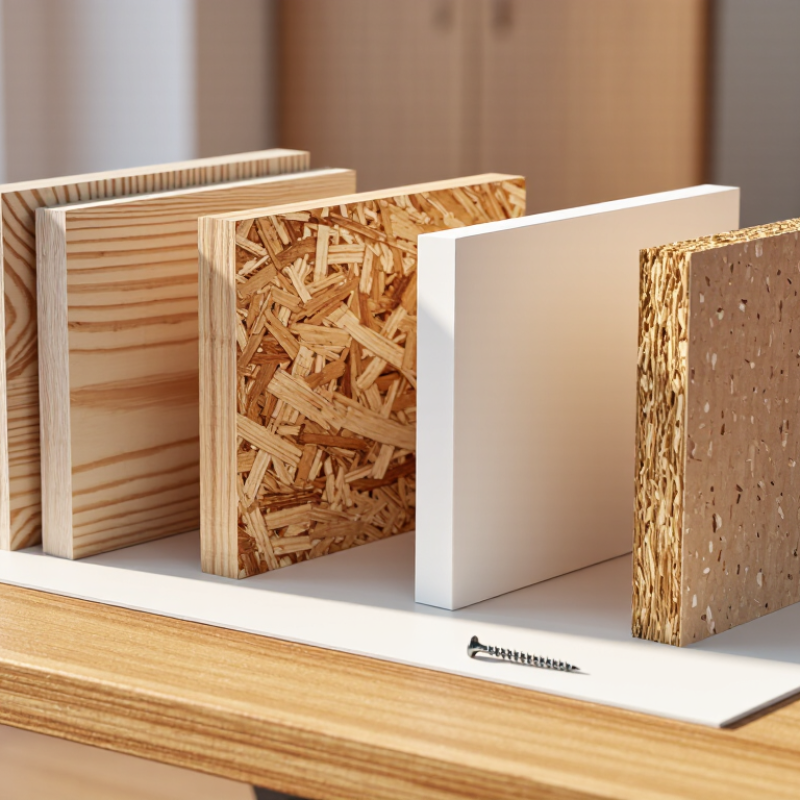
Plywood offers strong veneers and reliable screw holding. OSB provides efficient structural performance, especially in walls and roofs. MDF has a smooth face for painted furniture and detailed routing. Particleboard remains practical for economical cabinetry, although moisture can quickly weaken its edges. Each choice has a weakness.

Michael Green, a respected mass-timber architect, has said, “Wood is the only structural material that grows naturally and is renewable.” His point adds an important environmental dimension, but it does not remove the need for careful selection. A sustainable panel can still fail when installed beside a sink without proper sealing.

Real projects reveal the difference. A bathroom cabinet may need moisture-resistant MDF or sealed plywood. A workshop shelf may benefit from plywood’s stronger fastener grip. A painted interior door can favor MDF’s consistent surface. Check thickness, core quality, emissions certification, and manufacturer instructions before comparing prices.

There is no universal winner.

This guide will examine the main Wood Panels types through performance, appearance, durability, cost, and environmental considerations. It will also question common assumptions. “Stronger” does not always mean better. “Green” does not always mean suitable. Some recommendations may change with climate, workmanship, and local availability. That uncertainty matters. The best decision is usually the one that survives real use, not merely the one that looks impressive on a specification sheet.
What Is the Best Type of Wood Panel?

What Defines the Best Type of Wood Panel?

What Is the Best Type of Wood Panel?

The best wood panel is defined by performance, not appearance alone. A smooth surface can still hide weak edges, poor screw holding, or moisture damage. For a kitchen cabinet, I examine the panel’s density, thickness tolerance, edge stability, and resistance to repeated humidity. In a bathroom, swelling at an unsealed cut edge matters more than a perfect showroom finish. No panel wins every test.

Independent standards provide useful evidence. EN 13986 links wood-based panels with formaldehyde testing under EN 717-1; the E1 threshold is 0.124 mg/m³ of air. That figure helps compare indoor products, but it does not measure durability. The Food and Agriculture Organization reported that global forests covered about 31% of land area in 2020. Therefore, responsible sourcing and documented chain-of-custody data should influence a panel’s value.

For structural work, engineers should check test data for bending strength, moisture resistance, and load performance. For furniture, surface quality and machining behavior may matter more. A panel that cuts cleanly saves labor and reduces chipped corners. I have found that “water-resistant” is often misunderstood. It does not mean waterproof. The honest choice depends on the room, the fastening method, the expected service life, and the available evidence. Sometimes the cheaper panel is the wrong panel.

How Different Wood Panel Types Are Made

What Is the Best Type of Wood Panel?

Wood panels are made through very different processes. Solid wood panels use boards joined edge to edge, showing natural grain and movement. Plywood is built from thin veneers, with each layer turned across the previous one. This cross-grain structure improves stability. MDF uses refined wood fibers, wax, and resin pressed under heat. Its surface is smooth, but moisture can make it swell. Particleboard uses small wood chips and adhesive, while OSB uses larger, oriented strands in layered sheets.

The best panel depends on its location and workload. In a dry living room, MDF can create clean, painted cabinet doors. Plywood is often more dependable for shelves because its layers resist bending. OSB suits structural or workshop applications, where its visible strands may be acceptable. I once selected a cheaper particleboard panel for a utility shelf. It looked adequate at first, but the unsupported center sagged within months. That choice was too optimistic.

Tips: Check the panel’s thickness, density, and moisture rating before cutting. Inspect the edges for voids or loose particles. For furniture, support long shelves with a front rail or central divider. Wear eye protection and use dust extraction when machining panels. Read the technical sheet, especially for indoor air emissions. Small details matter.

Which Wood Panel Fits Each Project?

What Is the Best Type of Wood Panel?

Which Wood Panel Fits Each Project?

The best wood panel depends on moisture, load, finish, and budget. Plywood suits cabinets, shelving, and structural walls because its cross-laminated veneers resist splitting. The USDA Forest Products Laboratory’s Wood Handbook identifies plywood as a dimensionally stable panel when manufactured and installed correctly. It still needs sealed edges.

OSB fits wall, roof, and floor sheathing where strength and cost matter. Its oriented strands create a consistent structural surface, but exposed edges can swell after repeated wetting. The 2023 Structural Panels and Engineered Wood Products market review reported continued demand for OSB in residential construction, driven by efficient material use. That does not make it ideal for every interior.

MDF creates a smooth, paint-ready face for doors, wardrobes, and decorative panels. Its dense, fine fibers machine cleanly, although screws need careful predrilling. Particleboard works for economical furniture, especially in dry rooms, but weakened edges can disappoint during assembly. FAO’s 2022 State of the World’s Forests reported global wood production above four billion cubic metres in 2020, reinforcing the need to match panels carefully rather than choose by price alone.

I have seen projects fail from poor edge protection, not poor panel selection. A moisture-prone bathroom may need a rated panel and sealed joints. Check the project’s exposure first.

How to Compare Strength, Cost, and Appearance

Choosing the best wood panel depends on strength, cost, and appearance, not preference alone. FAO’s Global Forest Products Facts and Figures 2022 recorded about 400 million cubic meters of global wood-based panel production. That scale reflects varied uses, from furniture interiors to structural walls. The USDA Forest Products Laboratory’s Wood Handbook notes that moisture strongly affects panel movement and performance. Many wood products reach fiber saturation near 30% moisture content. That matters.

For load-bearing work, structural plywood usually offers reliable bending performance and strong screw holding. Oriented strand board can provide similar structural value at a lower purchase cost, though its flake pattern looks less refined. Medium-density fiberboard is smooth and easy to paint. Its typical density, reported in wood engineering references, ranges roughly from 0.50 to 0.80 g/cm³. It is heavy, and exposed edges absorb moisture quickly. Look closely. A low price can disappear after sealing, edging, waste, and installation.

Appearance changes the decision. Plywood can show layered edges and natural grain, while MDF creates a flatter, more uniform surface. I often prefer plywood for visible shelving, but that judgment is not universal. A warped sheet can defeat attractive grain. Cost comparisons should use equal thickness, panel grade, usable area, and finishing requirements. The USDA handbook also warns that panel properties vary by species, adhesive system, density, and manufacturing quality. Labels alone are imperfect evidence. Check the technical sheet, storage conditions, and intended-use rating before buying.

What Is the Best Type of Wood Panel? - How to Compare Strength, Cost, and Appearance

Wood Panel Type Typical Strength and Stability Moisture Resistance Typical Cost Level* Appearance Best Uses Main Limitations
Structural Plywood High strength-to-weight ratio; cross-laminated veneers provide good bending strength and dimensional stability. Good when exterior-rated adhesive and suitable grade are specified; edges still require protection. Medium to high Visible layered edges; face quality ranges from utility-grade to smooth, attractive veneer. Flooring, roofs, walls, cabinets, shelving, furniture, and demanding construction work. Usually costs more than particle board or standard MDF; lower grades may contain knots and surface voids.
Oriented Strand Board (OSB) High structural capacity in rated panels; strong and consistent for sheathing, though edges can swell if exposed to water. Moderate to good depending on panel rating; prolonged wetting can cause thickness swelling. Low to medium Distinctive coarse strand pattern; generally chosen for performance rather than decorative appearance. Wall, roof, and subfloor sheathing; workbenches and utility projects. Rough surface, visible edges, heavier feel, and less refined appearance than plywood.
Medium-Density Fiberboard (MDF) Flat and uniform, with good stiffness for interior components; weaker than plywood for structural loading and screw holding at edges. Low in standard form; moisture-resistant grades perform better but are not automatically waterproof. Low to medium Very smooth, homogeneous surface that paints well; no natural wood grain unless veneered. Painted cabinets, shelving, trim, doors, routed panels, and furniture parts. Heavy, creates fine dust when machined, and can swell significantly after water exposure.
Particleboard Adequate for lightly loaded interior furniture; lower bending strength and screw-holding capacity than plywood or MDF. Low unless specifically manufactured as moisture-resistant; exposed edges absorb water quickly. Low Coarse, uniform wood-particle texture; commonly covered with laminate, melamine, or veneer. Budget furniture, cabinet boxes, closet systems, and interior shelving in dry locations. Poor moisture tolerance, weaker edges, and fasteners may loosen after repeated assembly.
Hardwood Veneer Plywood Strong, relatively lightweight, and stable; core quality determines much of its structural performance. Ranges from interior to exterior grade; select the appropriate adhesive and core specification. Medium to high Natural wood grain and color; can be clear-finished, stained, or painted. Furniture, doors, cabinetry, wall panels, and visible architectural interiors. Thin face veneer can be damaged by aggressive sanding; appearance varies by species and grade.
High-Density Fiberboard (HDF) Dense, hard, and dimensionally consistent; suitable for wear-resistant components but not a substitute for structural plywood. Better surface hardness than standard MDF, but ordinary HDF still requires protection from prolonged moisture. Medium Smooth and uniform; usually finished with laminate, paint, or printed décor. Laminate flooring cores, furniture components, door skins, and precision interior panels. Dense and heavy; edges can be difficult to fasten without appropriate preparation.
*Cost level is a general comparison for unfinished panels of similar thickness. Actual prices vary by thickness, grade, local availability, certification, and moisture or fire rating. Always check the panel’s technical data sheet and intended-use rating before specifying it.
Quick selection guide: Choose structural plywood for a strong, versatile panel; OSB for economical structural sheathing; MDF for a smooth painted finish; particleboard for low-cost dry interior applications; and hardwood veneer plywood when natural appearance and furniture-quality surfaces are priorities.

How to Choose the Right Wood Panel for Your Needs

What Is the Best Type of Wood Panel?

How to Choose the Right Wood Panel for Your Needs

The best wood panel depends on where it will be used. Plywood offers strong layers for shelves, cabinets, and furniture frames. MDF has a smooth surface, making it suitable for painted doors and decorative wall panels. Particleboard costs less, but it needs careful protection from moisture. Solid wood feels warm and distinctive, though it may expand or shrink with seasonal humidity. Choose based on strength, moisture exposure, finish, and budget rather than appearance alone.

Tips: Check the panel’s thickness and edge quality before buying. For a kitchen or bathroom, ask for moisture-resistant material and seal exposed cuts. In a child’s room, verify indoor air-emission information and follow local safety guidance. Bring a simple drawing with measurements. It can prevent an expensive mistake.

I once focused too much on a smooth finish and underestimated the weight of a long shelf. The panel looked excellent, but the supports were too far apart. That experience changed my selection process. I now consider span, fastener grip, and installation conditions together. For heavy storage, plywood is often a dependable choice. For a painted feature panel, MDF may be more practical. Still, no panel is perfect. A good choice balances performance, maintenance, and the real conditions of your space.

What Is the Best Type of Wood Panel?

How to Choose the Right Wood Panel for Your Needs

The chart uses indicative comparative scores from 1 to 5, based on commonly documented characteristics of each panel type. Plywood and solid wood generally provide the highest strength, MDF offers a smooth surface for painting, particleboard is usually the most economical, and OSB provides a practical balance for structural and construction applications. Moisture resistance depends on grade, sealant, edge protection, and installation conditions.

Optimized by Optimole