
What Is the Best Mobile Excavator from China?

Choosing the best Mobile Excavator from China depends less on a single brand name and more on the work it must perform. A machine for roadside drainage may need different reach, travel speed, and stability than one used on a compact urban site. Even a strong specification sheet cannot tell the whole story. Real job conditions matter.

A careful comparison should examine operating weight, digging depth, engine output, hydraulic response, and attachment compatibility. Check how smoothly the boom and bucket move under load. Look closely at tire condition, welds, hose routing, and access to service points. Small details count. Ask for clear information about parts availability, warranty coverage, operator support, and delivery configuration. These can affect ownership costs long after the purchase.

Manufacturer claims deserve practical verification. Request technical documents, inspect the machine in person when possible, and arrange a working demonstration with realistic soil and attachments. If visiting a factory is not practical, independent inspection and detailed video evidence can reduce uncertainty. They are not perfect substitutes. I would also compare total cost of ownership, not only the quoted price, because fuel use, maintenance intervals, and downtime shape the real value.

There is no universal winner. A suitable excavator balances performance, reliability, service access, and budget for a specific workload. Some trade-offs remain. This guide explains how to assess Chinese mobile excavators and choose one with evidence, not guesswork.
What Is the Best Mobile Excavator from China?

What Is a Mobile Excavator and How Does It Work?

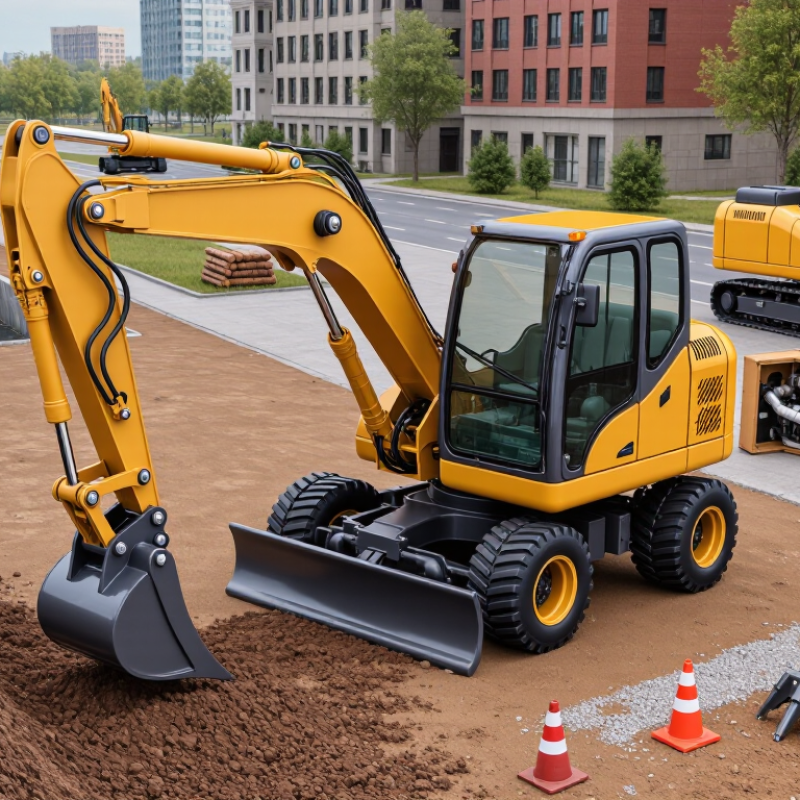
A mobile excavator is a digging machine mounted on wheels rather than continuous tracks. Its wheeled chassis lets it move between nearby work areas without a separate transport vehicle in many situations. A cab, boom, arm, and bucket work together to dig, lift, and place material. The operator uses controls to direct hydraulic fluid, which moves the boom and bucket with considerable force. Smooth movements matter. A sudden swing can shift the load or disturb loose ground.

On site, stabilizers or a front blade may help steady the machine before digging. The operator checks the ground, nearby obstacles, and the machine’s working range. A bucket cutting through damp soil feels different from one working in compacted gravel; the machine’s response depends on the material. Wheeled models can be useful on paved or firm surfaces, but soft ground may limit traction and stability. Not always. Tire condition, hydraulic hoses, and fluid levels also deserve regular inspection. These checks can be missed when a job is rushed, and that is a real weakness in day-to-day operation. A mobile excavator’s reach and lifting capacity vary by model, so operators should consult its operating information before handling heavy loads.

What Types of Mobile Excavators Are Made in China?

What Is the Best Mobile Excavator from China?
What Types of Mobile Excavators Are Made in China?

Chinese-made mobile excavators come in several practical configurations. Wheeled excavators travel quickly between nearby work areas and suit road repairs, utility work, and firm urban sites. Crawler excavators use tracks for better grip on soft or uneven ground, but usually need transport between distant jobs. Compact and mini excavators fit narrow yards and indoor renovation sites, where a full-size machine may not turn easily. Small is useful.

Some manufacturers also offer long-reach models for clearing drainage channels or working beside embankments. Their extended booms can reach farther, but they may sacrifice lifting capacity and need careful setup. I would not choose by maximum digging depth alone; that is an easy mistake. Compare operating weight, transport dimensions, bucket options, hydraulic flow, and visibility with the actual job conditions.

Tips: Check the ground before choosing wheels or tracks. Ask for written specifications, parts availability, and service details. If possible, inspect a working unit and test controls, boom response, and stability. A brochure can look convincing. Real site conditions may expose a mismatch.

What Is the Best Mobile Excavator from China?

Common Excavator Types by Typical Operating Weight

China manufactures wheeled and tracked excavators across a wide range of sizes. The best type depends on the work: wheeled models suit jobs that require frequent road travel, while tracked models are designed for varied terrain. Weight ranges are approximate; specifications vary by model and configuration.

Which Features Determine the Best Chinese Model?

The best Chinese mobile excavator is not simply the machine with the largest engine or deepest digging figure. Match its operating weight and reach to the work. A road-maintenance crew may value compact dimensions and quick travel, while a drainage contractor needs stable digging and enough boom reach. Check the machine’s weight against the surfaces it will cross. That detail is easy to overlook.

Hydraulic response matters during a full workday. Test how smoothly the boom, arm, and bucket move together, especially when lifting a loaded bucket beside a trench. A machine that feels quick but jerky may tire its operator and slow precise work. Check the tire setup, steering, braking, and stabilizers on representative ground. A clean demonstration pad tells only part of the story. Not always.

Service access is another deciding feature. Can a technician reach filters and inspection points without removing several panels? Ask for maintenance intervals, parts availability, and clear operating documentation, then verify them with local service providers. Compare rated lifting capacity at the actual working radius, not just the headline maximum. Also check cab visibility, control layout, and noise during a realistic trial. I would not choose from a specification sheet alone; even a careful comparison can miss how the machine behaves after hours on rough, wet ground.

What Is the Best Mobile Excavator from China? – Which Features Determine the Best Chinese Model?

There is no single best model for every job. The right choice depends on the work, road-travel requirements, attachments, operating conditions, and local service support. The ranges below are general selection guidance; specifications vary by model and configuration.

Feature What to Look For Why It Matters How to Assess It
Operating weight and size Choose a class that matches the lift, digging, and access needs of the job. Wheeled excavators are available across a range of operating weights, commonly from under 10 tonnes to well over 15 tonnes. A heavier machine can offer greater stability and capacity, but may be less suitable for restricted sites or road-weight limits. Check operating weight with the intended boom, bucket, counterweight, and attachments fitted. Confirm transport and axle-load requirements.
Engine power and emissions compliance Match engine output to the machine’s weight and hydraulic demands; verify the emissions certification required in the country where it will operate. Adequate power supports digging and travel performance. Emissions rules and fuel requirements differ by market. Request the engine data sheet, rated power and applicable emissions documentation for the exact configuration.
Travel speed and road suitability Look for a road-travel speed appropriate to the route, along with suitable brakes, lights, tires, and required road equipment. Wheeled excavators can move between nearby jobs without a low-bed transporter, where local rules and site conditions permit. Compare maximum travel speed with legal limits, stopping performance, tire rating, and the machine’s road-homologation status.
Digging geometry Compare maximum digging depth, reach, dump height, and bucket range with the tasks the machine will perform. A machine that cannot reach the required depth or loading height may need repositioning or a different configuration. Use the manufacturer’s working-range chart for the exact boom, arm, bucket, and tire setup—not just headline figures.
Hydraulic performance Check pump flow, pressure, auxiliary circuits, and compatibility with planned tools such as breakers, grabs, or tiltrotators. Attachments have specific hydraulic requirements. Mismatched flow or pressure can reduce performance or damage equipment. Ask for the hydraulic specifications and confirm attachment requirements, return-line arrangements, and control options.
Stability and support equipment Assess whether the machine needs outriggers, a dozer blade, or both for its intended lifting and digging work. Proper support can improve stability while working, especially on uneven ground or when lifting loads. Review the rated lift chart and operating instructions. Never rely on a general lifting capacity without checking working position and support setup.
Tires, axles, and steering Select tires and drivetrain features for the expected mix of paved roads, compacted ground, and soft or uneven terrain. Tire choice affects traction, ride, road wear, and ground pressure; steering and axle features affect maneuverability. Check tire specifications, axle oscillation or locking features, steering modes, and the availability and cost of replacement tires.
Fuel use and operator comfort Look for controllable work modes, clear visibility, ergonomic controls, suitable cab ventilation, and accessible service points. Fuel consumption and operator fatigue affect total operating cost and productivity over time. Request fuel-use information for comparable duty cycles and arrange a practical demonstration with the intended operator.
Parts, warranty, and service support Confirm local access to trained technicians, routine maintenance parts, diagnostic support, and written warranty terms. Downtime and parts delays can outweigh a lower purchase price, particularly for machines used intensively. Verify local service coverage, parts lead times, warranty exclusions, and support arrangements before purchase.

Practical takeaway: The best Chinese mobile excavator is the model whose verified specifications, road compliance, attachment compatibility, operating costs, and local support fit the intended work—not simply the one with the highest headline power or lowest purchase price.

Which Chinese Manufacturers Offer Notable Mobile Excavators?

China’s mobile-excavator market includes large construction-equipment groups, specialist wheeled-machine makers, and export-focused manufacturers. Larger groups often offer several machine sizes, established production systems, and access to parts networks. Specialist makers may concentrate on compact excavators for narrow streets, utility work, or farm access roads. Export-oriented factories can offer different cab layouts and attachments, but options vary by model.

The comparison is not tidy. A low purchase price says little about performance after a long day on uneven ground. Check rated operating weight, travel speed, axle design, hydraulic flow, and the reach needed for your usual jobs. Ask how quickly routine parts can be supplied in your region. A polished brochure is not proof. Request operating videos, service documents, and references from users with similar workloads. Also confirm that the machine’s specifications meet local requirements. One detail is easy to overlook: wheel size and steering mode can affect stability and maneuverability more than a headline horsepower figure. Some manufacturers publish sparse service information, so buyers may need to ask sharper questions before comparing offers.

How to Choose a Model for Your Work Requirements?

What Is the Best Mobile Excavator from China?

How to Choose a Model for Your Work Requirements?

The best wheeled excavator is the one that fits your ground, access, and daily workload. Measure the narrowest gate and check the machine’s transport width before comparing digging depth. On paved streets, tires and suitable travel speed matter. On soft ground, stability and tire choice deserve more attention. Small details count.

China Construction Machinery Association data recorded 195,018 excavator sales in 2023, including 105,038 exports. This signals a broad export market, not proof that every model suits your job. Treat those figures as context, then compare documented operating weight, bucket capacity, digging reach, and hydraulic flow.

Ask for the rated figures and test the machine under a representative load, if possible.

Match the attachment system to your actual tasks. A breaker, for example, may need different hydraulic flow than a standard bucket. Check parts availability, service response, warranty terms, and operator visibility in the cab.

Ask how fuel use was measured; quoted figures can be optimistic. That deserves scrutiny.

A machine that fits the budget but sits idle awaiting parts is not a bargain. Keep your shortlist tied to real site measurements and the work you repeat most often.

Optimized by Optimole