Why Choose Ultrafiltration Water System at Canton Fair 139?
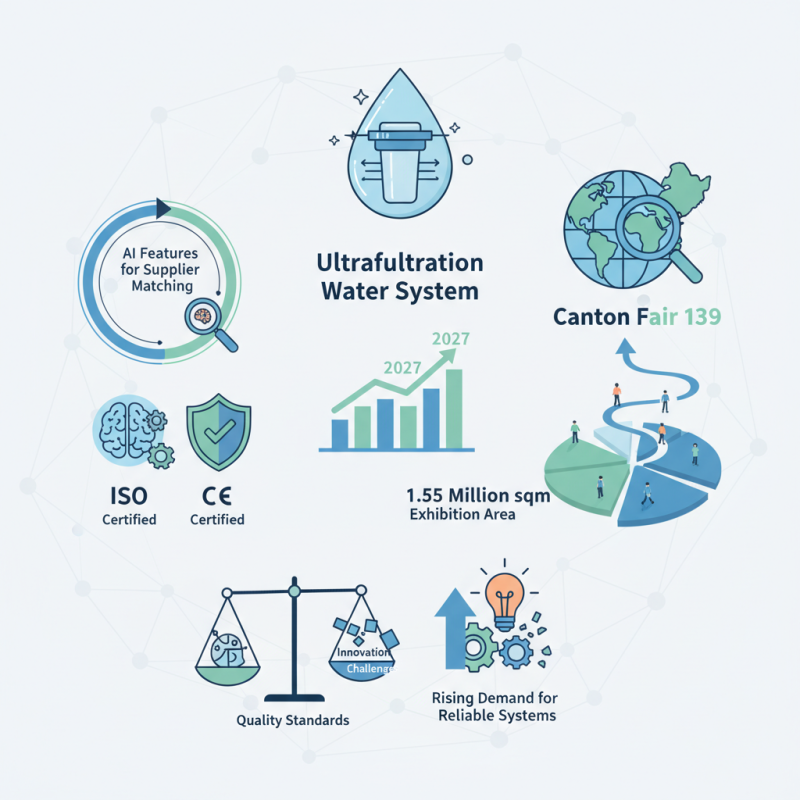
The Ultrafiltration Water System has gained recognition in the water treatment industry for its efficiency and effectiveness. According to recent industry reports, the global market for ultrafiltration technology is projected to reach $7.2 billion by 2027, reflecting its growing importance in water purification. Renowned expert Dr. Alice Chen states, "The Ultrafiltration Water System is revolutionizing how we approach clean water access."
At the upcoming Canton Fair 139, the spotlight will be on innovative technologies, including these systems. With the introduction of AI features, potential buyers can swiftly identify suppliers that meet strict qualifications. This includes necessary certifications like ISO and CE. This advancement enhances the efficiency of navigating the expansive 1.55 million square meters exhibition area.
However, challenges remain. Many suppliers still struggle to meet quality standards. The demand for reliable Ultrafiltration Water Systems continues to rise, emphasizing the need for consistent innovation. As the industry evolves, it is essential for stakeholders to reflect on their practices and ensure they align with the growing expectations of the global market.
Advantages of Ultrafiltration Water Systems in Modern Filtration
Ultrafiltration water systems have become essential in modern water treatment. They serve as a crucial barrier against contaminants. According to industry reports, these systems can remove particles as small as 0.01 microns. This makes them effective in filtering bacteria and viruses.
The advantages of ultrafiltration extend beyond just purification. These systems are known for their energy efficiency. They consume less energy compared to reverse osmosis systems. Not only that, but they also require minimal maintenance. Reports suggest that ultrafiltration systems can last up to ten years with proper care.
Tip: Regularly check membrane integrity. This ensures optimal performance and prolongs system life. However, some users overlook this step, resulting in decreased efficiency. It's vital to remain vigilant about maintenance practices. Filtering water through ultrafiltration also enhances taste, appealing to many consumers. Remember, investing in quality filtration impacts health significantly.
Key Differences Between Ultrafiltration and Traditional Water Treatment Methods
Ultrafiltration (UF) water systems have gained popularity for their efficiency and effectiveness. Unlike traditional methods, UF uses membranes to separate impurities. This process removes bacteria, viruses, and larger particles. It delivers cleaner water without the need for harmful chemicals. The ultrafiltration process is often more straightforward and thus easier to operate.
Traditional treatment methods, like chlorination, rely heavily on chemicals. This can lead to by-products that may be harmful. Additionally, these systems often require more maintenance. In contrast, ultrafiltration systems generally have lower maintenance needs. They offer a more sustainable approach to water treatment. However, they might not remove all contaminants, highlighting areas for improvement.
The choice between these methods really depends on specific needs. Users must evaluate the water quality they wish to achieve. Sometimes, traditional methods may suit particular situations better. It's essential to weigh the pros and cons before deciding. Addressing these aspects can lead to smarter choices in water purification.
Impact of Ultrafiltration on Water Quality and Contaminant Removal Efficiency
Ultrafiltration (UF) technology is important for ensuring water quality. It effectively removes contaminants, including bacteria, viruses, and suspended solids. According to a 2021 report by the World Health Organization, ultrafiltration systems can remove nearly 99% of pathogens. This high efficiency is beginning to gain recognition. However, not every system operates at the same level.
UF membranes have pore sizes ranging from 0.01 to 0.1 micrometers. This allows them to filter out larger particles while allowing smaller molecules, like water, to pass through. Studies suggest that UF systems can significantly reduce turbidity. A drop from 10 NTU (Nephelometric Turbidity Units) to less than 0.5 NTU is often achievable. But, not all models are equal. Some systems may underperform due to membrane fouling or inadequate maintenance.
**Tip:** Regular maintenance and cleaning schedule are crucial for optimal performance. Neglecting this can lead to reduced efficiency.
In certain situations, ultrafiltration may not remove all contaminants, especially smaller organic molecules. Additionally, user experience can vary significantly. Understanding your local water conditions can help in selecting the right system. This decision impacts water quality, health, and usability.
**Tip:** Always test your water before choosing a filtration system to gauge efficacy.
Why Choose Ultrafiltration Water System at Canton Fair 139?
| Parameter | Ultrafiltration Performance | Conventional Filtration Performance |
| Contaminant Removal Efficiency (%) | 95-99% | 70-85% |
| Removal of Bacteria (%) | 99.99% | 90-95% |
| Removal of Viruses (%) | > 90% | < 50% |
| Operational Pressure (bar) | 1-3 | 3-8 |
| Energy Consumption (kWh/m³) | 0.1-0.5 | 0.5-1.5 |
| Maintenance Frequency (months) | 6-12 | 3-6 |
Market Trends: Growth Statistics and Adoption Rates of Ultrafiltration Systems
The adoption of ultrafiltration water systems is on the rise worldwide. Recent market reports indicate a growth rate of 12% annually. This surge reflects increasing awareness of water quality issues. Consumers and industries are seeking innovative solutions. Ultrafiltration offers a reliable, efficient method to remove contaminants.
In regions facing water scarcity, ultrafiltration systems are becoming vital. Data shows that these systems are now used in over 50% of water treatment facilities in urban areas. They are particularly appreciated for their ability to produce clean drinking water. Yet, challenges remain in terms of energy consumption and maintenance.
Companies are continuously innovating to improve these systems. Emerging technologies aim to enhance performance while reducing costs. However, more education is needed about the benefits and limitations of ultrafiltration. Adoption rates could be higher with better consumer understanding. The potential for growth in this sector is significant but not without obstacles.
Application Areas: Industries Benefiting from Ultrafiltration Technology
Ultrafiltration technology offers numerous advantages across various industries. This method excels in water purification, making it essential for sectors like food and beverage. In these industries, maintaining high-quality water sources is critical. Ultrafiltration efficiently removes contaminants, ensuring safe processing of products. Employers appreciate its cost-effectiveness, too.
In the healthcare sector, ultrafiltration plays a crucial role. Hospitals require clean water for patient care and equipment sterilization. The technology effectively reduces pathogens, enhancing safety for patients. Moreover, wastewater treatment facilities benefit from this technology. It aids in recycling processes, making water reuse feasible and combating water scarcity.
Despite its benefits, there are challenges. Some operators may struggle with maintaining filtration systems. Regular maintenance is essential to ensure optimal performance. Additionally, initial setup costs can be a barrier for smaller businesses. This calls for careful planning and investment. As industries explore ultrafiltration, they must weigh these factors for long-term success.