China Top Prefabricated Substation Manufacturers
China’s Prefabricated Substation market serves projects that need compact, factory-assembled power equipment. A Prefabricated Substation can bring transformers, switchgear, protection devices, and control systems together inside a transportable enclosure. For buyers, the challenge is not simply finding a low-cost supplier. It is checking whether the complete unit suits the site, operating conditions, and maintenance plan.
As an expert reference, power-distribution engineer Thomas A. Short has written extensively about distribution systems and equipment. A useful paraphrase of the engineering lesson is: “Assess the substation as an integrated system, not as separate components.” This is a paraphrase, not a verbatim quotation. The distinction matters. A well-made enclosure cannot compensate for poorly matched switchgear, unclear relay settings, or difficult cable access.
This guide introduces China-based manufacturers and the questions worth asking before shortlisting them. Compare product configurations, stated standards, testing records, customization options, and after-sales support. Ask for drawings that show cable entry points and equipment clearances. Request evidence of routine and type testing where applicable, then confirm which tests cover the proposed configuration. A polished brochure is not enough. Factory capability matters, but so do documentation and service response after delivery. Some comparisons will remain imperfect because suppliers disclose different levels of detail. That gap deserves attention, not guesswork.
Prefabricated Substations: Definition and Role in China’s Power Sector
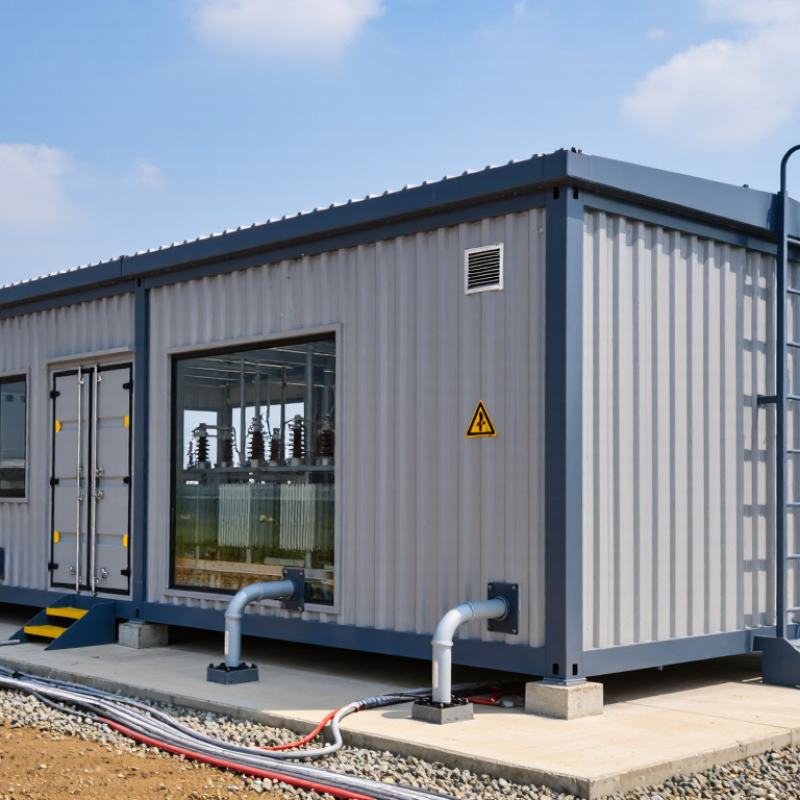
Prefabricated substations are compact power facilities assembled largely in a factory and transported to site in modules or enclosed units. They typically combine transformers, switchgear, protection systems, and monitoring equipment. Once connected, they help convert voltage and control the flow of electricity between transmission networks and local users. In practical terms, a unit beside an industrial park may receive high-voltage power and distribute it at safer, usable levels to nearby buildings and production lines. The equipment is housed together. That can reduce on-site construction time.
China’s power sector serves dense cities, remote communities, factories, and expanding renewable-energy projects. Prefabricated substations can support this varied demand where space is limited or a connection is needed on a tighter schedule. They may also help standardize installation and simplify later maintenance, provided the design suits local climate, grid conditions, and load requirements. Details matter: ventilation, drainage, cable access, and protection settings can affect reliability. A factory-built unit is not automatically a better fit. The term itself can be a little misleading, since levels of prefabrication differ between projects. Engineers still need to check interfaces, site foundations, and operating needs carefully. Small mismatches can cause delays.
China’s Prefabricated Substation Manufacturing Landscape
China’s prefabricated substation manufacturing landscape is shaped by expanding electricity demand and the need to connect new loads quickly. The National Energy Administration reported that China’s electricity consumption reached 9.22 trillion kWh in 2023, rising 6.7% year on year. The China Electricity Council recorded 527.5 billion yuan in grid investment that year, up 5.4%. These figures help explain demand for compact, factory-assembled substations in industrial parks, renewable-energy projects, and urban developments.
Manufacturers typically integrate transformers, switchgear, protection systems, and control equipment within transportable enclosures. Factory assembly can reduce on-site wiring and shorten installation work, but it does not remove the need for careful commissioning. Buyers should examine insulation performance, thermal management, corrosion protection, and test records. A door seal, cable entry, or ventilation path can become a weak point in harsh outdoor conditions. Small details matter.
The landscape includes large electrical-equipment producers and specialized engineering firms, with capabilities varying by voltage class, customization, and project scale. Reliable comparisons require more than catalog specifications: check whether factory acceptance tests cover the actual configuration and whether documentation supports later maintenance. Reported investment figures indicate market momentum, not uniform quality or guaranteed project outcomes. The figures cannot show every regional difference, and that limitation deserves attention.
Key Technologies, Components, and Quality Standards
Prefabricated substations bring a transformer, medium- and low-voltage switchgear, protection devices, and control equipment into one enclosure. Their compact layout saves installation time, but it leaves little room for heat and maintenance access. Heat matters. Ventilation or cooling should match the transformer’s losses, local climate, and expected load profile.
Reliable designs coordinate protective relays, circuit breakers, busbars, grounding, and monitoring systems. Relay settings must suit the upstream network and downstream equipment; a correct device with poor settings can still fail to isolate a fault properly. Check cable entry points, door interlocks, and clearances, too. These details look minor on drawings. On site, they shape safe operation.
Quality checks should cover insulation, wiring, mechanical operation, and protective functions. Temperature-rise and short-circuit performance should be supported by applicable type-test evidence, while routine tests verify each completed unit. Enclosure protection and corrosion resistance need to suit the actual installation environment, not just a catalogue description. Ask for test records, drawings, and component specifications. Standards vary by project and region, so acceptance criteria should be agreed before production. Even careful factory testing cannot reproduce every site condition; that limitation deserves honest review during commissioning.
How to Evaluate and Select a Chinese Manufacturer
China Top Prefabricated Substation Manufacturers
How to Evaluate and Select a Chinese Manufacturer
Selecting a Chinese prefabricated substation manufacturer takes more than comparing prices. Check whether the supplier can match the project’s voltage, capacity, climate, and installation conditions. Ask for general arrangement drawings, equipment lists, and clear interface details. Small details matter. For example, confirm cable entry direction, ventilation openings, and space for maintenance before approving the design.
Review the manufacturer’s quality controls and request relevant factory test records. These may include checks of wiring, insulation, protection functions, and enclosure performance. Confirm which components are sourced externally and how substitutions are approved. During a factory visit, inspect assembly areas, labeling, and inspection records. A tidy floor is useful, but it does not prove consistent quality. Ask staff to explain how they handle design changes and nonconforming parts.
Compare quotations against the same technical specification, not just the headline price. Clarify delivery scope, packing, commissioning support, spare parts, and response times for technical questions. Check references for projects with similar ratings and environmental demands. It is easy to overvalue polished presentations; I would give more weight to traceable test evidence and precise answers. Some points may remain unclear until installation, so record assumptions and open questions before signing.