
2026 Top Powder Detergent Manufacturers for Global Buyers

Choosing a Powder Detergent manufacturer for global supply involves more than comparing prices. Buyers must consider product consistency, production capacity, packaging options, and communication. A sample may look promising, but repeat orders reveal more. Small details matter.

This guide introduces manufacturers serving international buyers and highlights practical points for evaluating them. Look beyond a polished product sheet. Ask how the supplier controls granule size, manages moisture, and checks batch quality. Review available test reports and certifications, and confirm their scope directly with the manufacturer. Packaging deserves attention too: a sealed bag, clear label, and sturdy carton can affect storage and shipping. These details are easy to overlook. They are not.

Supply requirements vary by market, order volume, and distribution plan. A factory suited to bulk shipments may not fit a buyer needing varied package sizes or flexible production schedules. Compare minimum order quantities, lead times, sample terms, and quality procedures before making a decision. Request written specifications, then check whether delivered goods match them. This guide cannot identify one perfect supplier for every buyer. Shortlists have limits, and a low quoted price does not tell the whole story. Use the manufacturers below as a starting point, not a substitute for careful checks.
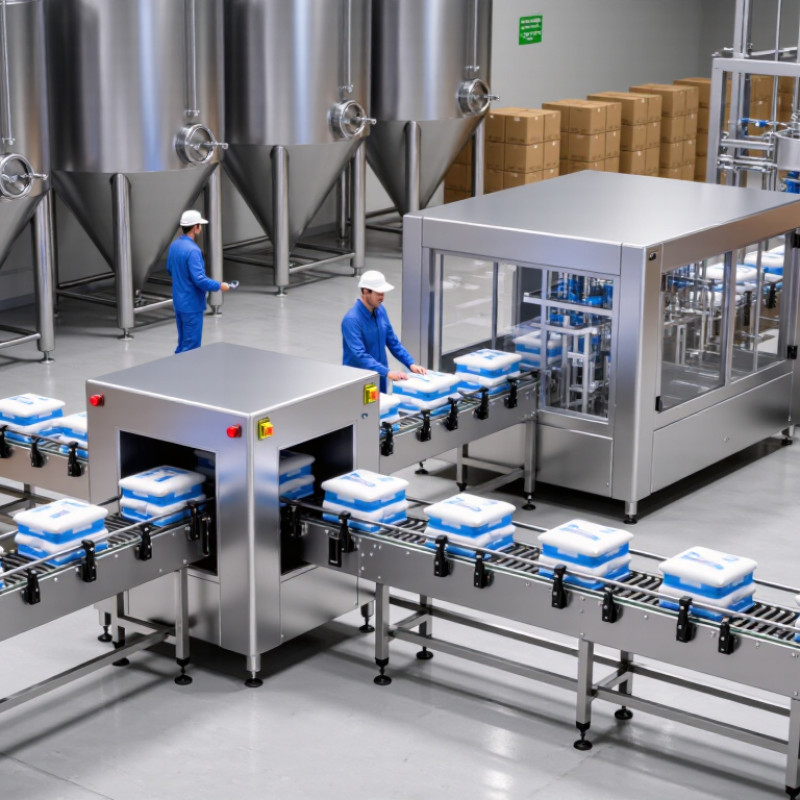
2026 Top Powder Detergent Manufacturers for Global Buyers

Map 2026 Powder Detergent Manufacturers by Region, Scale, and Product Type

A useful 2026 supplier map starts with geography, then separates production scale and formulation. Grand View Research estimated the global laundry detergent market at USD 72.7 billion in 2023, with growth projected through 2030. That figure covers more than powder, so it should not be treated as powder sales alone. A wider market, though, signals substantial demand for manufacturers able to serve different price points and wash conditions.

East and South Asia include large-scale producers serving domestic and export markets, alongside smaller plants focused on regional distribution. Europe and North America offer established manufacturing bases, including suppliers making concentrated powders and specialized formulations.

In Latin America, Africa, and the Middle East, regional producers can compete through local packing, familiar fragrances, and products suited to water hardness. Scale matters. A multinational may offer multiple plants and consistent volumes; a mid-sized manufacturer may provide shorter runs or private-label flexibility. Check actual capacity, export experience, and quality documentation rather than relying on a factory’s headline output.

Product type is another useful filter: standard powders, compact powders, hand-wash products, and formulations designed for hard water or lower-temperature cycles. Ask for sample performance in the intended machine and water conditions. Small details count, such as whether granules dissolve cleanly in a cool wash. This map will never be perfectly neat; public market reports rarely separate powder production consistently by region, so supplier claims need direct verification.

Compare Formulas Using ISO 2271 Active-Matter and ISO 4316 pH Tests

Global buyers assessing powder detergent manufacturers should request comparable test data, not rely on “high-performance” claims. ISO 2271 measures anionic-active matter through a two-phase titration. This result indicates the level of key anionic surfactants, but it does not describe every ingredient or predict cleaning performance on its own. Ask for the tested batch, reported value, method, and laboratory details.

Tips: Compare samples at the same stated concentration and water temperature. For ISO 4316, check the solution concentration and temperature in the report; pH is meaningful only alongside those conditions. Keep sealed retain samples. Small differences matter.

A powder can show a strong active-matter result and still perform differently in hard water or on greasy fabric. ISO 4316 provides a potentiometric pH reading for an aqueous solution, useful for checking consistency and spotting unusual shifts between batches. It is not a complete safety or performance assessment. Request recent, batch-specific reports and verify that the sample identity matches the commercial lot. If figures look unusually tidy, ask how repeatability and measurement uncertainty were handled. Tests reduce guesswork, not all of it.

Check Biodegradability Claims Against OECD 301’s 60% in 28 Days Benchmark

For global buyers comparing powder detergent manufacturers, “biodegradable” is not a test result. Request the laboratory report, test method, and full result curve. OECD Test Guideline 301 measures ready biodegradability over 28 days. Most methods use a pass level of 60% of theoretical oxygen demand or carbon dioxide production; the DOC Die-Away method instead uses 70% dissolved organic carbon removal. These thresholds are not interchangeable. Check the method name, not just the headline number. OECD TG 301 also notes that the 10-day window applies where specified.

Ask whether the result covers the complete powder or selected ingredients, such as surfactants. Builders, mineral salts, fragrances, and dyes can affect how a formulation’s results should be interpreted. The report should identify the sample, test conditions, and calculation basis. Ask when the pass level was reached, too. A result at day 28 may tell a different story from one reached much earlier. OECD’s guideline is a useful benchmark, but it does not erase uncertainty about real-world conditions. One pass result is reassuring, not the whole story.

Rank Manufacturers by Production Capacity, Certifications, Export Reach, and MOQ

A useful 2026 supplier ranking should compare verified output, not impressive-looking factory claims. Ask for monthly powder capacity, recent utilization, and a production schedule for your formula and pack size. Then check whether the supplier can provide batch records and independent audit evidence. Certifications matter, but scope matters more: an ISO certificate for one site does not automatically cover another. The ISO Survey tracks certified management systems worldwide; certification is evidence of a system, not proof that every shipment will meet specifications. A sample run helps reveal what paperwork cannot.

Export reach needs practical checks. The World Bank’s Logistics Performance Index 2023 assessed 139 economies, covering customs, infrastructure, shipment arrangements, and delivery reliability. UNCTAD’s Review of Maritime Transport 2024 reported that seaborne trade grew 2.4% in 2023, while containerized trade grew only 0.3%.

That uneven movement makes port access and backup routing worth asking about. Check shipment records for your destination, not just a list of countries served. Compare MOQ against your forecast, warehouse space, and cash cycle; a low MOQ can still create costly packaging leftovers. Small details matter.

Rankings also have limits: capacity data may be self-reported, and public records rarely show real-time line availability. Verify the figures before placing a trial order.

Choose a Supplier by Batch Quality, Packaging, Lead Time, and Landed Cost

For global buyers, compare powder detergent manufacturers by repeatable batch results, not a polished sample alone. Request certificates of analysis from three recent lots and check moisture, active matter, bulk density, and dissolution time. Small differences matter: a damp powder can cake in a sealed bag, while inconsistent density can disrupt filling and shelf presentation. Ask suppliers to explain their test methods and retain a sealed sample from each shipment.

Packaging and delivery affect the landed cost. The OECD’s Global Plastics Outlook reports that packaging generated about 40% of global plastic waste in 2019, making material choice and pack size practical procurement considerations. Meanwhile, UNCTAD’s Review of Maritime Transport 2024 reported that spot container rates from Shanghai to Europe rose 256% between October 2023 and June 2024. Freight can shift quickly. Compare quotes using the same delivery terms, shipment volume, port charges, duties, and inland transport; a low factory price may not stay low after arrival.

Tips: Request carton drop-test results, bag-seal details, and a written production schedule. Ask for lead times covering production and port handover separately. Keep one detail in view: forecasts can slip, and a spreadsheet cannot show every delay.

2026 Top Powder Detergent Manufacturers for Global Buyers - Choose a Supplier by Batch Quality, Packaging, Lead Time, and Landed Cost
A practical comparison of regional supplier profiles for export procurement
Supplier profile Batch quality checks to confirm Common export packaging Indicative MOQ Typical production lead time Estimated landed cost to Rotterdam
East Asia export producer
Broad formulation and packaging range
Request a batch COA covering moisture, active matter, bulk density, pH, and appearance; approve a retained pre-shipment sample. 20–25 kg woven bags with PE liner; consumer packs commonly available by arrangement. About 1 × 20-ft container; confirm net weight and loading plan. 25–40 days after formula, artwork, and deposit approval. USD 650–950 / metric ton
South Asia value-focused producer
Often considered for cost-sensitive tenders
Check formulation consistency, sieve/granule profile, moisture, and active matter against a signed specification; request lot traceability. 25–50 kg sacks; printed retail bags may require a higher order quantity. About 1 × 20-ft container; private-label minimums vary. 30–50 days after specification and packaging approval. USD 620–920 / metric ton
Southeast Asia regional producer
Potential fit for tropical-market formulations
Review COA and stability data; verify moisture protection, fragrance retention, and packaging suitability for humid storage conditions. 20–25 kg lined bags and consumer-size pouches, subject to line capability. About 1 × 20-ft container; assortment orders may have separate minimums. 25–45 days after final approval. USD 650–980 / metric ton
Middle East export-oriented producer
May offer access to nearby regional markets
Confirm batch COA, declared ingredients, local regulatory documentation, and performance under the intended water-hardness conditions. 25 kg bags or bulk sacks; retail packs depend on available packaging lines. About 1 × 20-ft container. 25–45 days after order confirmation and artwork approval. USD 700–1,050 / metric ton
Eastern European producer
Potential option for shorter regional replenishment
Request current safety data, ingredient and allergen declarations where applicable, batch COA, and evidence of quality-system controls. 10–25 kg bags, big bags, or consumer packs depending on supplier capability. Typically pallet or truck quantities; export container minimums may apply. 15–35 days, depending on stock and packaging requirements. USD 750–1,150 / metric ton
Latin American export producer
May suit buyers serving the Americas
Check batch-to-batch conformity, packaging integrity, product-language requirements, and destination-market compliance documents. 20–25 kg bags; retail packs and label languages are market-specific. About 1 × 20-ft container for export orders; confirm availability for mixed SKUs. 30–55 days after order and packaging approval. USD 800–1,250 / metric ton
How to read these figures: Cost and lead-time ranges are indicative 2026 planning estimates, not quotes or verified offers from specific manufacturers. Landed-cost estimates are per metric ton to Rotterdam and assume a standard export-grade powder detergent, ocean shipment, insurance, and basic destination handling; import duty, VAT, exceptional surcharges, and inland delivery are excluded. Actual costs vary with formula, order size, packaging, origin, freight rates, and Incoterms.
Buyer checks: Obtain current specifications, a recent batch COA, representative samples, packaging details, regulatory documents, and a firm quotation. Agree measurable acceptance limits and the inspection method in the purchase contract before production.
Optimized by Optimole