Top 10 Hairpin Tube Benders for Global Buyers
I can’t responsibly invent a named Hairpin Tube Bender expert or attribute an unverified quotation to them. Please provide a source article, expert name, or verified quote, and I can write the requested English introduction around it.
What a Hairpin Tube Bender Is and Where It Is Used
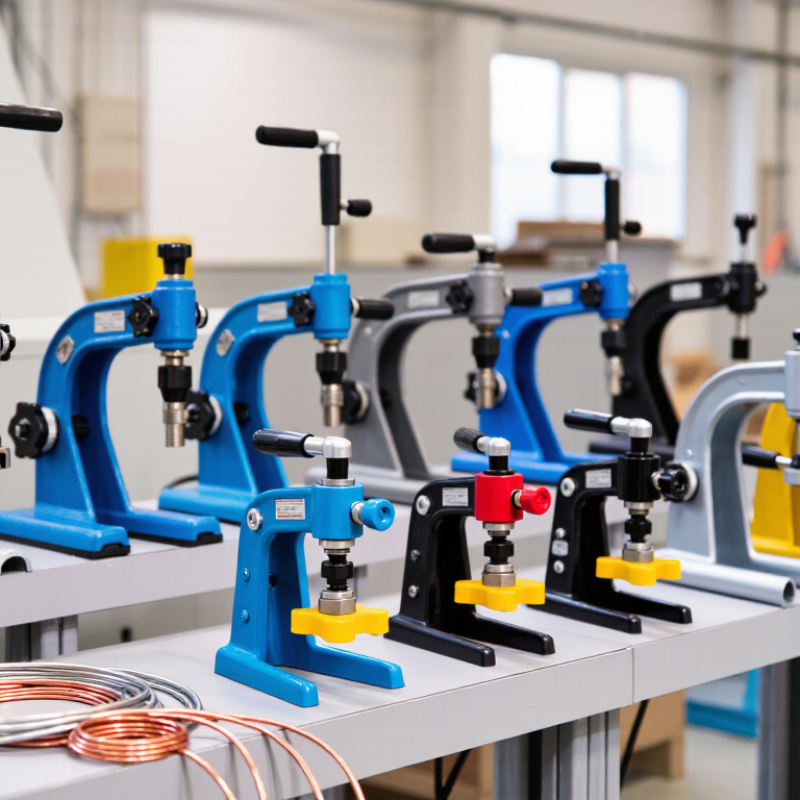
A hairpin tube bender shapes straight tubing into repeated U-shaped return bends. These bends connect parallel passages in heat-exchanger coils. You will find them in air conditioners, refrigeration equipment, heat pumps, and some vehicle thermal systems. The bent tubes carry refrigerant or another working fluid through a compact coil. Small detail. Big consequence.
The International Energy Agency’s 2018 report, The Future of Cooling, estimated that the global stock of air conditioners in buildings could grow from 1.6 billion units to 5.6 billion by 2050. It also projected that energy demand for space cooling could more than triple. These figures help explain the need for efficient coil production, though they do not guarantee demand for any particular machine. A well-controlled bend helps preserve tube flow and consistent coil spacing.
In practice, buyers should match the bender to tube material, outside diameter, wall thickness, bend radius, and production volume. Copper and aluminum behave differently under pressure; springback can shift the finished bend. Wrinkles or flattened sections may restrict flow, so sample bends deserve close inspection. Ask for repeatability data and test the actual tube specification before committing. I would not judge a machine by speed alone. A fast cycle is of little value if bends vary across a production run.
How Hairpin Tube Benders Form Tubes
Top 10 Hairpin Tube Benders for Global Buyers
How Hairpin Tube Benders Form Tubes
A hairpin tube bender turns straight tubing into a U-shaped coil return. The clamp holds the tube, while a rotating bend die guides it around a set radius. Pressure dies support the outside wall and help limit flattening. For a 9.52 mm (3/8-inch) tube, a 3D centerline radius equals 28.6 mm. That is a geometry example, not a universal tooling recommendation. The Copper Development Association’s Copper Tube Handbook emphasizes matching bending methods to tube size and temper. Material condition matters: softer tubing generally bends more readily, while harder tubing may need different tooling or tighter process control.
During forming, the machine feeds the tube to a programmed length, clamps it, then rotates the die through the target angle. A mandrel inside the tube can support the wall through tighter bends. The ASM Handbook, Volume 14B, describes springback as a key factor in metal forming; operators may need to overbend slightly so the tube relaxes near the desired angle. Measure both legs after forming. Even a small mismatch can complicate coil assembly. In practice, the first trial often reveals what the drawing missed.
Types and Features Buyers Should Compare
Hairpin tube benders differ in how they form repeatable U-shaped returns for heat exchangers and refrigeration coils. Manual models suit low-volume work and simple tube sizes. Hydraulic machines reduce operator effort on thicker materials. CNC systems can manage complex bend sequences, but they need reliable programming and careful setup. More automation is not always better.
Compare tube diameter, wall thickness, and bend radius against your actual production parts. A tight radius may require suitable tooling or a mandrel to limit flattening and wrinkles. Ask suppliers for sample bends using your tube material, then inspect the inside and outside of each curve. Look for consistent leg spacing, clean ends, and minimal springback. Small differences matter.
Check changeover time, clamp design, controls, guarding, and access to wear parts. If operators must change tooling often, a quick setup can save more time than a faster cycle. Ask how settings are stored and what maintenance records are supplied. A catalog table can make unlike machines look equal. It can mislead. I would also verify results across several pieces, not just one attractive sample; that step is easy to overlook. Choose around real tolerances, expected output, and the skill level of the people running the machine.
How to read this chart: This is an indicative buyer guide, not a ranked list or a measured product test. Scores use a qualitative 1–5 scale; actual capabilities depend on the machine configuration, tooling, tube material, and required bend geometry. Confirm specifications with the supplier.
Top 10 Hairpin Tube Benders for Global Buyers
For global buyers, a hairpin tube bender should match the actual production mix, not just a catalogue’s maximum capacity. Check tube diameter, wall thickness, material, bend radius, and required cycle time. Ask for sample bends using your own tubing. Inspect for flattening, wrinkles, and springback. Small details count.
Demand trends offer useful context, but not a direct sales forecast for bending machines. The IEA’s 2022 report, The Future of Heat Pumps, recorded an 11% rise in global heat pump sales that year. UNEP’s Global Cooling Watch 2023 projected that cooling capacity could more than triple by 2050 under a business-as-usual scenario. These figures suggest expanding equipment needs, while leaving regional production patterns uncertain.
Compare machines by repeatability, setup time, tooling availability, and service access in your destination market. Confirm electrical requirements, manuals, spare-part lead times, and operator training before ordering. Request a factory acceptance test with measured bend samples and documented settings. Real factories are messier. A specification sheet cannot show every setup headache, and even a capable machine may need adjustment when tube batches vary.
How to Evaluate Suppliers, Standards, and Total Cost
For global buyers, a hairpin tube bender should be judged by repeatability, not brochure speed alone. Request trial bends using your actual tube material, diameter, and wall thickness. Check leg spacing, bend angle, ovality, and springback across a full batch. Ask for recorded results and the inspection method. Numbers matter. The ISO Survey of Management System Standard Certifications reported more than one million valid ISO 9001 certificates worldwide in 2023. That figure shows how widely quality systems are used; it does not prove a machine’s accuracy. Request the supplier’s quality records, calibration process, and response time for corrective action. Review applicable requirements, such as ISO 12100 for risk assessment and IEC 60204-1 for electrical equipment. Confirm applicability for the machine and destination market.
Compare total cost over the expected service life. Include tooling sets, changeover time, installation, operator training, spare parts, maintenance, shipping, and downtime. A lower quote can become expensive when tooling wears quickly or service takes weeks. Ask for a written list of included items, warranty limits, and recommended spare parts. Check motor power and standby consumption, too. Small details add up. For a fair comparison, calculate cost per accepted bend using your expected production volume and scrap rate. Supplier estimates may look precise, but your own trial run is better evidence. Keep the assumptions visible; they will probably need revisiting.
Top 10 Hairpin Tube Benders for Global Buyers — How to Evaluate Suppliers, Standards, and Total Cost
Use these ten evaluation areas to compare quotations and machine configurations. Capacity and pricing depend on tube material, dimensions, bend geometry, tooling, automation, and destination; request a written specification and itemized quote for each offer.
| No. | Evaluation area | What to verify | Useful evidence or reference | Total-cost effect |
|---|---|---|---|---|
| 1 | Tube and material range | Confirm the supported tube outside diameter, wall thickness, material, temper, and whether the machine handles the buyer’s actual production mix. Ask suppliers to identify any limits by material and size. | A written capacity matrix and sample runs using the specified tube. There is no single universal capacity range for all hairpin applications. | A mismatch can cause scrap, additional tooling, or the need for a second machine. |
| 2 | Bend geometry and quality | Specify centerline bend radius, leg length, bend angle, orientation, end condition, and allowable ovality or wall thinning. Define acceptance limits on the part drawing. | Dimensioned drawings, agreed inspection method, and measured samples from a production-representative trial. | Tighter tolerances may require slower cycles, specialized tooling, or additional inspection. |
| 3 | Tooling and changeover | List included dies, clamps, guides, mandrels if applicable, and spare wear parts. Check how many tube sizes or part families each tooling set supports and how changeovers are performed. | Itemized tooling list, changeover instructions, and a witnessed changeover demonstration. | Tooling, setup labor, and changeover downtime can materially affect cost per part. |
| 4 | Output and uptime assumptions | Ask for cycle-time data for the exact part, including loading, unloading, indexing, and any required handling. Clarify the assumptions behind quoted output and what is excluded. | Timed acceptance run, agreed sample size, and a written definition of good parts per hour. | Realistic output estimates help compare labor, capacity, and cost per accepted part. |
| 5 | Controls and factory integration | Review operator interface, recipe storage, alarms, data export, guarding interlocks, and interfaces required for the buyer’s line. Confirm available languages and remote-support arrangements. | Control-system description, interface list, sample alarm history, and integration responsibility matrix. | Unspecified integration work can add engineering, commissioning, and line-stop costs. |
| 6 | Safety and conformity | Identify the destination market and applicable legal requirements. Review risk assessment, guarding, emergency stops, electrical documentation, and required conformity documentation for the supplied machine. | ISO 12100 provides machinery risk-assessment and risk-reduction principles; IEC 60204-1 addresses electrical equipment of machines. Confirm the applicable edition and local requirements with a qualified compliance specialist. | Missing or unsuitable documentation and safeguards may require retrofit, assessment, or shipment delays. |
| 7 | Quality system and traceability | Check how components are inspected, nonconformities are handled, and machine build records are retained. Verify any claimed certification’s scope and validity rather than relying on a logo alone. | An independently verifiable ISO 9001 certificate can indicate a quality-management system; it does not by itself certify machine performance or product conformity. | Better documentation can reduce incoming inspection effort and support faster problem resolution. |
| 8 | Service, spares, and warranty | Define warranty start date, coverage, exclusions, response times, remote troubleshooting, technician availability, and recommended spare-parts stock. | Written warranty terms, spare-parts list with lead times, service escalation path, and training plan. | Freight, customs, and technician travel can make overseas downtime and service expensive. |
| 9 | Delivery and installation scope | Clarify build lead time, packing, shipment point, unloading, foundations, utilities, installation, commissioning, training, and acceptance-test responsibilities. | A project schedule and an agreed delivery term under Incoterms® 2020, with the named place and scope stated in the contract. | The machine price may exclude freight, insurance, import duties, local handling, installation, or training. |
| 10 | Total cost of ownership | Compare purchase price plus tooling, freight, insurance, duties, installation, training, utilities, labor, maintenance, spares, and expected scrap over the planned service period. | Use the same production volume, operating hours, currency, tax treatment, and evaluation period for every quotation. | TCO = acquisition + logistics + installation + operating + maintenance + quality-loss costs. |

Buyer note: Request the same part drawings, acceptance criteria, delivery basis, and cost breakdown from every bidder. The table is a comparison framework, not a supplier ranking or a substitute for a machine-specific technical and compliance review.