Top Epoxy Insulation Manufacturers in China
Epoxy Insulation is used in electrical equipment where dependable dielectric performance, mechanical strength, and dimensional stability matter. In transformers, switchgear, and other components, small differences in resin formulation or curing can affect service life. The details matter.
China has a broad network of insulation-material producers, from specialist resin formulators to manufacturers of molded parts and laminated components. This guide to the top Epoxy Insulation manufacturers in China offers a practical starting point for buyers comparing suppliers. It considers product range, manufacturing capabilities, quality documentation, customization, and responsiveness. These factors help explain how a company may fit a project, but they do not guarantee results in every application.
Supplier claims should be checked against current technical datasheets, test reports, and sample evaluations. Ask about operating temperature, dielectric strength, moisture resistance, and applicable testing methods. For molded parts, inspect dimensions, surface finish, and consistency between samples and production batches. For resin systems, confirm mixing ratios, curing conditions, shelf life, and storage requirements. A supplier’s certifications can be useful, but their scope and validity deserve careful review.
There is no perfect shortlist. Public information may be incomplete, and product specifications can change. Treat this overview as a research aid, then confirm requirements directly with each manufacturer. A clear technical discussion often reveals more than a polished catalog.
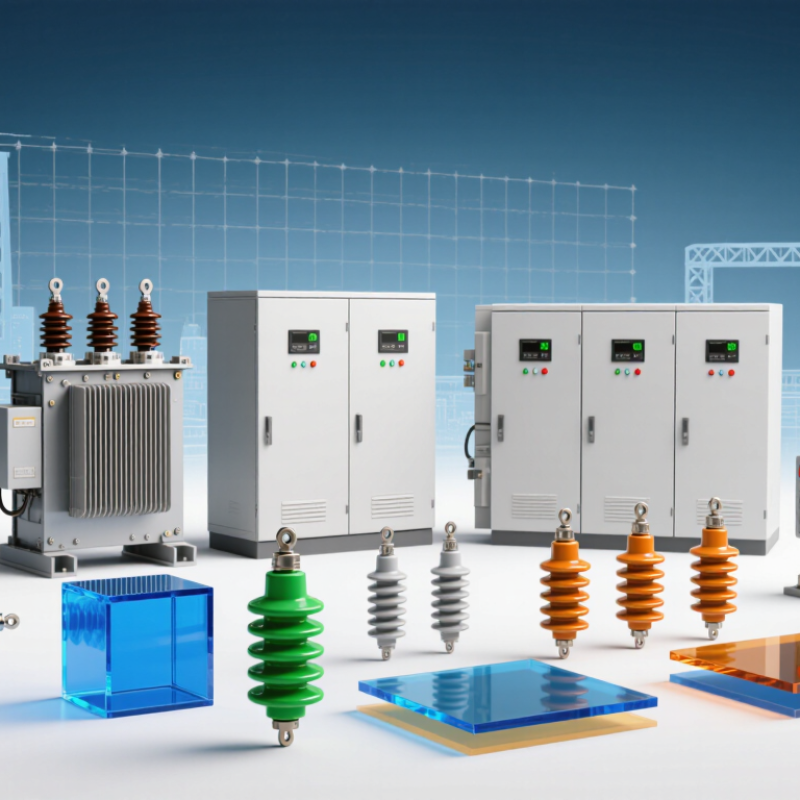
What Epoxy Insulation Is and Where It Is Used
Epoxy insulation is a cured resin material that separates electrical conductors from each other and from grounded structures. It can be cast around metal inserts, applied as a coating, or shaped into spacers and support insulators. Once cured, it forms a rigid barrier with useful dielectric strength and strong adhesion. In a switchgear cabinet, for example, an epoxy support can hold a busbar clear of the metal enclosure. Epoxy is also used in transformers, circuit breakers, and some motor components. Voltage, heat, moisture, pollution, and mechanical load all influence the design. That matters.
Performance depends on formulation, curing, geometry, and surface condition—not just the word “epoxy.” Voids, sharp edges, or incomplete curing can create weak points. Engineers should review dielectric test results, thermal limits, dimensions, and aging data for the intended conditions. Epoxy parts can be difficult to repair after cracking, and prolonged heat may shorten service life. Not everywhere. In damp or contaminated settings, surface design and protection need extra attention. One assumption worth questioning is that a material datasheet tells the whole story. It helps, but finished components still need suitable testing and careful evaluation against real operating conditions.
How China’s Epoxy Insulation Industry Has Developed
China’s epoxy-insulation industry has shifted from basic resin supply toward engineered systems for power equipment. Growth in electricity networks and renewable energy has increased demand for reliable insulation in switchgear, transformers, and control components. Manufacturers have also improved casting, vacuum degassing, and curing processes. Small process changes matter: trapped air can become a weak point under electrical stress.
The National Energy Administration’s 2023 National Electric Power Industry Statistics reported 216.88 gigawatts of newly installed solar capacity and 75.9 gigawatts of new wind capacity in China. These figures do not measure epoxy demand directly, but they show the scale of infrastructure expansion that supports demand for electrical components. Suppliers now face pressure to deliver consistent dielectric performance, heat resistance, and stable production across larger orders. Testing matters.
Industry development remains uneven. Some producers can tailor formulations for specific operating temperatures, while others still compete mainly on price. That is a real limitation. For buyers, test records, curing controls, and long-term reliability data are more useful than broad performance claims. Continued progress will depend not only on capacity, but also on repeatable quality and closer cooperation between material makers and equipment engineers.
Leading Epoxy Insulation Manufacturers in China
Top Epoxy Insulation Manufacturers in China
Leading Epoxy Insulation Manufacturers in China
China’s leading epoxy insulation manufacturers serve power-grid, switchgear, and industrial equipment projects. Their work is more than molding resin into neat, hard components. Consistent curing, clean surfaces, and controlled dimensions matter. A small void inside a casting can weaken electrical performance under stress.
Demand is tied to grid expansion. The International Energy Agency’s 2023 report, Electricity Grids and Secure Energy Transitions, says over 80 million kilometres of grids must be added or refurbished by 2040. China’s National Energy Administration reported electricity consumption of 9.22 trillion kWh in 2023. These figures point to sustained needs for dependable insulation, but they do not prove that every supplier meets the same standard.
Experienced buyers check test records for dielectric strength, partial discharge, thermal aging, and moisture resistance. They also ask how suppliers control raw materials and inspect finished parts. Details matter. A polished sample tells little about batch consistency. Factory audits and traceable test results offer stronger evidence, though they still cannot remove every risk. Some suppliers may publish impressive figures without explaining test conditions; that deserves scrutiny. For demanding applications, compare measured performance with the actual operating temperature, voltage, and installation environment. A good selection is careful, not flashy.
Top Epoxy Insulation Manufacturers in China - Leading Epoxy Insulation Manufacturers in China
| Product Category | Common Product Forms | Typical Electrical Applications | Relevant Standard or Test Method | Useful Buyer Verification |
| Rigid epoxy-glass laminated materials | Flat sheets and machined insulating parts made from glass-fabric reinforcement and thermosetting resin | Electrical supports, barriers, switchgear components, and insulating plates | IEC 60893-3-4 covers requirements for industrial rigid laminated sheets based on epoxy resins. IEC 60243-1 describes electric-strength testing at power frequencies. | Confirm the material designation, sheet thickness, dimensional tolerances, and test results for the specific grade and thickness being purchased. |
| Epoxy-based laminated tubes and rods | Rigid round tubes and rods, often made with glass reinforcement | Insulating supports, structural spacers, and components for electrical equipment | IEC 61212-3-1 specifies requirements for industrial rigid round laminated tubes and rods based on thermosetting resins for electrical purposes. | Check the applicable material specification, inside and outside dimensions, length, machining requirements, and inspection documentation. |
| Cast epoxy insulation components | Cast or molded parts shaped for a particular electrical assembly | Insulation components used in electrical equipment; dry-type transformer requirements are addressed at equipment level | IEC 60076-11 applies to dry-type power transformers; it is an equipment standard rather than a general material specification for all cast epoxy parts. | Request drawings, application-specific test reports, and confirmation that the finished assembly meets its relevant equipment requirements. |
| Solid insulating materials assessed for tracking | Test specimens cut or prepared from the material under evaluation | Comparative evaluation of resistance to tracking under specified laboratory conditions | IEC 60112 specifies a method for determining proof and comparative tracking indices of solid insulating materials. | Compare results only when the test method, specimen preparation, and reported conditions are consistent. |
| Electrical insulation assessed for thermal endurance | Material samples evaluated over time at elevated temperatures | Estimating thermal endurance for electrical insulation systems and materials | The IEC 60216 series addresses determination of thermal endurance properties of electrical insulating materials. | Review the reported thermal-endurance data and test basis; a single temperature value should not be treated as a universal service-life guarantee. |
| Manufacturer quality-management systems | Documented processes for production, inspection, and corrective action | Supports consistent manufacturing and quality control across insulation product lines | ISO 9001 specifies requirements for quality-management systems; it is not a product-performance standard. | Verify certificate validity, certification scope, issuing body, and whether the scope covers the relevant manufacturing site and product activities. |
Manufacturer-neutral comparison: no company or brand names are included. Standards identify test methods or product requirements within their stated scope; confirm the current edition and the specific product’s declared compliance before purchase.