
Who Are the Top Electrical Cabinet Manufacturers in China?

China’s electrical cabinet sector serves factories, power systems, transport projects, and data centers. Buyers compare more than price: enclosure materials, thermal management, wiring quality, certification, and after-sales support all affect long-term reliability. A cabinet may look simple from the outside. Inside, heat, vibration, and crowded cable routes can expose weak design choices.

Market reports offer useful context, but their figures need careful reading. Fortune Business Insights tracks the broader control-panel market, while cabinet-specific estimates vary because researchers define products and applications differently. These reports point to continued demand from industrial automation and infrastructure investment; they do not, by themselves, establish which Chinese manufacturer is best. For procurement teams, factory audits, test records, and sample inspections remain essential evidence. A polished catalogue is not enough.

As electrical-safety specialist Mark W. Earley has emphasized in his work on electrical safety, “Safety is not an option.” That reminder applies to cabinet selection: specifications must translate into safe, maintainable equipment on the factory floor. This guide examines leading Chinese manufacturers through practical criteria, including product range, engineering capability, quality controls, and export experience. One limitation deserves attention: public company information is uneven, so rankings should be treated as a starting point, not a final verdict.
Who Are the Top Electrical Cabinet Manufacturers in China?

What Is an Electrical Cabinet and What Is It Used For?

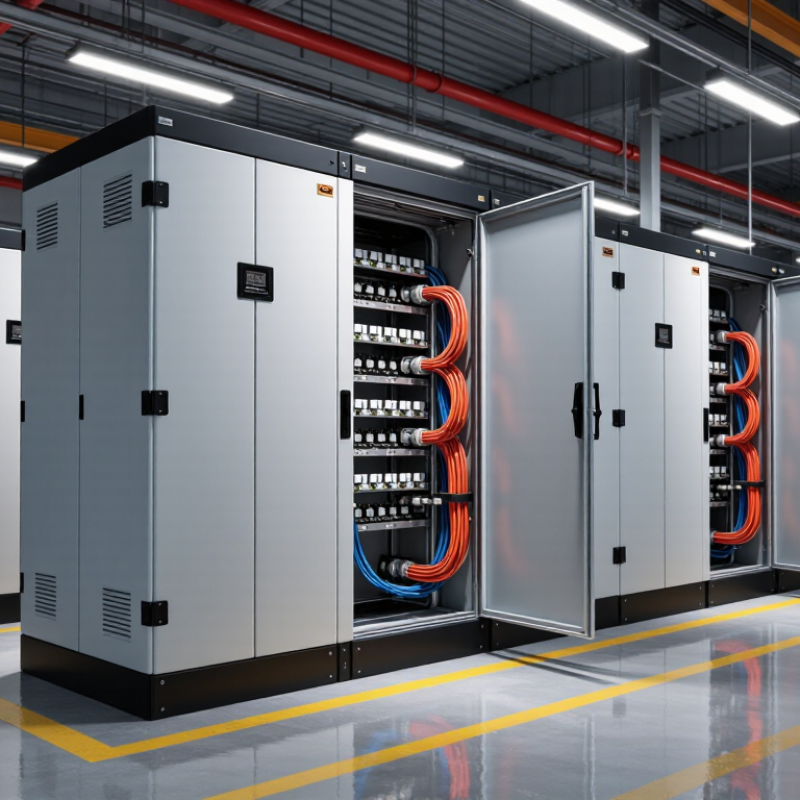
An electrical cabinet is a protective enclosure for equipment that distributes, controls, or monitors electrical power. Inside, technicians may find circuit breakers, contactors, relays, terminals, and a programmable controller arranged on mounting rails. The cabinet keeps these parts organized and helps shield them from dust, accidental contact, vibration, and moisture. It also gives technicians a defined place to inspect connections and perform maintenance. Not glamorous. Essential, though.

In a factory, a cabinet might coordinate a conveyor motor, emergency stop circuit, and temperature sensor. In a building, it may house controls for pumps or ventilation. Its size and construction depend on the equipment, installation space, and surrounding conditions. A cabinet near a washdown area needs different protection from one in a dry control room. Heat matters too: tightly packed components can run hot, so ventilation or cooling may be needed. Selection requires care. A sturdy door alone does not guarantee suitable protection; seals, cable entries, grounding, and internal layout also matter. Even experienced teams can overlook condensation or leave too little room for future wiring. That is worth checking before installation.

How Are China’s Leading Electrical Cabinet Manufacturers Identified?

Identifying China’s leading electrical cabinet manufacturers requires more than comparing prices or polished catalogs. Start with engineering evidence. Can the team interpret wiring diagrams, select suitable enclosure materials, and explain thermal management choices? Ask for drawings, component lists, and examples of cabinets built for similar operating conditions.

What to look for during a factory visit
Specific answers matter. A factory visit can reveal practical details: labeled workstations, controlled cable routing, and inspection records tied to each unit. Still, a tidy workshop does not prove consistent quality.

Look for documented testing, including insulation, grounding continuity, and functional checks where relevant. Confirm how dimensions, ingress protection, and temperature requirements are verified before shipment. Reliable manufacturers should also explain how they manage design changes, component substitutions, and after-sales questions.

A practical note: Clear records help. So does a response that admits a limitation instead of promising everything. One weakness in this process is that buyers may judge quality from a single sample; production batches can vary.

Request references, review sample documentation, and compare the delivered cabinet against the approved drawings. These checks make supplier selection more grounded, though no checklist can replace careful technical review.

Which Major Electrical Cabinet Manufacturers Operate in China?

China’s electrical cabinet sector includes several kinds of manufacturers, rather than one uniform group. Large industrial equipment producers often build cabinets for factories, power distribution, and automation projects. Specialized cabinet makers focus on enclosures, wiring, cooling, and custom layouts. Regional suppliers also serve local contractors with standard low-voltage cabinets and shorter delivery schedules. The mix matters.

Many manufacturers operate in coastal manufacturing centers, where metalworking, electrical components, and logistics networks are readily available. Others serve customers from inland industrial regions. Their capabilities can differ widely. One shop may offer laser-cut steel panels and powder coating; another may specialize in assembly, testing, and project documentation. Buyers should check production capacity, material specifications, ingress-protection ratings, and inspection records. A polished catalogue alone is not enough.

For a reliable comparison, request drawings, sample test reports, and details about wiring standards used for the target project. Ask whether the manufacturer can trace components and record inspection results for each cabinet. Some suppliers handle design changes smoothly; others need longer approval cycles. This is where expectations can slip. Factory visits or independent inspections may help confirm actual processes, though access and scope vary. No single supplier fits every application, and public information may not show how consistently a factory performs over time.

Who Are the Top Electrical Cabinet Manufacturers in China? – Which Major Electrical Cabinet Manufacturers Operate in China?

Manufacturer segment Typical products Common applications Relevant standards and specifications Common manufacturing strengths Notable production regions
Low-voltage switchgear and distribution cabinets Low-voltage switchboards, distribution boards, motor control centers, and power distribution cabinets Commercial buildings, factories, infrastructure, and utility installations IEC 61439 series; GB/T 7251 series; rated current, voltage, and short-circuit withstand requirements depend on the design Busbar processing, electrical assembly, protection-device integration, and routine verification Zhejiang, Jiangsu, Guangdong, and other industrial provinces
Industrial control cabinet manufacturers PLC cabinets, control panels, machine control cabinets, and operator stations Factory automation, packaging lines, machine tools, material handling, and process control IEC 60204-1 for electrical equipment of machinery; applicable GB standards and project specifications Custom wiring, component mounting, control-system integration, and project-based engineering Jiangsu, Zhejiang, Shanghai, Guangdong, and other manufacturing hubs
Sheet-metal enclosure and cabinet manufacturers Wall-mounted enclosures, floor-standing cabinets, network cabinets, and custom sheet-metal housings Electrical distribution, industrial equipment, telecommunications, and control systems Ingress-protection ratings are specified under IEC 60529; dimensions, material, finish, and rating are order-dependent Laser cutting, punching, bending, welding, surface finishing, and made-to-order fabrication Zhejiang, Guangdong, Jiangsu, and other metalworking centers
Power-system and utility cabinet manufacturers Metering cabinets, distribution cabinets, control cabinets, and project-specific power enclosures Power distribution projects, substations, public infrastructure, and industrial facilities Applicable GB/T and IEC requirements, utility specifications, and project-specific acceptance criteria Configuration to project drawings, electrical assembly, documentation, and inspection coordination Manufacturing bases across eastern, southern, and central China
Outdoor and environmental-protection cabinet manufacturers Outdoor electrical cabinets, weather-resistant enclosures, and cabinets with ventilation or thermal management Outdoor power equipment, transport infrastructure, telecommunications, and remote monitoring IEC 60529 ingress-protection ratings; environmental and corrosion requirements are selected for the installation site Weather sealing, coatings, ventilation design, thermal management, and optional corrosion-resistant materials Coastal and industrial regions, including Guangdong, Zhejiang, Jiangsu, and Shandong

Note: This table describes common manufacturer segments and capabilities in China, not a ranked list of named companies. Product compliance, ratings, and availability should be confirmed against the supplier’s technical documents and the project requirements.

How Do Their Products, Capabilities, and Industries Served Compare?

China’s electrical cabinet manufacturers vary more by engineering depth than by appearance. Some focus on standard wall-mounted enclosures for control panels, while others build floor-standing cabinets, modular switchboard systems, or stainless-steel housings for demanding environments. A useful comparison starts with details: sheet thickness, coating quality, door seals, cable-entry options, and how neatly internal mounting rails align. Small details matter.

Production capabilities differ, too. Larger facilities may combine laser cutting, bending, welding, powder coating, and assembly under one roof. This can support consistent dimensions and shorter production cycles, especially for repeat orders. Smaller or more specialized workshops may offer greater flexibility with non-standard sizes and wiring layouts, though buyers should verify inspection procedures and sample quality. A polished catalogue is not proof of reliable output.

Industries served often reveal a manufacturer’s strengths. Cabinet designs for factories may prioritize heat management, access, and space for drives or relays. Building projects may need compact distribution cabinets, while transport, energy, or outdoor installations can require stronger corrosion protection and weather sealing. Ask for drawings, material specifications, test records, and examples of comparable projects. Even then, no checklist removes every risk; an early sample can expose a mismatch that documents miss.

What Factors Should Buyers Consider When Choosing a Manufacturer?

When comparing electrical cabinet manufacturers in China, look beyond product photos and headline prices. Start with the cabinet’s intended environment: a dusty workshop, a humid plant room, or an outdoor installation each demands different materials, seals, and cooling arrangements. Ask for drawings, material specifications, and test records for the exact configuration you plan to buy. A generic certificate may not describe your finished cabinet.

Check manufacturing capability in practical terms. Can the supplier explain sheet-metal thickness, coating options, door-seal details, and wiring access? Request a sample or inspect a production unit, paying attention to sharp edges, uneven paint, loose hinges, and the fit around cable entries. Small flaws matter. They can become costly during installation or maintenance. Also confirm how custom dimensions affect lead time, minimum order quantities, and replacement-part availability.

Communication deserves equal attention. A capable manufacturer should ask about load, heat, installation space, and service access before recommending a design. Compare written quotations line by line, including packaging, inspection, delivery terms, and any stated tolerances. Ask who handles design changes and how defects are recorded. A factory visit can help, but it is not a complete guarantee. Some buyers focus too much on the lowest price; I would still compare actual specifications, even when the cheaper offer looks convincing.

Optimized by Optimole