China Top CNG Gas Generator Set Manufacturers?
Choosing among China’s top Cng Gas Generator Set manufacturers requires more than comparing catalog prices. A reliable review should examine engine origin, alternator quality, gas pressure requirements, control systems, factory testing, and after-sales support. It should also consider real operating conditions. A 500 kW Cng Gas Generator Set may perform differently at a dusty construction site than inside a clean industrial plant.
Energy analyst Daniel Yergin has said, “Natural gas is the fuel of choice for the 21st century.” His statement reflects the fuel’s practical role in flexible and lower-emission power generation. However, CNG is not automatically the best solution. Gas availability, compression costs, storage capacity, and local regulations can change the final decision.
This article will introduce leading Chinese manufacturers and compare their technical strengths. The review will focus on measurable details, including rated output, fuel consumption, voltage stability, noise control, emissions compliance, and maintenance access. Factory certification matters. So does field experience.
A dependable supplier should provide documented load-bank test results, clear warranty terms, spare-parts support, and trained service engineers. Ask for references.
Some manufacturers present impressive specifications but provide limited evidence from long-term projects. That weakness deserves attention. A polished brochure cannot replace verified operating data. Buyers should also check whether the supplier understands methane quality, regulator settings, starting loads, and synchronization requirements.
The final selection should match the site, not merely the brand name. Careful comparison remains essential. Mistakes can be expensive.
CNG Gas Generator Sets: Definition, Applications, and Operating Principles
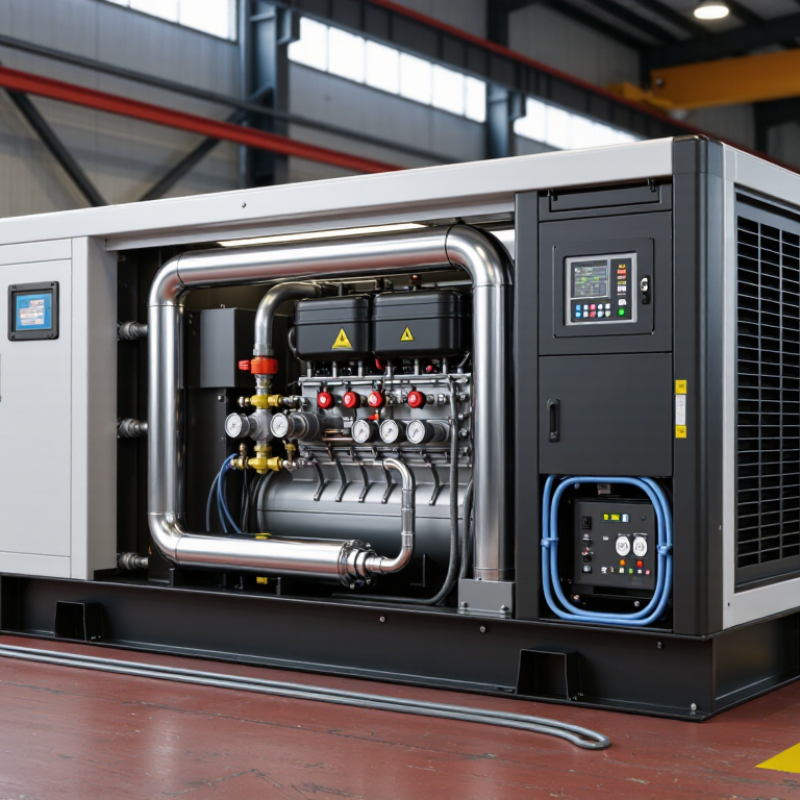
CNG gas generator sets convert compressed natural gas into electrical power through an internal-combustion engine. CNG is stored in high-pressure cylinders, then reduced to a controlled delivery pressure. A gas mixer or electronic injector supplies fuel to the engine. The spark ignites the air-fuel mixture, turning the crankshaft and driving an alternator.
These sets serve factories, hospitals, data centers, farms, and remote construction sites. They can provide standby power or operate continuously in distributed energy systems. Combined heat and power systems also recover engine heat for hot water or process heating. The U.S. Department of Energy reports that reciprocating-engine CHP systems commonly achieve 30%–40% electrical efficiency, with total efficiency reaching approximately 65%–80%.
Fuel quality matters. Methane content, pressure stability, moisture, and contaminants affect combustion and maintenance. The U.S. Environmental Protection Agency links cleaner natural-gas combustion with lower particulate and sulfur emissions than conventional diesel generation, although methane leakage still requires attention. That point is often underestimated.
For buyers comparing Chinese manufacturers, inspect rated output, gas-pressure requirements, cylinder safety design, control response, and factory test records. ISO-aligned quality systems help, but certificates cannot replace field evidence. In practice, published efficiency is not a promise. Load profiles, ambient temperature, maintenance intervals, and poor commissioning can change results. A practical acceptance test should record fuel consumption, voltage stability, exhaust temperature, and performance at multiple loads.
CNG generator sets use a spark-ignited natural-gas engine to convert the chemical energy of methane-rich compressed natural gas into mechanical power, which is then converted into electricity by an alternator. Electrical efficiency generally improves as the engine approaches its rated load. The carbon-intensity values below are indicative calculations based on a natural-gas emission factor of approximately 0.182 kg CO₂ per kWh of fuel energy.
China’s CNG Generator Set Manufacturing Industry and Market Structure
China’s CNG generator set industry has developed around engine production, gas-system integration, alternator assembly, and after-sales service. Manufacturers often operate within industrial clusters. Nearby suppliers provide valves, control panels, radiators, and acoustic enclosures quickly. This structure shortens delivery times, but quality can vary between suppliers.
Demand comes from factories, hospitals, construction sites, data facilities, and remote gas networks. Buyers compare fuel consumption, starting performance, emissions compliance, noise levels, and maintenance access. In practical projects, a generator may operate beside a compressor station. Gas pressure can change during peak hours. That detail matters. A set tested only in a workshop may behave differently on site.
The market includes integrated producers, specialized system builders, and smaller regional assemblers. Export-oriented manufacturers increasingly provide remote monitoring, load-bank testing, and multilingual service support. Certification is a purchasing gate, not a decorative file. Buyers should verify test records, component traceability, warranty terms, and technician coverage. Quoted output figures may hide altitude, methane content, and ambient temperature limits. Comparisons can become unfair. China offers broad manufacturing capacity and competitive engineering, yet the lowest initial price may not reduce operating costs. Reliable selection depends on measured fuel data, realistic load profiles, and disciplined commissioning.
Key Criteria for Evaluating Chinese CNG Generator Set Manufacturers
China Top CNG Gas Generator Set Manufacturers?
Evaluating Chinese CNG generator set manufacturers requires more than comparing quoted prices. Check the factory’s production records, engineering staff, and documented experience with similar gas applications. Ask for project references using comparable output, gas pressure, altitude, and operating hours. Numbers can mislead.
Request a complete technical file before signing. It should include engine data, alternator efficiency, gas train specifications, control logic, noise readings, and emissions test results. Confirm whether the set passed a witnessed load test at 25%, 50%, 75%, and 100% capacity. Review performance during sudden load changes. A stable unit should not hunt, stall, or show alarming voltage swings. Gas quality also matters. Methane content, pressure, moisture, and contaminants can change performance significantly.
Inspect quality control in person or through an independent auditor. Look at wiring labels, hose routing, weld consistency, enclosure sealing, and spare-parts storage. Ask how technicians respond to a failed ignition coil at night, not only during office hours. Clear manuals, remote diagnostics, training, and response times reveal operational maturity. Warranty language deserves careful reading, especially for gas components and continuous-duty use. A low bid may exclude commissioning or essential filters. I have seen checklists miss small details that later become expensive. No checklist is perfect. Compare the manufacturer’s promises with test evidence, maintenance records, and the practical conditions at your installation site.
Leading Chinese Manufacturers by Product Range and Industry Expertise
China’s leading CNG gas generator set manufacturers are increasingly differentiated by product range and application expertise. The International Energy Agency’s Gas 2024 report projects continued global gas demand growth through 2029, supporting flexible distributed power systems. Chinese manufacturers commonly offer sets from small commercial units to multi-megawatt containerized systems. Their portfolios may include open-frame, silent, trailer-mounted, and parallel-operation models.
Product depth matters in real projects. A factory, for example, may need a 500 kW unit for daily production, while a remote oil site may require synchronized containerized sets. Experienced manufacturers usually provide gas pressure regulation, automatic transfer controls, heat recovery, and remote monitoring. Some also adapt engines for biogas or associated gas, although performance depends heavily on methane content and contamination levels. This is often underestimated.
Industry knowledge separates capable suppliers from simple assemblers. Manufacturers serving hospitals focus on stable voltage and rapid backup response. Those supporting data centers emphasize redundancy, load testing, and maintenance planning. Mining and construction customers often prioritize dust protection, mobility, and fuel flexibility. The World Bank’s Global Gas Flaring Tracker Report shows that gas flaring remains substantial worldwide, creating possible demand for recovery-based generation. Still, emissions data and field conditions must be verified independently. Catalog specifications can look excellent. Site performance may differ. Audited testing, documented service records, and clear warranty terms provide stronger evidence than marketing language.