Top 10 Air Compressor Exporters You Should Know About?
In the ever-evolving landscape of industrial machinery, air compressors play a crucial role. As manufacturing demands grow, the significance of Air Compressor Exporters cannot be overstated. "Understanding the global market for air compressors is key for future growth," says John Smith, a renowned expert in industrial exports. His insight highlights the importance of recognizing leading players in this sector.
With various countries specializing in air compressor production, knowing the top exporters can guide businesses in making informed decisions. Efficient air compressors are vital for productivity in numerous industries, from automotive to construction. However, companies often overlook emerging exporters that offer competitive pricing and innovative technology. It’s essential to stay updated, as the market can shift rapidly.
Air compressor exporters contribute significantly to the global economy. They deliver advanced solutions that enhance operational efficiency. Yet, not all exporters maintain the same quality standards. Businesses must navigate this complex landscape carefully. Identifying reputable exporters requires time and effort. Conducting thorough research becomes imperative in ensuring reliable partnerships.
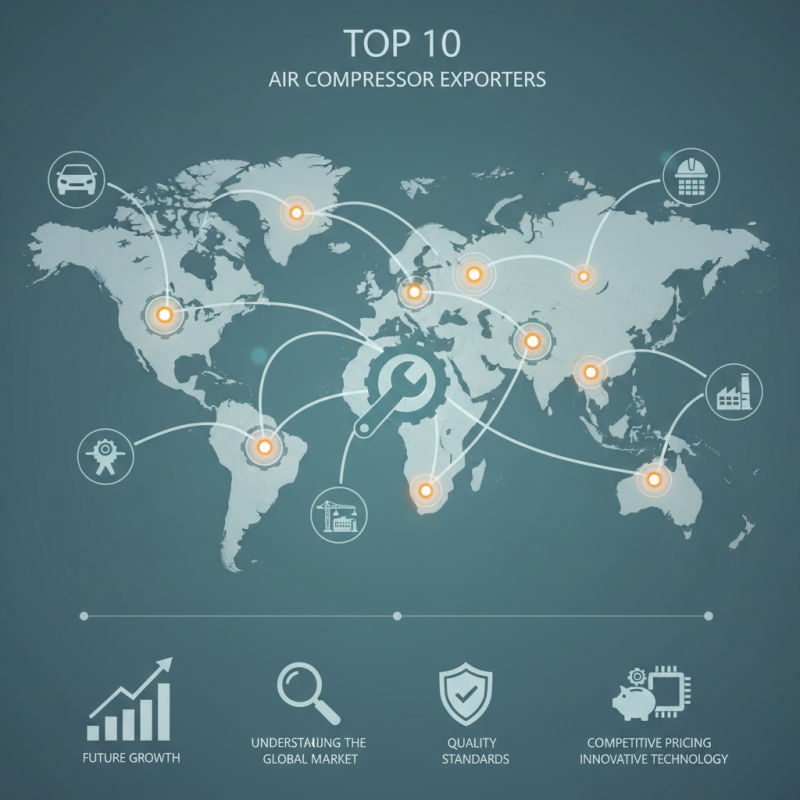
Overview of Global Air Compressor Export Markets
The global air compressor export market has experienced significant growth in recent years. Various factors contribute to this trend, including industrial expansion and increased demand for compressed air solutions. Countries across the globe are investing in manufacturing and construction, driving the need for reliable air compressors. Each region showcases unique preferences in air compressor types and specifications.
Developed nations lead in technology and innovation within this sector. Their air compressors often feature advanced controls and energy efficiency. In contrast, emerging markets focus on affordability and mechanical simplicity. However, some exporters struggle with quality consistency, which can impact their reputation. Not all suppliers maintain the same standards, creating a mixed landscape.
Market dynamics shift due to fluctuating economies and trade policies. Exporters must adapt to these changes by enhancing their product offerings. Companies are encouraged to prioritize customer needs while considering sustainability. The balance between innovation and reliability is crucial. In this bustling market, understanding regional demands is vital for success.
Top 10 Air Compressor Exporters Overview
| Rank | Country | Export Value (in million USD) | Market Share (%) | Main Export Destinations |
| 1 | United States | 1200 | 25% | Canada, Mexico, China |
| 2 | Germany | 950 | 20% | France, UK, Italy |
| 3 | China | 800 | 18% | USA, Japan, Germany |
| 4 | Japan | 600 | 15% | Asia, North America, Europe |
| 5 | Italy | 500 | 12% | Germany, France, UK |
| 6 | UK | 400 | 10% | USA, Germany, Australia |
| 7 | Austria | 350 | 8% | Germany, Italy, Switzerland |
| 8 | India | 300 | 6% | Middle East, Africa, Asia |
| 9 | Brazil | 250 | 5% | USA, Argentina, Chile |
| 10 | South Korea | 200 | 4% | USA, Japan, China |
Criteria for Evaluating Top Air Compressor Exporters
When evaluating air compressor exporters, consider key criteria that reflect their expertise and reliability. A strong track record is crucial. Look for companies with years of experience in the industry. This experience often translates to a deeper understanding of customer needs and market dynamics. Transparent communication is another essential criterion. Exporters must clearly state their product specifications, delivery timelines, and after-sales support options.
Tips: Always request references. Feedback from previous clients can reveal valuable insights. Inspect customer service responsiveness. A knowledgeable and friendly representative can make all the difference.
Additionally, product quality should never be overlooked. Assess the materials and technology used in manufacturing air compressors. High-quality components lead to better performance and longevity. Certifications can also signal a commitment to quality standards, enhancing trust.
Tips: Don’t blindly trust claims. Conduct your own research on materials used in the compressors. Understand the warranty offered. A robust warranty can indicate confidence in their product quality.
Detailed Profiles of Leading Air Compressor Exporters
The global air compressor market is projected to reach $36.4 billion by 2027, according to industry reports. This growth is driven by rising demand across various sectors such as manufacturing and construction. Notably, leading exporters have adopted advanced technologies to enhance performance and efficiency. These exporters not only provide a wide range of air compressors but also focus on sustainable solutions.
Prominent countries in air compressor exports include the United States and Germany. They account for a significant market share due to their innovation in compressor design. However, some exporters face challenges related to supply chain disruptions. The energy efficiency of air compressors is also an area where many companies need improvement, as achieving optimal performance can be complex.
In addition, market players must keep abreast of evolving regulations and customer preferences. As businesses push for greener alternatives, the shift towards eco-friendly air compressors is evident. Although many exporters are taking steps in this direction, the pace of change varies significantly. Addressing these issues is crucial for maintaining competitiveness in the global market.
Key Manufacturing Technologies in the Air Compressor Industry
The air compressor industry relies on advanced manufacturing technologies that enhance performance and efficiency. Key processes include precision machining, heat treatment, and surface finishing. These ensure durability and long-lasting operation. Companies invest heavily in research and development to innovate designs and improve energy efficiency.
Tips: Focus on selecting quality materials in manufacturing. Quality components extend equipment life and optimize performance.
Another significant technology is the integration of automation. Automation improves production speed and reduces human error. This transition to smart manufacturing allows for real-time monitoring and adjustments, enhancing productivity.
Tips: Embrace data-driven approaches. Utilizing analytics can reveal trends in machine performance, leading to timely maintenance.
The industry's focus on sustainability cannot be overlooked. Many manufacturers explore eco-friendly alternatives and energy-efficient designs. Balancing performance with environmental impact is an ongoing challenge.
Tips: Regularly evaluate new technologies for sustainability. Innovations can lead to both cost savings and environmental benefits.
Trends Shaping the Future of Air Compressor Exports
The air compressor export market is evolving rapidly. Recent reports indicate that the global air compressor market is expected to surpass $40 billion by 2027, growing at a CAGR of 4.5%. This growth reflects increased industrial automation across various sectors, including manufacturing and construction. Companies are investing in more efficient and robust air compressors to enhance productivity while reducing energy consumption.
Sustainability also shapes the future of air compressor exports. Emerging regulations on emissions are pushing manufacturers to innovate. For instance, the demand for energy-efficient compressors is on the rise. They can reduce energy costs by up to 30%. This is crucial for businesses aiming to minimize their carbon footprint. However, some manufacturers struggle to adapt, facing challenges with initial investments in new technology.
Technological advancements are another trend influencing air compressor exports. The adoption of IoT and smart technologies offers improved monitoring and predictive maintenance. These innovations can lead to significant operational savings. Yet, many small enterprises may find it difficult to keep up. This gap raises questions about competitiveness in an increasingly tech-driven market.
Top 10 Air Compressor Exporters Trends