What is a strong base anion resin and its applications?
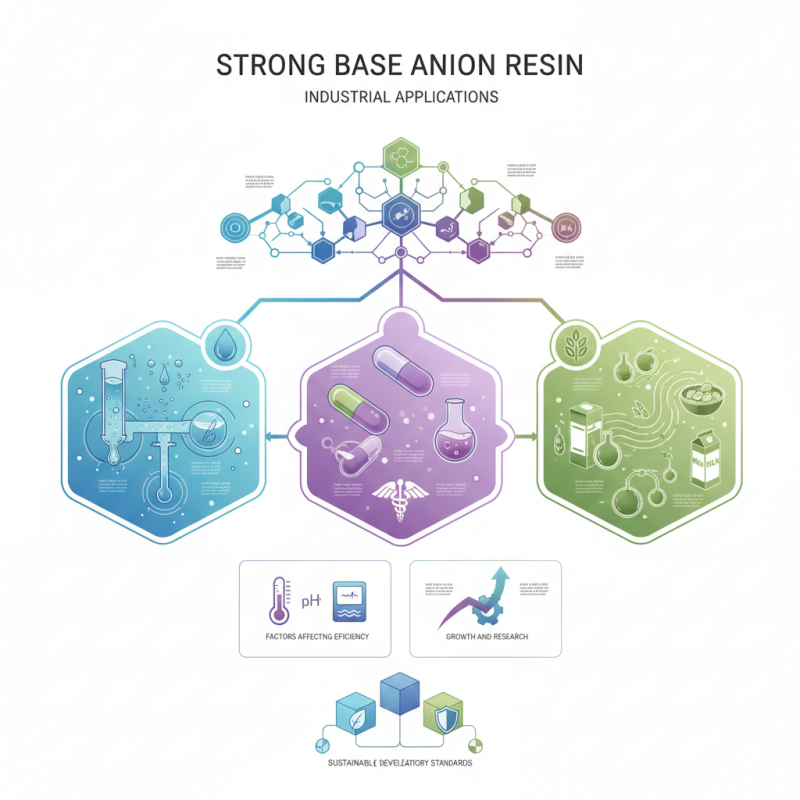
strong base anion resin plays a crucial role in various industrial applications. These resins are integral in water treatment, pharmaceuticals, and food processing. Recent market studies highlight a robust growth in the demand for these materials, with estimates suggesting a compound annual growth rate of over 5% in the next few years. This surge reflects an increasing awareness of water purification needs globally.
In water treatment, strong base anion resins are employed to remove contaminants effectively. They excel in selective ion exchange processes, significantly improving water quality. In pharmaceuticals, they aid in the purification of active ingredients. However, challenges persist. The efficiency of these resins can fluctuate based on various factors, including pH levels and temperature. Ongoing research aims to enhance their performance and durability.
Despite their advantages, the industry faces hurdles. Not all strong base anion resins meet the stringent regulatory standards for safety and effectiveness. Companies must navigate these challenges to optimize their formulations. Understanding the long-term implications of resin use is vital for sustainable development. As such, continuous improvement is essential in maximizing their potential across sectors.
Definition and Characteristics of Strong Base Anion Resins
Strong base anion resins are specifically designed for water treatment and chemical processing. These resins possess quaternary ammonium groups, enabling them to effectively remove negatively charged ions. Their high capacity and regeneration potential make them suitable for various applications, including deionization, wastewater treatment, and selective ion removal.
A key feature of strong base anion resins is their high operational stability. Research indicates that these resins can maintain efficiency across a wide pH range. However, regular monitoring is crucial. They may experience reduced performance in challenging water conditions. Industry studies suggest that optimal operating conditions enhance lifespan and efficiency.
Tip: Always consider the specific application needs before choosing a resin type. Misalignments can lead to unsatisfactory results. Additionally, proper maintenance is essential to maintain the resin's effectiveness, as contaminants can diminish ion exchange capacity. Avoiding shortcuts during installation can save time and costs in the long run.
Types of Strong Base Anion Resins and Their Chemical Structures
Strong base anion resins are crucial in water purification and industrial processes. Their chemical structure allows for effective ion exchange. These resins typically consist of a polymer backbone with quaternary ammonium functional groups. This setup enables the resin to attract and bind negatively charged ions in solution.
There are different types of strong base anion resins. Type I resins are cross-linked polystyrene, featuring a high degree of cross-linking for durability. Type II ones have a less cross-linked structure, which enhances selectivity. Each type efficiently captures specific anions, like sulfate or nitrate, from water. Their efficiency can vary based on conditions.
The choice of resin type depends on the application. It's essential to consider factors like flow rate and temperature. Sometimes, a resin may not perform as expected. This can lead to incomplete removal of contaminants. Adjusting conditions may prove necessary to optimize performance. Understanding each resin type's chemical properties can lead to better outcomes in practical applications.
Mechanisms of Ion Exchange in Strong Base Anion Resins
Strong base anion resins play a crucial role in various purification processes. These resins consist of a polymer matrix that is functionalized with quaternary ammonium groups. When exposed to a solution, they exchange hydroxide ions with anions in the water. This process leads to the removal of unwanted impurities.
The ion exchange mechanism is fascinating yet complex. When water passes through the resin, anions interact with the charged sites on the resin’s surface. For instance, sulfate ions might displace hydroxide ions, effectively trapping them within the resin. This process continues until the sites are saturated. Observing this, one might notice fluctuations in performance based on water chemistry. Sometimes, this results in incomplete removal of certain contaminants.
Operators must continually monitor and adjust conditions for optimal performance. Variations in pH or ion concentration can impact the effectiveness of the resin. Understanding these subtleties is key. As technological advancements emerge, further research into enhancing these resins’ selectivity and capacity is necessary. This evolution could lead to even more efficient purification solutions in the future.
Applications of Strong Base Anion Resins in Water Treatment
Strong base anion resins play a vital role in water treatment. These resins work by exchanging anions in solutions. They are especially effective in removing contaminants like nitrates, phosphates, and heavy metals. According to industry reports, over 60% of water treatment facilities utilize strong base anion resins for their efficiency in cleaning water.
In addition to municipal applications, these resins find use in industrial settings. Power plants, for example, rely on them to purify feedwater. This ensures that boilers operate efficiently, avoiding scale build-up. Reports suggest that using strong base anion resins can increase the lifespan of water treatment systems, reducing overall costs.
Tips: Always monitor the resin's performance. Regular testing helps identify breakthroughs or saturation. Replacing the resin at optimal intervals prevents inefficiencies in water treatment. Filtering not just removes contaminants but also improves taste. Many industries must also consider the environmental impact of resin disposal.
Industrial Uses of Strong Base Anion Resins in Chemical Processes
Strong base anion resins play a crucial role in various industrial processes. These resins are primarily used for the removal of anions in water treatment systems. Their effectiveness in ion exchange makes them invaluable in chemical manufacturing. According to a report by MarketsandMarkets, the global market for ion exchange resins is projected to reach $1.4 billion by 2025, indicating significant growth in this field.
One notable application is in the food and beverage industry. Strong base anion resins help in purifying water used in production. They also play a significant role in sugar refining. These resins can remove impurities, ensuring high-quality products. That said, challenges persist in their regeneration and longevity. Reports indicate that improper handling can lead to resin degradation, impacting efficiency.
Another application is in pharmaceuticals. Strong base anion resins assist in the separation and recovery of active ingredients. Their ability to selectively adsorb compounds is vital in this sector. However, there's room for improvement. Some resins may not perform well under specific conditions. This reflects the need for ongoing research and development to enhance their capabilities. Such advancements could lead to more sustainable and efficient chemical processes.
What is a strong base anion resin and its applications? - Industrial Uses of Strong Base Anion Resins in Chemical Processes
| Application Area | Resin Type | Ion Exchange Capacity (meq/g) | Temperature Stability (°C) | Common Uses |
| Water Treatment | Strong Base Anion Resin | 1.2 | 90 | Removal of organic compounds and hardness ion |
| Pharmaceuticals | Type I Anion Exchange Resin | 1.5 | 85 | Purification of active pharmaceutical ingredients |
| Food & Beverage | Type II Anion Exchange Resin | 1.0 | 80 | Deionization and decolorization of juices |
| Chemical Manufacturing | Strong Base Resin for Chlor-alkali | 1.8 | 95 | Separation and purification of chlorinated compounds |
| Environmental Remediation | Strong Base Anion Resin | 1.3 | 90 | Removal of solvents and heavy metals from wastewater |