Top CNC Aluminum Profile Manufacturers for Global Buyers
Choosing a reliable Cnc Aluminum Profile manufacturer requires more than comparing prices and attractive catalogs. Global buyers need evidence of consistent production, practical engineering knowledge, and dependable communication. The right supplier should understand extrusion, CNC machining, surface finishing, and international packaging requirements. Small details matter. A clean cutting edge, accurate drilling, and protected anodized surface can prevent costly assembly problems.
This guide examines leading manufacturers serving international markets. It considers alloy options, dimensional tolerances, machining capacity, quality inspection, certifications, and production flexibility. Buyers should ask how suppliers control each batch and manage design changes. Useful evidence may include inspection reports, material certificates, factory photographs, and samples from recent production. A serious manufacturer can explain its process clearly, from aluminum billet selection to final carton labeling.
No supplier is flawless. That matters. A polished website cannot replace measurable performance or responsive after-sales support. Some factories offer excellent pricing but struggle with small orders, unclear drawings, or changing delivery schedules. Others provide strong engineering advice but require longer lead times. This comparison therefore focuses on practical purchasing experience, not promotional language alone. It also encourages buyers to test communication, request a sample, and confirm tolerances before placing a large order. With careful evaluation, companies can choose a Cnc Aluminum Profile partner that supports stable quality, safer planning, and long-term international cooperation.
What CNC Aluminum Profile Manufacturing Involves
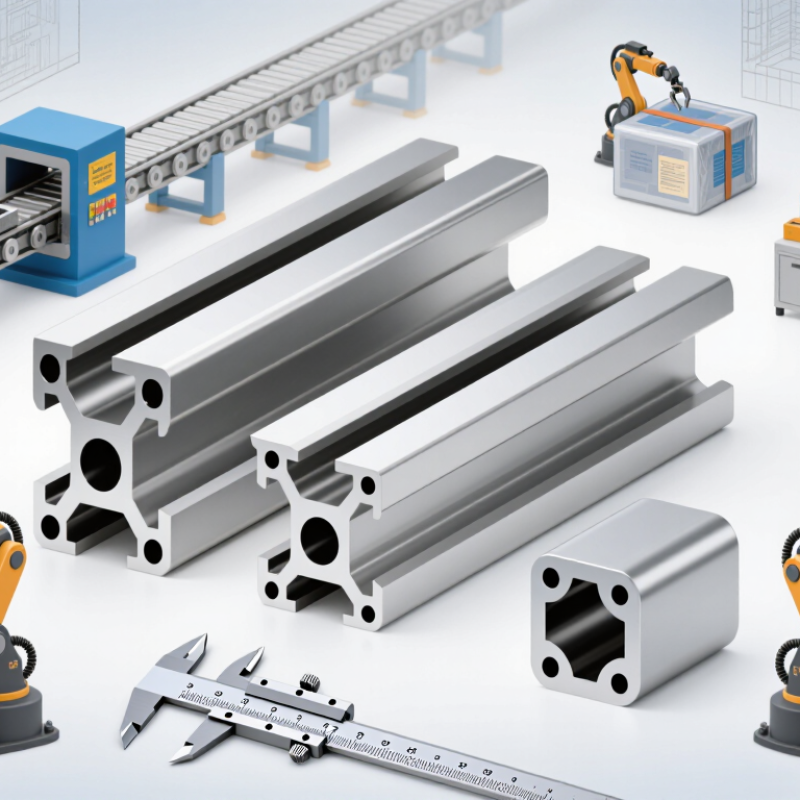
CNC aluminum profile manufacturing turns standardized extrusions into precise structural parts. The process begins with alloy selection, extrusion inspection, and digital drawing review. Profiles are clamped, referenced, and machined with drills, end mills, or saws. Tool paths control hole positions, pocket depths, and cut lengths. Coolant, chip removal, and spindle speed affect edge quality. A small setup error can multiply across a production batch. That reality is often missed. World Aluminium reported 70.6 million tonnes of primary aluminum production in 2023. This shows the scale behind this lightweight material. Yet volume does not guarantee consistency.
Reliable manufacturers combine CNC machining with measurement discipline. Operators verify critical dimensions using calipers, coordinate measuring machines, and thread gauges. They inspect burrs, surface marks, squareness, and profile deformation. Initial-article inspection should confirm the drawing before repeated machining begins. Statistical process control can reveal drift before parts fail assembly.
ISO 9001-based procedures improve traceability, but paperwork cannot replace skilled judgment. The International Aluminium Institute states recycled aluminum requires about 5% of primary production’s energy. This makes scrap segregation valuable. It also demands honest accounting, because contaminated chips reduce recovery efficiency.
Tips: Ask for alloy certificates, tolerance tables, inspection records, and a sample part. Clarify whether tolerances apply before or after anodizing. Check packaging against real shipping conditions. A beautiful prototype can still arrive scratched. Request corrective-action evidence, not only promises.
How to Evaluate Global CNC Aluminum Profile Manufacturers
How to Evaluate Global CNC Aluminum Profile Manufacturers
A reliable CNC aluminum profile manufacturer should prove capability, not merely promise it. The International Aluminium Institute reports that global aluminum demand could reach about 119.5 million tonnes annually by 2050. This growth increases pressure on machining accuracy, material traceability, and delivery control.
Ask for alloy certificates, dimensional inspection records, and sample parts from the same production line. Confirm whether testing follows recognized standards, such as ISO 9001 quality procedures and ISO 2768 tolerance guidance. A capable supplier should explain its CNC equipment, tool calibration cycle, surface-treatment process, and inspection method in plain language. Vague answers are warning signs.
Study production evidence carefully.
The International Aluminium Institute recorded approximately 70.6 million tonnes of primary aluminum production in 2023, so material availability alone does not prove manufacturing quality. Request a first-article inspection report showing profile length, hole position, flatness, and surface condition. Ask how rejected parts are isolated and corrected. Small details matter.
Cost comparisons can mislead.
One supplier may exclude packaging, tooling, inspection, or export documentation. Another may quote a higher price because it includes these controls. The World Bank’s Commodity Markets Outlook also shows that aluminum prices can shift with energy costs, supply conditions, and industrial demand. Locking a price without defining alloy, tolerance, and delivery terms is risky. I have seen buyers focus on the lowest quotation and overlook inconsistent anodizing. That mistake is expensive. Supplier evaluation should include a pilot order, video audit, and documented corrective-action process before full-scale purchasing.
Leading CNC Aluminum Profile Manufacturers for International Buyers
For international buyers, selecting a CNC aluminum profile manufacturer requires more than comparing quotations. Grand View Research’s 2024 aluminum extrusion analysis forecasts annual market growth of about 3.4% through 2030. More suppliers will enter the field. Quality will still vary. A capable manufacturer should clearly explain alloy selection, extrusion limits, CNC tolerances, surface treatment, and inspection records. Vague answers are a warning.
During supplier audits, request a sample profile, dimensional report, coating specification, and material certificate. Ask for the actual tolerance, not “high precision.” In many assemblies, a 0.1-millimeter mismatch can create visible steps or difficult fastening. Manufacturers serving global buyers should also provide packaging tests, production traceability, and export documentation. These details reduce damage, rework, and customs delays.
Material efficiency matters as well. The International Aluminium Institute reports that roughly 75% of all aluminum ever produced remains in use. Buyers should ask how production scrap is separated, recycled, and documented. Sustainability claims need evidence. No factory is perfect. I would still compare first-article results with later batches, because one excellent sample can hide process drift. Strong manufacturers accept that scrutiny and report problems before shipment.
Quality Standards and Certifications in CNC Aluminum Production
Top CNC Aluminum Profile Manufacturers for Global Buyers
Quality Standards and Certifications in CNC Aluminum Production
Global buyers should judge CNC aluminum manufacturers by evidence, not polished catalogs. In production audits, I look for alloy certificates, process records, and inspection results tied to each batch. A reliable supplier identifies billet chemistry and extrusion lot numbers before machining begins. This traceability helps teams investigate cracks, burrs, or inconsistent anodizing without guessing. Practical quality starts here.
ISO 9001 certification can indicate a controlled quality system, but it does not guarantee perfect parts. Buyers should verify the certificate scope, issuing body, and expiration date. For environmental requirements, ISO 14001 may support responsible process management. Depending on the destination market, suppliers may also provide RoHS or REACH declarations. These documents need current, product-specific evidence. Generic files are weak evidence.
CNC accuracy requires measurable proof. Ask for CMM reports, first-article inspection records, and surface-finish readings in Ra values. A capable factory controls tool wear, coolant condition, fixture alignment, and deburring methods. Profiles should be checked for straightness, wall thickness, hole position, and anodized color variation. Small details matter. I have seen acceptable drawings fail during assembly because a tolerance was never discussed. That mistake deserves review, not excuses. Clear sampling plans and agreed acceptance limits reduce costly surprises for global buyers.
Top CNC Aluminum Profile Manufacturers for Global Buyers: Quality Standards and Certifications
Representative minimum yield-strength requirements for commonly specified aluminum alloys used in CNC profile production. Values may vary by product form, temper, and applicable material specification.
Reference basis: representative requirements commonly specified for extruded aluminum products under ASTM B221. Buyers should verify alloy certificates, temper, dimensional inspection records, and ISO 9001 quality-management certification with each supplier.
Ordering, Customization, and Shipping Considerations for Global Buyers
For global buyers, ordering CNC aluminum profiles begins with a usable technical brief. State alloy, temper, dimensions, tolerance, surface finish, hole locations, and annual volume. Request a sample before approving mass production. A 3D drawing alone can hide weak clamping points or difficult tool access. In practice, buyers often over-specify tolerances. That raises cost without improving assembly.
Customization should balance engineering needs with production stability. Ask whether the supplier can combine extrusion, CNC milling, drilling, deburring, and inspection under one quality plan. The International Aluminium Institute reports that recycled aluminum requires about 95% less energy than primary aluminum. Buyers can therefore discuss recycled content, but must verify alloy consistency and certification. The cleanest specification is not always the best one.
Shipping deserves equal attention. UNCTAD’s Review of Maritime Transport 2024 states that more than 80% of global merchandise trade by volume moves by sea. Long profiles need rigid crates, moisture protection, corner guards, and clear weight markings. Confirm Incoterms, port handling, insurance, documents, and pallet dimensions before production. Divide large orders into staged shipments when project schedules are uncertain. It costs more coordination. Still, one damaged container can erase a small unit-price saving. A perfect delivery forecast is impossible, so buyers should build realistic buffer time.