
What Are Insulation Parts and What Types Are Available?
Insulation Parts are components and materials that slow the transfer of heat, sound, or electricity. Their purpose depends on the system: a wall needs different protection from a steam pipe or electrical enclosure. Some parts are easy to overlook, yet a small gap around a pipe elbow can reduce an otherwise careful installation’s effectiveness. Details matter.
Common thermal insulation types include fiberglass and mineral wool batts, rigid foam boards, flexible elastomeric sheets, and loose-fill materials. Pipes may use preformed sections with shaped elbows and protective outer jackets. Electrical systems use insulating sleeves, barriers, and bushings to separate conductive components. Each type has limits. Temperature range, moisture exposure, compression, and surface shape all affect suitability. A product that performs well in a dry wall cavity may not be appropriate outdoors or around hot equipment.
Selection starts with the job, not just the material name. Check the manufacturer’s technical data for thickness, service temperature, installation requirements, and relevant fire or electrical ratings. Fit also matters: seams should meet cleanly, and insulation should not be crushed to make it fit. Small gaps count. In practice, site conditions can differ from a product sheet, so inspection and qualified advice may be needed. One point deserves reflection: “more insulation” is not automatically better if moisture becomes trapped or equipment clearances are ignored. This guide introduces the main types and the practical questions that help match them to real applications.
What Insulation Parts Are and What They Do
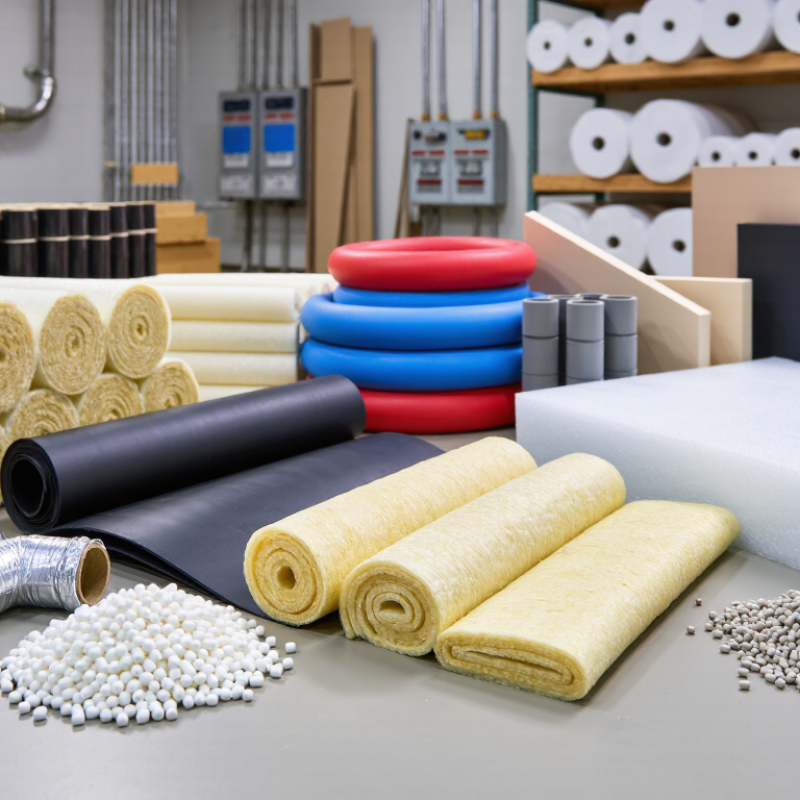
Insulation parts are the materials and fittings that work together to slow heat transfer, limit drafts, and manage moisture. Common types include fiberglass or mineral-wool batts, rigid foam boards, loose-fill insulation, and preformed pipe sleeves. Each suits different spaces. Batts fit between wall studs, while boards cover broad, flat surfaces. Loose fill can reach irregular attic corners. Pipe sleeves help reduce heat loss from exposed plumbing.
The surrounding components matter too. A facing or vapor retarder may help control moisture, depending on the climate and wall design. Tape, sealant, and fasteners close joints and hold materials in place. Small gaps matter. A narrow opening around a pipe can let air bypass insulation, making a well-filled cavity less effective than expected. Installation should match the product’s instructions and the building’s conditions; adding a vapor retarder without considering existing layers can trap moisture. The drawing may look complete, yet real walls often have awkward corners and crowded wiring. Careful measuring, clean cuts, and checking for compression help the parts perform as intended.

How Insulation Parts Limit Heat, Sound, or Electrical Transfer
Insulation parts reduce transfer by interrupting the routes heat, sound, or electricity can follow. A foam sleeve around a hot-water pipe slows heat loss by trapping still air. Its benefit can shrink if the seam is open or the sleeve is compressed. Small gaps matter. Reflective surfaces can reduce radiant heat, but they work best when facing an air space. They are not a substitute for every kind of insulation.
Sound control depends on the part and the noise. A dense panel can block some airborne sound, while a soft, porous layer absorbs sound inside a wall or enclosure. These methods are different. A loose door gasket may let a thin whistle through, even when the nearby wall is insulated. Electrical insulation works differently: materials such as rubber or ceramic resist current flow around wires and terminals. Their performance depends on thickness, temperature, moisture, and surface condition. A cracked bushing or damp, dirty surface can weaken protection. I would not judge a part by appearance alone; its stated temperature and voltage ratings need to suit the actual installation. A neat fit helps, but it does not prove the assembly is safe.
Materials Commonly Used in Insulation Parts
Insulation parts are made from materials that resist heat, electrical current, or both. The right choice depends on operating temperature, voltage, moisture, and mechanical stress. Ceramic is valued for strong electrical resistance and heat tolerance. It is hard, though, and can crack if dropped or clamped unevenly. Mica sheets and washers also tolerate high temperatures. Their layered structure makes them useful where thin, stable barriers are needed. Fiberglass-reinforced materials add strength to insulation boards and sleeves. They can withstand vibration, but exposed fibers may irritate skin during cutting.
Polymers are common in molded parts, flexible sleeves, and protective coatings. Epoxy compounds can bond firmly and hold their shape, while silicone rubber stays flexible across a broad temperature range. Thermoplastics are often easier to form into clips or spacers, but their heat limits vary widely. Small details matter. A material that performs well when dry may behave differently after absorbing moisture or collecting dust. Engineers should check the part’s temperature and voltage ratings, then consider how it will be installed and cleaned. Material selection is rarely perfect; a tougher material may be brittle, while a flexible one may wear faster. Testing the finished part under realistic conditions helps reveal those trade-offs.
Lower thermal conductivity means better insulating performance for the same thickness. These approximate typical values are in W/(m·K); actual values vary by product, density, temperature, and moisture.
Types of Insulation Parts by Form and Function
What Are Insulation Parts and What Types Are Available?
Types of Insulation Parts by Form and Function
Insulation parts vary in shape to fit different spaces and installation needs. Batts and rolls are flexible sheets that sit between wall studs or ceiling joists. Rigid boards cover broad, flat surfaces, such as basement walls. Loose-fill material can reach uneven corners and narrow cavities. Pipe sleeves wrap around plumbing to slow heat loss and help reduce condensation. Fit matters. Gaps can undermine even a thick layer of insulation.
Parts also serve different functions. Insulating materials resist heat flow, while facing layers can help manage moisture when selected for the assembly. Foil or reflective surfaces reduce radiant heat transfer when installed with the required air space. Seals, tapes, and compatible fasteners close joints or hold materials in place. Their performance depends on the surrounding construction, not just the product itself. A vapor-control layer in the wrong location may trap moisture, so check local building guidance and the material instructions.
Tips: Measure cavities before choosing batts or boards, and inspect corners for gaps after installation. Keep insulation clear of heat-producing equipment unless its instructions allow contact. Small details matter. It is easy to overlook a seam, and that is worth checking twice.
Factors to Consider When Selecting Insulation Parts
Selecting insulation parts starts with the conditions they must withstand. Check the operating temperature, voltage, moisture, and exposure to oils or cleaning chemicals. A part suited to a dry control cabinet may fail near a hot, damp pipe. Leave margin above expected temperatures, but confirm the maker’s rated limits rather than guessing. Fit matters. Measure the gap, mounting holes, and available clearance; even a small mismatch can create a path for heat or electrical leakage.
Material properties deserve equal attention. Compare thermal conductivity, dielectric strength, compressive strength, and resistance to aging for the specific application. For example, a spacer carrying a steady load needs different mechanical performance from a thin insulating sleeve around a wire.
Consider vibration and repeated heating, too: materials can expand at different rates and loosen over time. Check that adhesives, coatings, and nearby components are compatible.
Installation details count. Sharp edges may damage insulation, while over-tightened fasteners can crack rigid parts. Keep records of dimensions and operating conditions; this is easy to overlook during a quick replacement. A useful choice balances performance, service life, and practical installation, though the lowest-cost option may look adequate until conditions change.