How to Identify and Use Muscovite Mica in Your Projects?
muscovite mica is a versatile mineral used in various industries, including construction and cosmetics. According to a market report by Global Mica Supply, the demand for muscovite mica has increased by 15% in the last five years. This rise reflects its prominent role in innovation within these sectors.
Dr. Emily Parker, a leading expert in mica research, states, "muscovite mica’s unique properties enhance product performance." This statement emphasizes the importance of understanding muscovite mica’s characteristics when integrating it into your projects. Its insulation properties and shimmering effect make it desirable for many applications, yet sourcing it responsibly remains a challenge.
Despite its benefits, the mica industry faces scrutiny over ethical concerns. The complexity of identifying quality muscovite mica can lead to misjudgments. Thus, being informed about sourcing and application is crucial. Exploring muscovite mica could unlock new creative pathways while being mindful of its impacts.
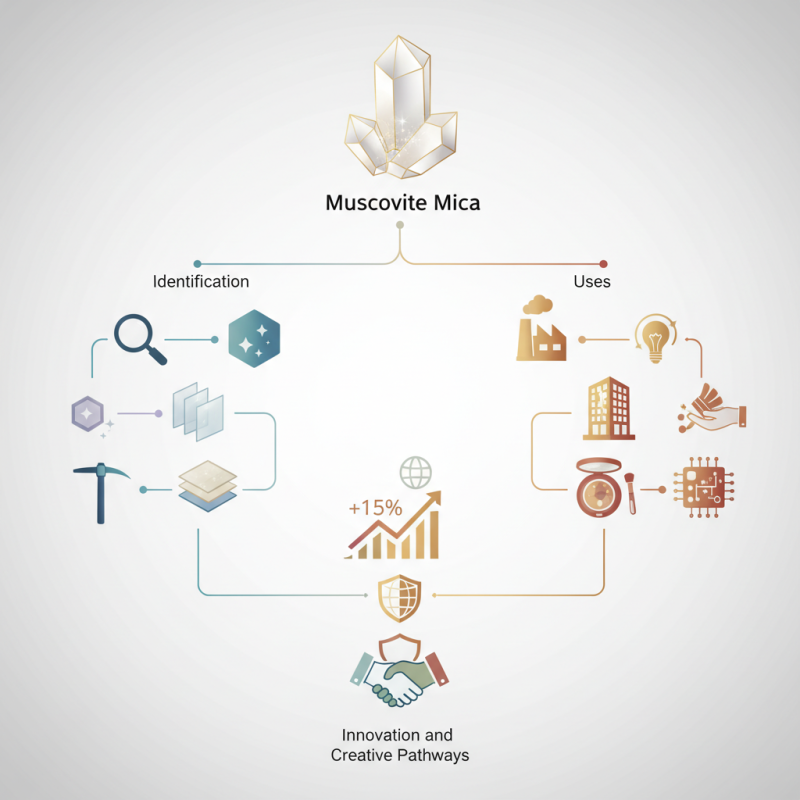
Identifying Muscovite Mica: Key Characteristics and Properties
Muscovite mica is a remarkable mineral with unique properties. It is a form of mica, characterized by its thin, flexible sheets. These sheets are transparent, allowing light to pass through. They range in color from colorless to shades of brown or green. When you hold them up to the light, their sparkling appearance is striking.
Identifying muscovite mica can be straightforward if you know what to look for. It has a perfect cleavage quality, meaning it can split into thin sheets easily. This feature is essential when working on projects. The sheets are also heat resistant, which makes them excellent for insulation. The flexibility of muscovite can be both an asset and a challenge. Sometimes, working with its delicate nature requires careful handling, leading to unexpected breaks.
While its beauty is undeniable, muscovite can be tricky. Not all mica is muscovite, and identifying other varieties requires a keen eye. If you mistake a similar mineral for muscovite, it could affect your project's outcome. Consider using a magnifying glass to inspect its crystal structure. The presence of impurities can also be misleading. Learning to identify this mineral properly takes practice and patience.
Sources and Locations: Where to Find Muscovite Mica
Muscovite mica can be found in various geological formations. Schist and granite are two common sources. You might also discover it in pegmatite veins. These locations typically have abundant minerals. When searching for muscovite mica, look for areas with rock outcrops. Streams and rivers may also carry mica due to erosion.
In North America, some significant deposits exist. Regions in the eastern United States are ideal for exploration. The Appalachian Mountains often yield fine specimens. In Canada, Quebec and Ontario have rich mica resources. However, some areas might be regulated. Always check local laws before collecting.
Understanding where to find muscovite is just one part. Gathering it can be challenging. Sometimes, the mica crystals can be small and scattered. Patience is vital as you sift through rocks. Remember, good quality muscovite has a brilliant shine. It may not always be easy to locate, but it’s worth the effort.
Usage of Muscovite Mica in Various Industries
Preparation and Processing: How to Work with Muscovite Mica
Muscovite mica is a versatile mineral used in various projects. Proper preparation and processing techniques are crucial for optimal results. To work with muscovite mica, one has to obtain high-quality sheets. According to a report from the U.S. Geological Survey, the global production of mica was approximately 170,000 tons in 2019. It shows a steady growth trend, emphasizing the increasing interest in mica materials.
Processing muscovite can be a meticulous task. Start by cleaning the sheets to remove any impurities. This step may take longer than expected. After cleaning, one should gently break the sheets into smaller pieces. Be careful not to crush them; this can lead to loss of quality. Mica can easily flake, but handling it tenderly is key. When mixed with resin or paint, it can enhance texture and appearance.
It's important to reflect on potential challenges. The mica industry faces scrutiny about ethical sourcing. Awareness is growing, leading to safer practices. Ensuring that your mica is from responsible sources can be an added step in your project. While working with muscovite mica, remember to approach it with caution and mindfulness. It's not just a material; it symbolizes a broader commitment to ethical craftsmanship.
How to Identify and Use Muscovite Mica in Your Projects?
| Property | Details |
| Chemical Formula | KAl2(AlSi3O10)(OH)2 |
| Color | Colorless, silver, brown, or green |
| Mica Type | Muscovite |
| Hardness (Mohs Scale) | 2.5 - 3 |
| Density | 2.8 - 3.0 g/cm³ |
| Applications | Electrical insulation, cosmetics, paints, sealants |
| Processing Methods | Crushing, milling, drying, and separating |
| Safety Precautions | Use dust masks and protective gear while handling |
| Availability | Widely available in mineral supply stores |
Applications in Crafts and Industry: Utilizing Mica Effectively
Muscovite mica is a versatile mineral, widely used in crafts and industry. Its unique properties, such as a shiny appearance and heat resistance, make it popular. In crafts, mica adds sparkle to paintings and handmade soaps. Crafters often mix powdered mica into resin for a shimmering effect. This technique enhances the aesthetic appeal of art pieces.
In the construction industry, mica acts as a binding agent in various materials. It improves the durability of paints and coatings. However, working with mica requires caution. Dust generated can be harmful when inhaled. Using proper masks and ventilation is crucial. Applying mica layers may also lead to uneven surfaces. Fine-tuning the process can result in better finishes.
Mica's applications extend to electronics. It is used in insulation and capacitors. Still, sourcing high-quality mica can be challenging. Not all mica is created equal; impurities can affect performance. Experimentation can help in discovering the right types for each project. Taking time for research and practice can lead to successful outcomes.
Safety Considerations: Handling Muscovite Mica Properly
Muscovite mica is a beautiful mineral used in various projects, from crafting to construction. However, handling it safely is crucial. Muscovite can release fine particles into the air, which can be harmful if inhaled. Therefore, wearing a mask is necessary during any work with mica. This simple precaution helps reduce the risk of respiratory issues.
It's essential to work in a well-ventilated area. Opening windows or using a fan can make a significant difference. If you are cutting or grinding the mica, use a damp cloth to minimize dust. This will help keep the work area cleaner and safer.
Here are some tips to remember: Always store muscovite mica in a sealed container to prevent dust dispersal. Ensure that your workspace is clear and organized. A tidy area decreases the chances of accidents. Lastly, consider wearing gloves to protect your skin from irritation. While muscovite is generally safe, it's better to take these precautions seriously.