
How to Choose the Right Quartz Reactor?

Choosing the right Quartz Reactor begins with more than comparing prices or polished product photos. In laboratory and industrial settings, quartz purity, wall thickness, geometry, and sealing quality can change performance. A reactor may look identical on a supplier’s website, yet behave differently under heat, vacuum, ultraviolet exposure, or corrosive process conditions. This guide explains the practical checks that support a defensible purchase. It focuses on evidence, not attractive claims.

Start by defining the process window. Record operating temperature, pressure, gas flow, liquid volume, light source, and expected reaction time. Consider thermal expansion carefully. A thick quartz tube offers strength, but it can also heat unevenly. A narrow chamber improves control, while restricting mixing and maintenance access. Connections deserve equal attention. Inspect valve materials, joint dimensions, gasket compatibility, and cleaning requirements. Request material certificates, dimensional drawings, test data, and a clear warranty. Reliable suppliers should explain limits without hiding behind vague phrases. Ask how the reactor was inspected and whether replacement parts remain available.

Experience teaches that the “best” reactor is rarely universal. A design that works well for a small photochemical setup may fail in a high-temperature pilot system. I would compare at least two qualified options and ask an engineer to review the risk points. No choice is perfect. Uncertainty remains. Therefore, document every assumption before approval. Recheck the decision after initial trials, especially if the quartz shows clouding, stress marks, deposits, or unexpected temperature gradients. With disciplined evaluation, the Quartz Reactor becomes a controlled process component, rather than an expensive guess.
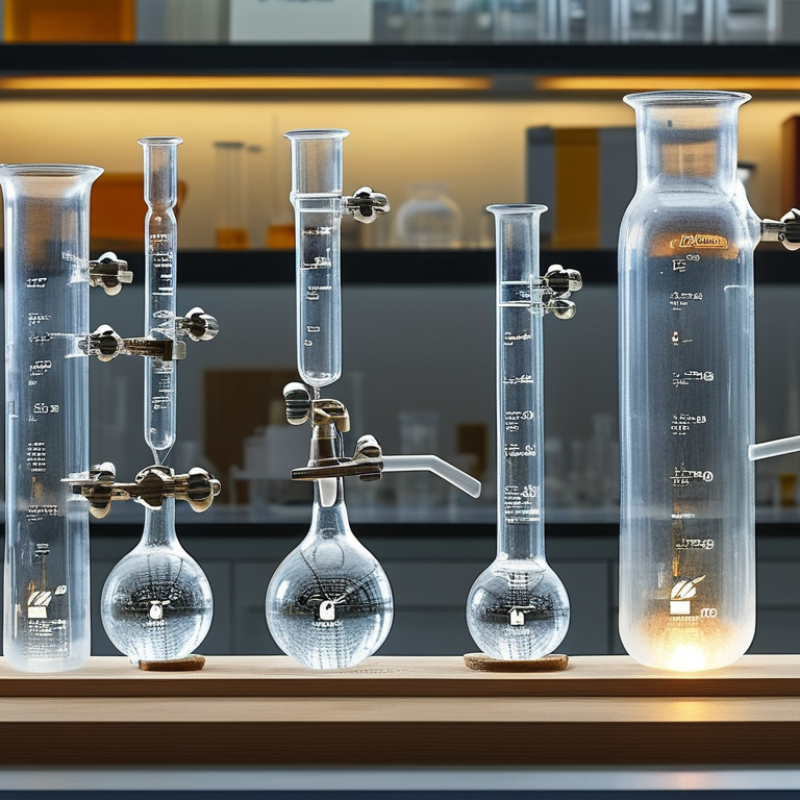
How to Choose the Right Quartz Reactor?

Define the Purpose and Operating Conditions of the Quartz Reactor

Choosing the right quartz reactor starts with a precise definition of its purpose. Is it designed for ultraviolet exposure, high-temperature processing, chemical mixing, or laboratory testing? Each application demands different dimensions, wall thickness, and internal geometry. A reactor used for UV treatment needs excellent light transmission and minimal shadowing. A thermal process may require stronger walls and controlled expansion space.

Operating conditions must be recorded before contacting a manufacturer or engineer. Note the working temperature, peak temperature, pressure, fluid composition, flow rate, and exposure time. Quartz performs well at elevated temperatures and resists many chemicals, but it is not universally resistant. Sudden temperature changes can cause thermal shock. Mechanical impact remains a serious risk.

Small details matter. A narrow inlet can increase pressure loss. Poorly positioned fittings may create dead zones, leaving material untreated. I have seen design discussions focus on reactor volume while ignoring residence-time distribution. That mistake can reduce process consistency. Measure the actual fluid behavior whenever possible. Do not rely only on nominal flow rates.

The reactor should also match the available monitoring equipment. Temperature probes, pressure sensors, and sampling ports must fit without blocking light or disturbing circulation. Cleaning procedures deserve attention too. Residue on quartz can reduce transparency and alter heat transfer. A design that looks efficient on paper may be difficult to inspect in practice. Leave room for maintenance, and question every assumption.

Select the Appropriate Quartz Reactor Design and Configuration

How to Choose the Right Quartz Reactor?

Select the Appropriate Quartz Reactor Design and Configuration

Choosing a quartz reactor starts with the process, not the vessel’s appearance. Define temperature, pressure, gas chemistry, throughput, and cleaning frequency. A vertical batch reactor suits repeated wafer processing and stable loading. A horizontal tube reactor may offer simpler maintenance and clearer gas-flow control. Single-wafer systems provide faster response, but batch systems can improve production efficiency.

Material behavior also matters. Fused quartz has very low thermal expansion, commonly reported near 0.55 ppm/K in technical materials data. This supports rapid heating and cooling, but sudden temperature changes can still cause stress. SEMI’s 2024 World Fab Forecast reported continued global capacity growth, increasing pressure on repeatability and equipment uptime. Therefore, inspect port geometry, wall thickness, heater spacing, and exhaust design together. A reactor with excellent purity may still perform poorly if flow distribution is uneven.

Tips: Match the chamber volume to the actual process load. Oversized spaces waste energy and extend purge time. Confirm temperature uniformity across the working zone, not only at the center. Review quartz replacement records from similar processes. Small design changes can affect particle generation. I would also challenge one common assumption: thicker quartz is not always safer. It can reduce deformation, yet it may slow thermal response and increase energy demand. Validate the choice through temperature mapping, pressure testing, and a short pilot run before full installation. Cite: SEMI, World Fab Forecast 2024; NIST, materials property data for fused silica.

How to Choose the Right Quartz Reactor? - Select the Appropriate Quartz Reactor Design and Configuration
Selection Dimension Typical Options Recommended Quartz Reactor Configuration Key Design Considerations Common Applications
Reactor Operation Batch, semi-batch, or continuous flow Batch reactors provide easier charging, sampling, and cleaning. Flow reactors offer better residence-time control and are suitable for steady-state operation. Photochemistry, catalyst testing, thermal treatment, gas–solid reactions
Reactor Geometry Cylindrical vessel, straight tube, annular tube, or multi-zone tube Cylindrical vessels are practical for stirring. Straight tubes simplify gas flow. Annular designs can improve light delivery when the optical path must be short. UV reactions, plasma-assisted processes, gas-phase reactions, thin-film processing
Working Volume Small laboratory scale to pilot-scale volume Do not fill a batch reactor completely. Allow space for thermal expansion, gas disengagement, mixing, and safe pressure control. The working volume should be defined separately from total volume. Screening experiments, scale-up studies, process development
Light Transmission Deep-UV, UV, visible, or infrared exposure Fused quartz generally transmits ultraviolet and visible radiation better than ordinary glass. Transmission depends on material grade, wall thickness, surface condition, wavelength, and impurities. Photocatalysis, UV curing, photolysis, semiconductor research
Temperature Range Ambient, elevated temperature, or thermal cycling Quartz has a very low coefficient of thermal expansion and good thermal-shock resistance, but it can still fracture from localized heating, impact, scratches, or rapid uneven cooling. Calcination, thermal decomposition, annealing, high-temperature synthesis
Pressure Mode Atmospheric, vacuum, low positive pressure, or pressure-rated design Quartz is brittle and does not tolerate pressure abuse. Wall thickness, diameter, shape, supports, seals, and temperature must be evaluated together. Never assume a standard tube is pressure-rated. Vacuum processing, inert-gas reactions, controlled-atmosphere experiments
Atmosphere Control Air, nitrogen, argon, oxygen, hydrogen-containing gas, or mixed gases Provide a gas inlet, outlet, purge route, and pressure-relief strategy where required. Gas compatibility must include the quartz, tubing, valves, fittings, and seals. Oxidation, reduction, inert processing, catalytic gas reactions
Mixing Requirement No mixing, magnetic stirring, mechanical stirring, or gas bubbling Stirring improves temperature and concentration uniformity. Confirm that the stir bar or shaft will not strike the quartz surface, especially during high-speed operation. Liquid-phase synthesis, dissolution, extraction, photocatalytic suspension reactions
Heating Method Heating mantle, furnace, hot plate, infrared source, or external lamp Use thermocouples or other sensors that do not create stress points. External heating should be uniform, and direct flame contact should be avoided unless the assembly is specifically designed for it. Thermal synthesis, gas-phase processing, evaporation, heat-treatment studies
Optical Access Side illumination, top illumination, immersion lamp, or external lamp exposure Consider lamp spectrum, reactor wall thickness, liquid absorbance, scattering, fouling, and cooling requirements. A quartz window or immersion well may be needed for efficient UV delivery. Photocatalysis, photochemical synthesis, UV disinfection, photoelectrochemical studies
Port Configuration Single neck, multi-neck, side ports, dip tube, sampling port, or cooling port Additional ports increase assembly complexity and potential leak points. Port placement should avoid shadowing the reaction zone and should allow maintenance access. Instrumented experiments, controlled-atmosphere reactions, sampling-intensive workflows
Sealing System Open top, ground-glass joint, compression fitting, elastomer seal, or fused connection Quartz may be chemically resistant while the sealing material is not. Check elastomer compatibility, permeation, outgassing, thermal limits, and differential expansion between materials. Vacuum work, gas-tight photochemistry, heated liquid reactions
Chemical Compatibility Acidic, oxidizing, aqueous, organic, or high-purity environments Quartz is resistant to many acids and aqueous solutions, but it is attacked by hydrofluoric acid and hot concentrated alkaline solutions. Verify compatibility at the actual concentration and temperature. High-purity synthesis, acid treatment, aqueous processing, UV reactions
Cleaning and Maintenance Manual rinsing, solvent cleaning, acid cleaning, or thermal cleaning Avoid abrasive tools and sudden temperature changes. Scratches, chips, and impact damage can significantly reduce mechanical reliability. Shared laboratory reactors, high-purity processes, repeated photochemical cycles
Process Monitoring Temperature, pressure, pH, dissolved oxygen, gas flow, optical intensity, or sampling Sensor location affects measurement accuracy. For optical processes, probes and fittings should be positioned to reduce shadowing and unwanted reflection. Reaction optimization, kinetic studies, quality control, scale-up validation
Scale-Up Strategy Increase vessel volume, use parallel reactors, or move from batch to flow Optical path length and surface-area-to-volume ratio can change process performance. Parallel small reactors may provide more consistent exposure than a single large vessel. Process development, pilot testing, production feasibility studies

Match Quartz Material Properties to Process Requirements

How to Choose the Right Quartz Reactor?

Quartz selection should begin with process chemistry, not vessel shape. Fused silica contains about 99.9% silicon dioxide and offers strong resistance to many acids. However, hot alkaline solutions can attack it quickly. The ASM Handbook reports a thermal expansion coefficient near 0.55 × 10⁻⁶/K for fused silica. This low value helps a reactor survive repeated heating cycles. It does not make the vessel immune to thermal shock.

Match the quartz grade to temperature, pressure, and contamination limits. For high-temperature processing, review the softening point, listed near 1,660°C in ASM material data. Operating close to that limit is poor practice. A reactor wall may remain clear while stress develops around a joint or sharp corner. Keep temperature ramps controlled. A 10°C-per-minute ramp may be acceptable in one design, but excessive in another.

Purity also matters. The U.S. Geological Survey’s Mineral Commodity Summaries 2024 identifies silica as a major industrial material used in glass and technical applications. Yet “high purity” is not a complete specification. Ask for trace-metal data, hydroxyl content, wall thickness, and inspection records. NIST measurement guidance also stresses calibrated temperature readings and uncertainty control. That detail is easy to overlook. A transparent tube is not automatically a reliable reactor. I would also question whether a custom flange, coating, or welded port introduces more risk than the process itself.

Evaluate Size, Heating, Sealing, and Gas-Handling Features

Choosing the Right Quartz Reactor

I start with the sample volume, not the reactor’s advertised capacity. A narrow chamber often gives better temperature uniformity and gas contact. Measure the vessel, fittings, and loading tools together. Leave enough headspace for expansion and safe handling. For example, a 50-millimeter tube may suit a small batch, but it can become crowded around a thermocouple. I once selected a compact reactor that looked efficient on paper. Loading became awkward, and cleaning took twice as long.

Heating control deserves careful attention. Quartz tolerates high temperatures, but uneven heating can stress the tube. Choose a furnace with stable control, suitable insulation, and a sensor near the sample zone. Sealing components must match the temperature and chemical conditions. Inspect O-rings, flanges, and compression fittings regularly. Small scratches can become leak paths. Perform a pressure-hold or leak test before heating. Do not assume a tight hand connection is reliable.

Gas handling should support steady, measurable flow. Use compatible tubing, calibrated flow control, and a clear outlet path. An inlet filter helps prevent particles from entering the chamber. Include pressure protection where required by the system design. Keep exhaust routing safe and visible. I prefer simple layouts because complicated tubing hides mistakes. Still, my first layout had too many joints. Fewer connections would have made troubleshooting easier. Record temperatures, flow rates, and seal condition during each run. Those notes often reveal problems that specifications miss.

Compare Quality, Maintenance Needs, Safety, and Total Cost

Choosing a quartz reactor requires more than checking wall thickness or optical clarity. In my experience, uniform tubing, clean joints, and low metallic contamination protect process consistency. The 2024 SIA Factbook reported global semiconductor sales of 526.9 billion dollars in 2023. That scale makes small yield losses expensive.

Maintenance needs deserve equal attention. Ask how often the reactor needs cleaning, whether deposits can be removed without scratching, and how quickly replacement parts arrive. A rough cost model should include labor, gases, electricity, cleaning chemicals, inspection, and lost production time. It is easy to compare purchase prices and ignore downtime. That mistake happens often.

Safety must remain measurable. OSHA’s respirable crystalline silica standard sets an eight-hour exposure limit of 50 micrograms per cubic meter. Handling damaged quartz, especially during cleaning, demands controlled procedures and suitable protective equipment. Review the reactor against SEMI S2 safety guidance, then document temperature limits, pressure controls, and breakage response. A cheaper design may need more frequent inspection. I have also seen “maintenance-free” claims become unrealistic after repeated thermal cycling. Use supplier test records, service histories, and independent inspection results before calculating total cost. The best reactor is not always the one with the lowest quotation.

How to Choose the Right Quartz Reactor?

Compare quality, maintenance needs, safety, and total cost using a normalized engineering planning index. Higher scores indicate a more favorable selection; for total cost, a higher score means lower expected ownership cost.

The comparison reflects typical design trade-offs: open quartz tube reactors are easier to clean and generally lower cost, sealed batch reactors improve containment but require more complex maintenance, and jacketed flow reactors provide stronger process control and safety features with higher installation and operating complexity.

Optimized by Optimole