
How to Choose the Best Auto Labeling Machine in China?
Choosing the best Auto Labeling Machine in China starts with the product, not the brochure. A round bottle, a flat carton, and a tapered jar each create different labeling challenges. Label size, adhesive, container material, line speed, and available floor space all matter. A machine that runs smoothly in a demonstration may behave differently with your actual products. Test it with your containers and labels.
Label-industry analyst Corey Reardon’s market-focused perspective offers a useful reminder: match equipment decisions to real operating needs. A practical buyer’s rule is: “Choose the machine around the product, label, and production line—not the sales promise.” This is a guiding principle, not a verified direct quotation. Ask suppliers for clear specifications, sample-run results, changeover details, and service arrangements. Check how operators load labels, adjust sensors, and clean contact parts. Small details count.
This guide explains how to compare machine types, inspect supplier capabilities, and assess long-term support in China. Look closely at accuracy, speed, and compatibility. Then consider training and spare-parts availability. One point is easy to miss: the cheapest machine may cost more when adjustments become routine. Still, no checklist can replace a real production trial. Use the criteria as a starting point, and question assumptions that do not fit your line.
What an Auto Labeling Machine Does and How It Works
How to Choose the Best Auto Labeling Machine in China?
An automatic labeling machine places labels on products or packages at a steady, repeatable speed. Its purpose is simple: position each label accurately while products move through a production line. Machine designs vary, so the right setup depends on package shape, label material, and required output.
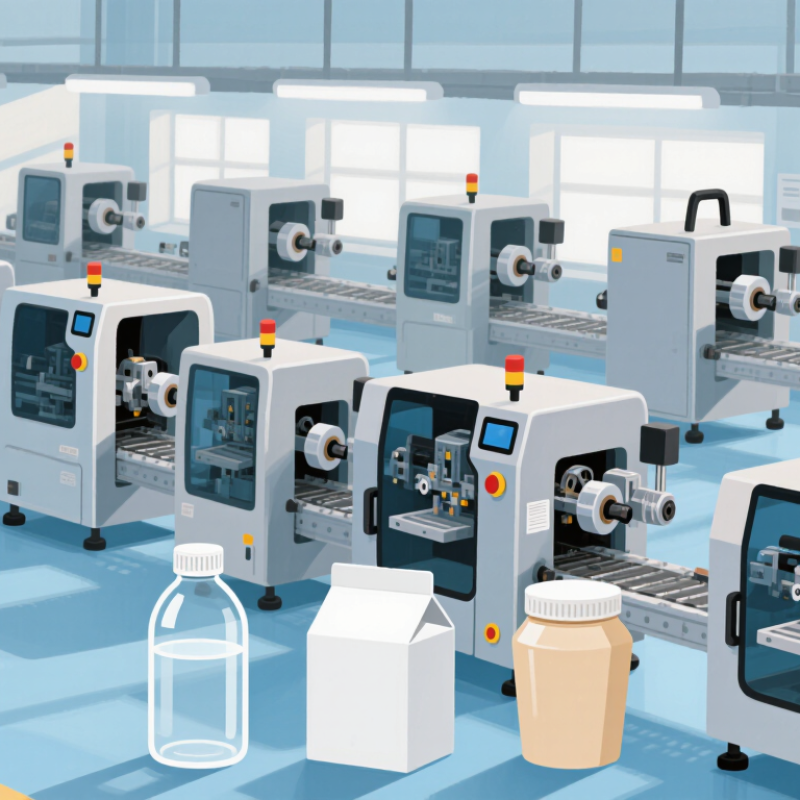
A typical line uses a conveyor, a product sensor, a label roll, and an applicator. The sensor detects an approaching item and signals the controller. Rollers then feed the label, while a peel plate separates it from its backing. An applicator presses it onto the package. For round bottles, rotating rollers may help smooth the label. Flat cartons often need a different guide and pressure setting. That matters. In practice, alignment is rarely perfect on the first run; testing real products helps reveal small shifts, wrinkles, or slipping labels.
Tips: Bring sample containers and labels when evaluating a machine in China. Ask for a trial at your intended speed, and check label position across several products. Confirm how quickly operators can adjust guides and replace a roll. A brief test cannot predict every production issue, but it can expose obvious mismatches early.
How to Define Your Product and Labeling Requirements
Before comparing auto labeling machines, define the product that will actually run on the line. Record its shape, dimensions, weight, and surface material. A glass jar, flexible pouch, and tapered bottle each present different feeding and positioning challenges. Note whether containers arrive upright, closely spaced, or with slight variations between batches. Small details matter.
Then specify the label itself: material, size, roll direction, adhesive, and placement. Include the acceptable position tolerance, such as a few millimeters from a seam or container edge. Estimate normal and peak production speed, not just the target shown in a sales specification. Measure twice. Also note changeover frequency, available floor space, and operator access for loading rolls and cleaning sensors.
Real samples are more useful than assumptions. Ask for a test using your containers and labels at realistic line speeds. Check adhesion after application, wrinkles around curves, alignment, and performance on damp or dusty surfaces. If the product changes seasonally, test those variations too. I have seen teams focus on maximum speed and overlook frequent size changes; that can make a fast machine frustrating in daily use. Record what failed during testing, even if the result seems minor. That record helps suppliers recommend suitable feeding, sensing, and adjustment features.
Which Auto Labeling Machine Type Fits Your Production Line
The right auto labeling machine depends on the package and label position. A wraparound applicator suits round bottles and jars, where the label must follow a curved surface. Flat cartons and pouches may need front-and-back or top-and-bottom labeling. For full-body coverage, a sleeve system can work, but it requires compatible film and room for a heat tunnel. More equipment is not always better.
Check the real production rate, not only the machine’s maximum speed. Allow time for container spacing, label rolls, and routine adjustments. Small details matter. A sensor must detect each item reliably, even when containers vary slightly in shape or arrive with uneven gaps. Also consider changeovers: frequent shifts between package sizes may call for adjustable guides and settings that operators can repeat.
Before choosing, test representative containers and labels on the production line. Observe placement, wrinkles, missed labels, and how quickly operators can clear a jam. A clean test with one sample is useful, but it may not reflect a full shift. That is an easy assumption to make. Confirm the machine can connect with the existing conveyor and leave enough access for cleaning and maintenance.
How to Choose the Best Auto Labeling Machine in China?
Which auto labeling machine type fits your production line? Compare common applications by container format.
A value of 1 indicates a commonly used application; 0 indicates it is not a typical match. These are general compatibility guides, not limits—actual suitability depends on the container, label, and machine configuration.
How to Evaluate Chinese Manufacturers and Machine Specifications
Choosing an auto labeling machine in China starts with the actual container, not a catalogue speed. Send the manufacturer your bottles, jars, or cartons, including samples with realistic surface finishes. Ask for a witnessed test using your label material and product spacing. A clean demo is not enough. Check placement tolerance, label wrinkles, and performance when containers arrive slightly unevenly.
Compare rated speed with your required output per minute, then ask how speed changes during label-roll replacement and format changeovers. Confirm the machine accommodates your label width, container diameter, and production-line direction. Review the electrical drawings, operating manual, parts list, and inspection records before placing an order. Useful details include sensor type, adjustment points, guarding, and the availability of commonly replaced parts. Ask how remote support works and what response times are included; vague promises deserve follow-up.
A factory visit or live video inspection can show whether assembly and testing are consistent. Request references from businesses handling similar containers, and verify what the quoted price excludes, such as installation or operator training. Specifications may look precise on paper, yet real batches vary. That is worth discussing openly. Record agreed test conditions and acceptance criteria in the purchase documents, so both sides judge performance against the same practical standard.
How to Verify Performance, Compliance, and Total Cost Before Buying
Before buying an auto labeling machine in China, test it with your own containers, labels, and production settings. Ask the supplier to run samples at your target speed, then check placement accuracy across several hundred units. Watch for wrinkles, slipping bottles, missed labels, and inconsistent spacing. Measure changeover time too; frequent product changes can make a fast machine feel slow. Measure twice.
Request a written test report that records line speed, reject rate, and operating conditions. A demonstration using ideal samples may not reflect your factory floor. No test is perfect, so repeat the run if results vary. Confirm that sensors, guards, and emergency stops work as expected, and review the operating and maintenance manuals before installation.
Check compliance documents against the requirements of your destination market and facility. Ask for relevant declarations, electrical specifications, and safety documentation, then have a qualified reviewer verify them. Calculate total cost beyond the purchase price: shipping, installation, tooling, training, spare parts, label waste, and expected downtime all matter. A simple spreadsheet helps compare quotes on the same assumptions. Include service response time, but do not treat a promise as a guarantee; get key terms in writing. I might still overlook a cost, especially during a rushed purchase. That is worth admitting.
| Machine configuration | Typical application | Indicative throughput | Label placement target | Changeover and format range | Performance verification before purchase | Compliance documents to request | Illustrative equipment budget (USD) | Five-year cost items to compare |
|---|---|---|---|---|---|---|---|---|
| Semi-automatic wrap-around or flat-surface labeler | Low-volume batches, frequent product changes, or operations where an operator places each container. | About 5–25 containers/minute; actual output depends on operator pace, container handling, and label size. | Set an acceptance target with the supplier. A practical trial may specify label position within ±1–2 mm under defined conditions. | Often suited to one or a few container formats. Confirm the supported diameter, height, label width, and adjustment range in writing. | Run the buyer’s containers and labels for at least 30–60 minutes. Record good units, rejects, stops, and placement measurements. | Machine electrical drawings, operating and maintenance manuals, risk assessment, parts list, and applicable market-specific conformity documents. | $2,000–$12,000, indicative planning range only. | Machine price, operator time, format parts, training, spare sensors, shipping, installation, and expected maintenance. |
| Automatic inline pressure-sensitive labeler | Continuous production lines labeling bottles, jars, or other containers with pressure-sensitive labels. | About 20–100 containers/minute; line speed is limited by product spacing, container stability, and label application method. | Agree on a measurable tolerance for the actual product and label. Validate performance across repeated runs, not just a short demonstration. | May cover multiple sizes with adjustment or change parts. Request a written changeover procedure and timed changeover demonstration. | Conduct a line-speed test using production-representative containers and labels. Track sustained output, label waste, missed labels, jams, and recovery time. | Applicable conformity declaration and technical documentation for the destination market; electrical safety information; risk assessment; material declarations for relevant contact parts, if applicable. | $8,000–$45,000, indicative planning range only. | Machine and integration, guarding, conveyor modifications, format kits, commissioning, training, spare parts, service response, and downtime risk. |
| Higher-speed or multi-panel automatic labeling system | Higher-volume lines, multiple label positions, or applications requiring coordinated front-and-back or wrap-around labeling. | About 80–200+ containers/minute for suitable applications; the validated rate can be substantially lower for unstable or difficult containers. | Set separate tolerances for each label position and define how skew, wrinkles, and label overlap are measured. | Format range and changeover time depend heavily on conveyor, handling, and application modules. Require a format-by-format specification. | Run a sustained factory acceptance test at the agreed rate, followed by a site acceptance test on the production line. Define pass/fail limits and remedies in the contract. | Destination-market conformity documents, electrical schematics, machine risk assessment, safety-device details, user documentation, and traceable component information as relevant. | $30,000–$150,000+, indicative planning range only. | Purchase price, engineering and line integration, safety upgrades, format tooling, commissioning, preventive maintenance, critical spares, and the cost of unplanned stoppages. |
Compliance check: Requirements depend on where the machine will be installed. For EU sales, request the applicable conformity documentation and technical file information; for other markets, confirm local electrical and machinery-safety requirements. ISO 9001 is a quality-management-system certification, not proof that a specific machine complies with product-safety law.
Total-cost comparison: Ask each supplier to quote the same scope and separately list machine price, options, format parts, packing and freight, installation, training, taxes or duties, warranty, spare parts, and service. Compare these costs over the same ownership period and production assumptions.