
How to Choose Plastic Candy Stand Up Pouches in 2026

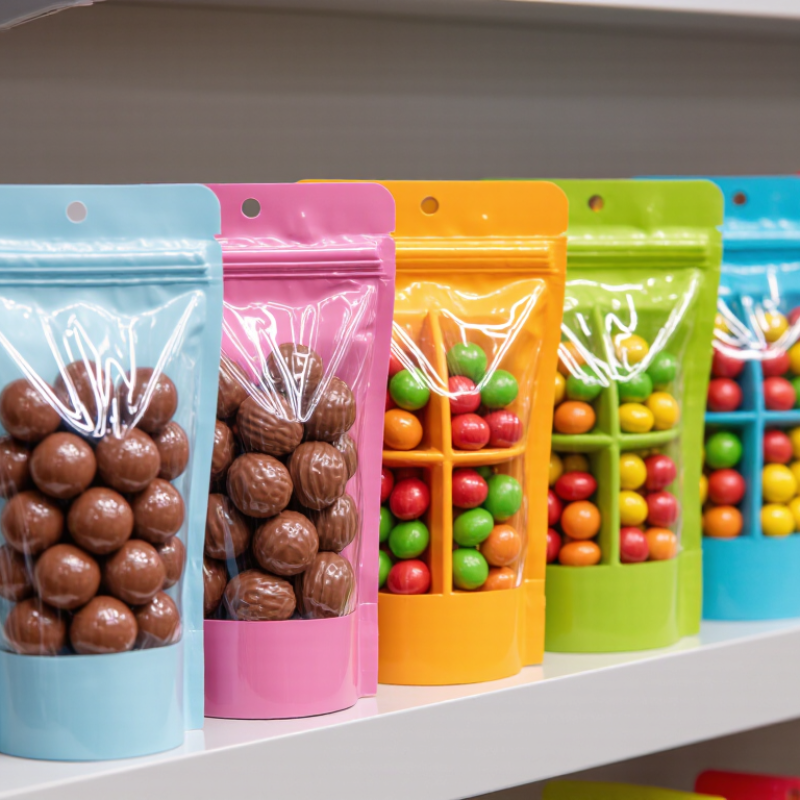
Choosing Plastic Candy Stand Up Pouches in 2026 means balancing shelf appeal with practical protection. A pouch must stand straight, seal cleanly, and keep small candies from escaping through weak seams. Glossy film can make colors pop under store lighting. But appearance alone is not enough.

The Flexible Packaging Association’s 2024 State of the U.S. Flexible Packaging Industry report puts 2023 industry shipments at about $42.9 billion. That scale reflects a broad packaging sector, not candy pouches alone, so buyers should assess specifications for their own product. The National Confectioners Association’s 2024 State of Treating report provides useful context on candy consumers and their habits. Together, these sources point to a practical choice: match pouch structure, barrier, and closure to the candy’s texture, shelf life, and sales channel. A chocolate-coated sweet may need different protection from a hard candy. Small details matter.

Alison Keane, president and CEO of the Flexible Packaging Association, has emphasized packaging’s role in protecting products and supporting more sustainable choices. This is a paraphrase of her public perspective, not a verbatim quotation. Use it as a useful reminder, not a specification. Ask suppliers for material details, seal-testing results, and clear recyclability guidance for the intended market. Compare samples by filling them, stacking them, and checking whether the base stays upright. A pouch can look perfect in a mock-up and disappoint on a packing line. That happens. The right choice is the one that performs consistently, not merely the one that photographs well.
How to Choose Plastic Candy Stand Up Pouches in 2026

Define Your Candy’s Packaging and Storage Requirements

Before choosing a pouch, define what the candy needs protection from. Gummies can stick together when warmth and moisture soften their surfaces. Hard candies may absorb moisture and lose their crisp texture. Chocolate needs careful temperature control; a pouch cannot prevent melting in a hot delivery van. Small details matter. Note the candy’s size, shape, oiliness, and expected storage time, then match the pouch’s barrier properties to those conditions.

Consider where the filled pouches will sit: in a cool pantry, under bright shop lights, or in a humid warehouse. A higher-barrier film may help limit moisture or oxygen exposure, while an opaque or metallized layer can reduce light exposure. Ask the supplier for film specifications, seal guidance, and food-contact documentation. Check that the pouch holds the planned fill without straining its seams. A zipper helps with repeated opening, but it does not replace a sound initial seal. Test filled samples under realistic storage conditions. A pouch can look perfect on day one, then feel less convincing after a warm week. I would not assume one material suits every candy; even a small test run can reveal leaks, clumping, or awkward pouring before a larger order.

Compare Plastic Materials, Barrier Properties, and Shelf-Life Needs

How to Choose Plastic Candy Stand Up Pouches in 2026

Candy type should guide the barrier, not the pouch’s appearance. Hard candies can become sticky when moisture enters; chocolate can lose flavor through oxygen, light, or odor exposure. PET often provides print quality and stiffness, while PE commonly forms the heat-seal layer. Metallized films can improve light and gas protection, but they hide the product. A clear high-barrier layer may suit display shelves, though performance can change with humidity. Candy is unforgiving.

Ask suppliers for oxygen transmission rate and water vapor transmission rate data, including test conditions. ASTM D3985 and ASTM F1249 are commonly used methods for these measurements. Request results for the finished laminate, not just one film. The Flexible Packaging Association’s 2024 State of the U.S. Flexible Packaging Industry report estimated 2023 U.S. industry shipments at $42.9 billion, showing how established flexible packaging is; that figure does not prove any pouch will protect your recipe. Test filled samples through expected storage conditions, and check seals after handling. I would also test a less protective, lower-cost option beside the premium structure. It may be enough—or it may not. Shelf life depends on the candy, the seal, and real storage temperatures.

Choose Pouch Size, Shape, Closure, and Display Features

How to Choose Plastic Candy Stand Up Pouches in 2026

Choose pouch size by the amount of candy and how customers will use it. A pouch filled to the top can strain its seals, while excess headspace may make a small portion look sparse. Test a few fill weights with the actual candy. Gummies and coated pieces settle differently, so estimates alone can miss the mark.

Shape affects both handling and shelf appeal. A flat-bottom pouch can stand steadily on a crowded counter, while a rounded or narrow profile may suit hanging displays. Check that the pouch remains upright when partly filled. For closure, zippers help customers reseal snacks, while tear notches make opening simple. Match the window size to the candy: a clear panel can show color and texture, but too much visibility may expose product to light. A polished mock-up can still prove awkward to fill; test it on the packing line.

Tips: Place a filled sample on the intended shelf. Check its footprint, label visibility, and zipper grip with dry fingers. Leave room for imperfect packing.

How to Choose Plastic Candy Stand Up Pouches in 2026 — Choose Pouch Size, Shape, Closure, and Display Features

Pouch Size (W × H + Gusset) Approximate Candy Fill Suitable Pouch Shape Closure Recommendation Display Features Best Suited For
100 × 150 + 30 mm About 40–100 g Compact stand-up pouch Press-to-close zipper; tear notch for first opening Optional small clear window; no hang hole needed for most shelf displays Small portions of gummies, hard candy, or individually wrapped sweets
120 × 180 + 40 mm About 80–180 g Classic Doyen-style pouch with rounded bottom gusset Resealable zipper above the product area Front window can show candy color and shape; suitable for countertop displays Everyday retail packs and mixed candy assortments
140 × 200 + 50 mm About 150–300 g Standard stand-up pouch Wide zipper for repeated opening; tear notch below the zipper Optional hang hole for peg displays; keep it clear of the zipper and seal Family-size gummies, chocolate pieces, and larger candy mixes
160 × 230 + 60 mm About 250–500 g Wide-base stand-up pouch Sturdy press-to-close zipper; consider a wider seal area for heavier fills Broad front panel for product information; a window may be placed below the main artwork Bulkier sweets, party mixes, and larger household packs
180 × 260 + 70 mm About 400–800 g Large-gusset stand-up pouch Heavy-duty zipper; check closure performance with the filled pouch Wide base improves shelf stability; optional reinforced hang hole for compatible peg displays Large-format candy assortments and refill packs
Custom dimensions based on product testing Set by target net weight and candy shape Curved, shaped, or flat-bottom pouch Choose a zipper, tear notch, or both according to use and pack size Specify window size, hang-hole position, and front-panel area before artwork approval Distinctive shelf presentation or candy with unusual dimensions

Planning note: Fill weights are approximate examples, not guaranteed capacities. Actual capacity depends on candy size, shape, density, and how the pouch is filled. Confirm dimensions and standing stability with filled samples, and verify that the packaging material and seal are suitable for the product and intended shelf life.

Verify Food-Contact Safety, Labeling, and Sustainability Claims

When choosing plastic candy stand-up pouches, check that every layer suits the candy’s actual contact conditions. Ask for a current food-contact declaration and supporting test information for the finished pouch, not just the base film. Heat, fat, acidity, and storage time can affect material performance. Keep records. If candy is packed warm or stored for months, confirm that the supplier has assessed those conditions.

Labels need equal care. Check the product name, ingredients, allergen statements, net quantity, and storage directions against the requirements in each sales market. Review the artwork at full size; small print can blur near a zipper or gusset. Make sure lot codes and date fields remain readable after filling. A label that looks clear on screen may not survive production. Generic templates may not fit every recipe.

Treat sustainability claims as evidence-based statements, not decoration. Ask what the pouch contains and whether local collection systems accept that exact combination. “Recyclable” can depend on location, sorting access, and package design, so qualify the claim where needed. Request documentation for recycled content or reduced material use, then compare it with the finished pouch specification. I’d still question broad claims; one thin layer does not tell the whole story.

Test Samples and Compare Suppliers, Costs, and Lead Times

Request samples in the exact candy pouch structure, film thickness, zipper, and print finish you plan to order. A flat swatch cannot show how a filled pouch behaves. Test seal strength, zipper cycles, puncture resistance, and product fit; then run samples on your filling line. Check barrier data, too, especially oxygen and moisture transmission. A shiny pouch proves little.

Compare quotes using the same specifications and order quantity. Include printing plates or cylinders, setup fees, freight, duties, and the cost of rejected pouches. The Flexible Packaging Association’s 2024 State of the U.S. Flexible Packaging Industry report estimated U.S. sales at $42.9 billion in 2023. That scale reflects a mature sector, but it does not make supplier quotes directly comparable. Ask each supplier for a written cost breakdown and sample test results.

Confirm lead times for artwork approval, tooling, production, and delivery separately. Ask what changes if a color needs correction or a seal test fails. Get the sample and production schedules in writing. Leave room for delays. A glossy sample can mislead; I would not approve from appearance alone. Sometimes, the cheapest quote is only cheaper on paper.

Optimized by Optimole