
How to Choose High Quality Pipe Machine Equipment?

Choosing High Quality Pipe Machine Equipment is not simply a price comparison. It is a production decision that affects accuracy, safety, maintenance, and long-term operating costs. A reliable machine should create consistent pipe dimensions, stable wall thickness, smooth surfaces, and dependable output during extended production runs.

Dr. W. Edwards Deming, a respected manufacturing quality expert, said, “Quality comes not from inspection, but from the improvement of the production process.” His principle remains practical for pipe manufacturers. A machine may look impressive in a showroom, yet perform poorly under heat, pressure, vibration, or continuous operation. Real evaluation should include factory testing, material compatibility, control-system stability, energy consumption, and access to replacement parts. Ask for production samples.

Look beyond specifications.

Experienced buyers inspect welds, bearings, extruder screws, cooling systems, and electrical cabinets. They also examine how quickly technicians can reach critical components. A polished brochure cannot reveal every weakness. That is where careful questioning matters.

High Quality Pipe Machine Equipment should support repeatable production rather than occasional success. Review the supplier’s installation records, customer references, training program, and response time. A trustworthy manufacturer explains limitations instead of promising perfect results. This is important because even excellent equipment can underperform when operators lack training or materials vary between batches.

There is no universal machine for every pipe factory. Sometimes, a lower-capacity system with stronger technical support proves more valuable. The final choice should connect machine design with actual pipe sizes, materials, output targets, workspace conditions, and future expansion plans. Mistakes remain possible, but disciplined evaluation makes them smaller, clearer, and easier to correct.
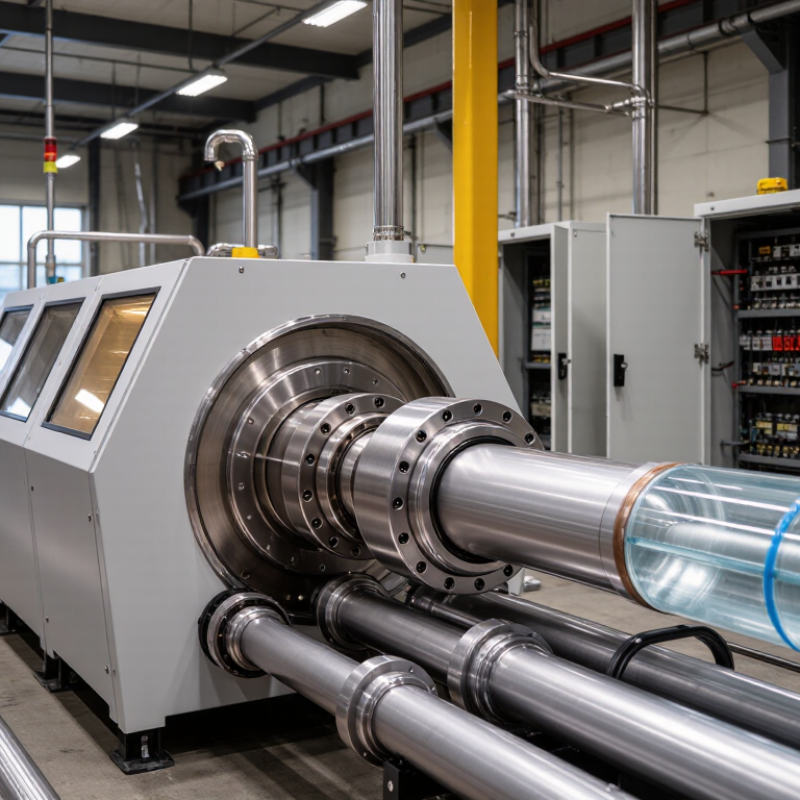
How to Choose High Quality Pipe Machine Equipment?

Defining Quality Standards for Pipe Machine Equipment

High-quality pipe machine equipment begins with defined, measurable standards.

ISO’s latest Survey reports more than one million ISO 9001 certificates worldwide. This figure shows quality management has become a global discipline, not a decorative certificate.

Buyers should request documented inspection plans, calibration records, material certificates, and traceable component serial numbers.
Look deeper.

For extrusion and forming equipment, dimensional stability matters more than a polished frame. Check wall-thickness variation, output consistency, temperature control, and surface finish under continuous production.

A reliable machine should provide test data from realistic resin grades, line speeds, and cooling conditions. The PlasticsEurope report “Plastics—the Fast Facts 2023” recorded global plastics production at approximately 400 million tonnes in 2022. That scale makes repeatable processing essential, especially when small deviations create large material losses.

Utilities also reveal hidden quality problems.

The U.S. Department of Energy’s compressed-air guidance estimates that leaks can waste 20% to 30% of compressor output. Inspect pneumatic circuits, pressure stability, and energy consumption during factory acceptance testing.

I would not trust a single successful trial; it proves too little. Run longer tests, record failures, and ask how quickly technicians can replace common wear parts.

No checklist catches everything. A machine may meet stated tolerances yet perform poorly in humid conditions, during voltage fluctuations, or with inexperienced operators. Those weaknesses deserve honest discussion before purchase.

Assessing Machine Design, Materials, and Manufacturing Precision

Choosing high-quality pipe machine equipment starts with its design, not its polished exterior. A reliable frame should resist vibration during cutting, forming, or welding operations. Inspect the layout around bearings, guides, motors, and emergency access points. Parts should be reachable without dismantling half the machine. That detail matters. In practical workshops, small access problems become repeated delays and unsafe shortcuts. Ask for load calculations, maintenance drawings, and test records before approving the equipment. A serious manufacturer should explain design limits clearly, including pipe diameter, wall thickness, and operating speed. Overstated capacity claims deserve caution.

Material selection reveals how the machine may perform after months of production. Look for suitable steel grades, hardened contact surfaces, corrosion protection, and properly insulated electrical components. Materials must match the stress, heat, and moisture around each working area. Manufacturing precision is equally important. Measure guide alignment, roller concentricity, shaft runout, and weld distortion with documented tools. Even a small alignment error can create uneven seams, surface marks, or unstable feeding. I once treated visual accuracy as sufficient; that judgment was too optimistic. Use calibrated gauges and repeat testing under realistic loads. Check sample pipes at different speeds, then record dimensional variation and surface quality. Do not rely on one perfect sample. Ask who verified the measurements and when. That evidence builds trust.

Comparing Production Capacity, Compatibility, and Automation Features

Selecting high-quality pipe machine equipment requires more than checking maximum output. Production capacity must match actual orders, material changes, and maintenance time. A machine rated at 1,000 pipes per hour may produce less when wall thickness, diameter, or cooling requirements change. In practice, I would request a trial run using the intended resin, tooling, and speed. The hourly number alone can mislead.

Compatibility deserves equal attention. Check pipe diameter ranges, material behavior, die dimensions, electrical standards, and available floor space. A suitable line should connect cleanly with mixers, feeders, cooling tanks, cutters, and inspection systems. The 2024 Deloitte Smart Manufacturing and Operations Survey identifies interoperability and data integration as persistent implementation challenges. That finding reflects factory reality: an advanced extruder can still underperform beside incompatible auxiliary equipment. Sometimes, the “best” machine is not the newest one.

Automation can improve repeatability, but it does not remove judgment. The International Federation of Robotics reported 541,302 industrial robots installed worldwide in 2023, showing continued investment in automated production. For pipe lines, useful features include automatic diameter control, recipe storage, remote alarms, and real-time energy monitoring. Rockwell Automation’s 2024 State of Smart Manufacturing Report found that 95% of manufacturers surveyed had invested in, or planned to invest in, smart technologies. Still, excessive automation may complicate repairs. I would examine sensor access, manual override functions, training needs, and spare-part availability. A careful compromise often works better than a fully automated promise.

How to Choose High Quality Pipe Machine Equipment?

Comparing production capacity, compatibility, and automation features

The chart uses a normalized 0–100 benchmark to compare common pipe machine configurations. Production capacity is based on maximum continuous output, compatibility reflects the supported pipe diameter range, and automation measures the proportion of feeding, sizing, cutting, and quality-control tasks handled automatically.

Equipment Configuration Typical Output Supported Diameter Automation Level
Standard Manual Line 8 m/min 20–63 mm Manual feeding and adjustment
Flexible Semi-Automatic Line 12 m/min 16–110 mm Automatic sizing and cutting
High-Output Automated Line 20 m/min 20–160 mm Integrated feeding, control, and inspection
Wide-Range Servo Line 16 m/min 16–200 mm Recipe-based automated changeover

Benchmark values represent typical industrial configuration ranges and are intended for equipment selection comparisons.

Checking Supplier Expertise, Certifications, Service, and Spare Parts

Choosing high quality pipe machine equipment starts with the supplier, not the catalog photograph. An experienced supplier should explain forming accuracy, welding stability, cutting tolerance, and expected maintenance intervals. Ask how many similar machines they have installed. Request installation records, sample pipes, and customer references from comparable production lines. A confident answer is useful. Vague promises are not.

Check certifications carefully. Confirm that certificates belong to the actual factory and match the machine model. Quality systems, electrical safety reports, material traceability, and documented factory testing all matter. Ask for inspection records showing alignment, speed testing, and emergency-stop performance. I once saw a machine pass a showroom demonstration but struggle with thinner steel during production. That experience taught me to request trial materials before signing.

Tips: Ask for a written service response time. Confirm remote support, technician availability, and training hours. Spare parts deserve equal attention. Request a recommended list for rollers, bearings, sensors, seals, and cutting blades. Check prices, delivery times, storage guidance, and compatibility details. A supplier may offer many parts, yet still miss one small sensor that stops the line. Keep critical items locally when possible. Also review the warranty exclusions. They can reveal practical weaknesses. Be willing to question your own assumptions; the cheapest quotation may not be the lowest operating cost.

How to Choose High Quality Pipe Machine Equipment? - Checking Supplier Expertise, Certifications, Service, and Spare Parts

Evaluation Dimension Suggested Weight Priority
Relevant Industry Experience 20% At least 5 years of documented experience with the same pipe process, such as extrusion, spiral welding, longitudinal welding, coating, or end finishing. Project references, machine model history, process flow diagrams, sample production records, and references from comparable applications. Incorrect machine configuration, unstable production results, longer commissioning time, and higher modification costs. High
Technical Capability 18% Supplier can define capacity, pipe diameter range, wall-thickness range, material compatibility, line speed, heating method, control system, and expected output based on measurable process data. Technical proposal, equipment layout, utility list, capacity calculation, process parameters, tolerances, and acceptance-test procedure. Under-sized equipment, excessive scrap, low actual output, or inability to process the specified materials. High
Quality Management System 12% A documented quality system aligned with ISO 9001 principles, including incoming inspection, process control, final inspection, nonconformity handling, and traceability. Current certificate issued by an accredited certification body, certificate scope, audit information, inspection plans, and sample quality records. Inconsistent component quality, weak traceability, repeated defects, and difficult warranty resolution. High
Product Safety and Regulatory Compliance 12% Equipment includes documented risk assessment, guarding, emergency stops, electrical protection, manuals, warning labels, and conformity documentation applicable to the installation market. Declaration of conformity where applicable, electrical drawings, risk assessment, safety-circuit description, user manual, and test records. Operator injury risk, import or installation delays, failed inspections, and additional compliance costs. High
Factory Acceptance Testing 10% Formal FAT is performed before shipment using agreed test materials or equivalent materials, with documented checks for speed, dimensions, temperature control, alarms, and safety functions. FAT protocol, test results, calibration records, production samples, inspection photographs, and signed punch-list closure. Problems are discovered only after installation, causing commissioning delays and expensive corrective work. High
Installation and Commissioning Service 10% Supplier provides installation guidance, commissioning support, operator training, maintenance training, and a defined response process for start-up problems. Service scope, engineer availability, training agenda, commissioning checklist, response-time commitment, and travel arrangements. Longer start-up period, improper operation, unstable quality, and dependence on informal technical assistance. High
Spare Parts Availability 8% Critical parts are identified by part number, compatible specification, recommended stock level, expected service life, and typical delivery time. Critical-spares list, exploded drawings, parts catalogue, stock policy, price validity, lead-time statement, and alternative-part details. Unexpected production stoppages, long downtime, incompatible replacements, and high emergency freight costs. High
Warranty and After-Sales Support 5% Warranty terms clearly define coverage, exclusions, response procedure, defect verification, replacement responsibility, and support duration. Signed warranty clause, service-level agreement, support channels, escalation procedure, and examples of service reports. Disputes over responsibility, slow corrective action, and unexpected repair expenses. Medium
Documentation and Maintainability 3% Complete documentation is supplied in the agreed language, including manuals, electrical schematics, pneumatic diagrams, software backups, lubrication points, and maintenance schedules. Sample manual, document index, drawing list, software backup policy, preventive-maintenance schedule, and training materials. Longer troubleshooting time, unsafe maintenance, and excessive dependence on the original supplier. Medium
Total Cost of Ownership 2% Evaluation includes purchase price, energy consumption, tooling, consumables, maintenance, spare parts, training, installation, and expected downtime—not only the initial quotation. Five-year cost model, energy data, maintenance intervals, consumable usage, tooling prices, spare-parts prices, and service rates. Low initial price but higher operating costs, frequent repairs, and reduced production profitability. Standard

Recommended evaluation method: Score each dimension from 1 to 5, multiply by the suggested weight, and verify all high-priority requirements before comparing quotations. Certification documents should be checked for scope, validity, issuing body, and applicability to the supplied equipment.

Calculating Total Costs, Maintenance Needs, and Long-Term Value

When choosing pipe machine equipment, calculate more than the purchase price. Include installation, tooling, electrical upgrades, training, and transport. A low-cost machine may require expensive adjustments before production starts. Ask for documented output rates under materials similar to yours. Numbers without test conditions can mislead.

Maintenance costs often decide the real value. Check how easily operators can reach bearings, rollers, sensors, and cutting components. Review the recommended service intervals and spare-part availability. A machine that stops for two days can cost more than routine maintenance. Keep a simple log for lubrication, alignment checks, part replacement, and unplanned downtime. It reveals patterns that sales brochures rarely show. I have seen teams overlook cleaning time. That small mistake affected weekly capacity.

Long-term value depends on stable performance, not impressive specifications alone. Compare energy use per production hour, changeover time, reject rates, and expected service life. Ask whether the control system can support future upgrades. Confirm that technical support includes practical troubleshooting, not only remote instructions. Operator training also matters because poor setup can damage equipment gradually. Do not trust every forecast. Verify claims with acceptance tests and references from comparable operations. A careful evaluation may delay the purchase, but it reduces expensive surprises later.

Optimized by Optimole