2026 How to Choose an Intrinsically Safe Blower Fan?
Selecting the right Intrinsically Safe Blower Fan is crucial for ensuring safety in hazardous environments. In industries such as oil and gas, mining, and chemicals, proper ventilation is vital. According to a report by the International Electrotechnical Commission, over 400 fatal incidents occur annually due to explosive atmospheres.
Expert Mark Thompson, a safety engineer at Industry Safety Solutions, emphasizes, “Choosing the right blower fan can make a significant difference in preventing accidents.” His insights underline the importance of understanding the specific safety requirements for your environment. It is not just about functionality; it is about compliance and risk mitigation.
When choosing an Intrinsically Safe Blower Fan, consider the operating environment and the necessary certifications. Reliable sources like Underwriters Laboratories provide guidelines on certified equipment standards. Balancing cost and quality remains a challenge many face. Ignoring these factors can lead to oversight and potential hazards, which we must continuously reflect upon.
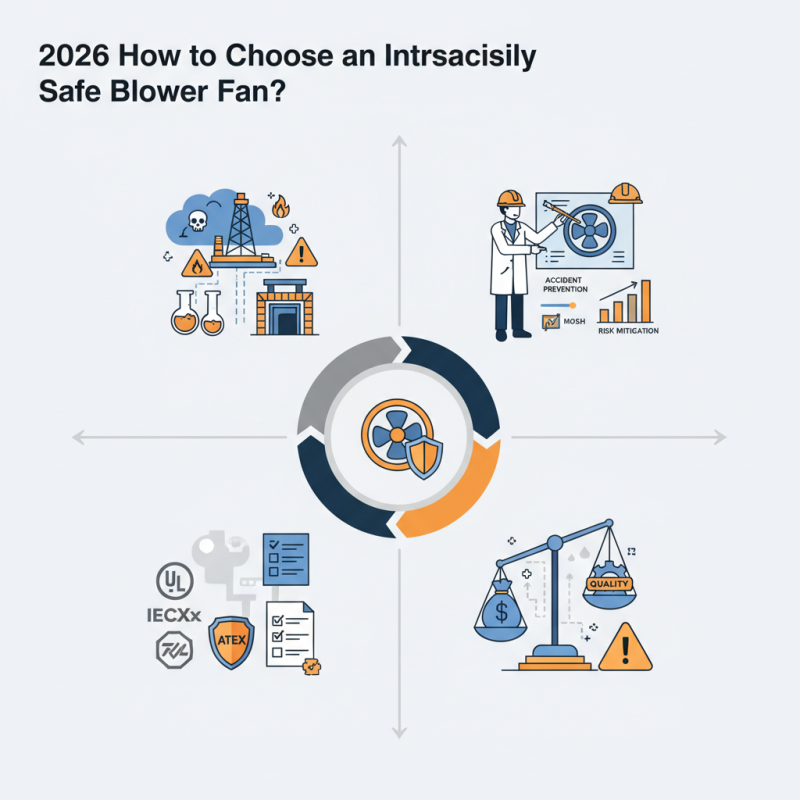
Understanding Intrinsically Safe Equipment Standards
When selecting an intrinsically safe blower fan, understanding equipment standards is crucial. Intrinsically safe equipment is designed to operate safely in hazardous environments. This means the equipment cannot generate sufficient energy to ignite flammable substances. According to the International Electrotechnical Commission (IEC) standards, particularly IEC 60079, equipment must be tested to ensure it meets strict safety criteria.
Professionals in the field recognize the importance of compliance with these standards. A report from the National Fire Protection Association (NFPA) indicates that improper equipment has caused 30% of industrial fires. This staggering statistic highlights the risk of inadequate safety measures. Companies must prioritize equipment that has been certified. Adherence to rigorous testing protocols not only protects personnel but also safeguards facilities.
Selecting the right blower fan involves looking for certifications like ATEX or UL, indicating conformity to international safety standards. It’s essential to consider the environment where the fan will operate. Factors such as temperature, humidity, and the presence of chemicals can affect performance. In many cases, the available options may not fully meet the specific safety requirements needed for diverse operational scenarios. It’s a complex balance that requires thoughtful evaluation and possibly reevaluation of safety choices.
Identifying the Specific Safety Requirements for Your Environment
Choosing an intrinsically safe blower fan requires a careful assessment of your environment. Different industries have varying safety standards. For example, the National Fire Protection Association (NFPA) reports that approximately 25% of workplace accidents stem from equipment failures. Intrinsically safe equipment minimizes these risks significantly.
It’s crucial to identify the areas where the blower will operate. Industries like petrochemicals or pharmaceuticals often deal with explosive atmospheres. According to the Occupational Safety and Health Administration (OSHA), a deep understanding of these environments is essential. In some cases, ventilating hazardous materials could lead to severe consequences.
**Tips:**
1. Determine the classification of the area.
2. Validate the insulation resistance rating.
3. Assess the temperature rating of the fan.
Selecting equipment suited to your specific needs can be daunting. Factors such as airflow capacity, energy efficiency, and noise level play a role. Sometimes, the cheapest option may not provide the safest outcome. Research studies indicate that investing in high-quality safety-rated fans can protect against long-term equipment failure.
Balancing cost with safety is challenging. It’s easy to overlook subtle indicators of risk. Engaging with professionals who understand these nuances can lead to better-informed decisions.
2026 How to Choose an Intrinsically Safe Blower Fan?
Evaluating Different Types of Blower Fans: Features and Functionality
When selecting an intrinsically safe blower fan, evaluating different types is essential. Features vary widely, impacting performance in various environments. A key factor is the fan’s material. Stainless steel options resist corrosion. Plastic models are lighter but may lack durability. Consider where the fan will be used. Areas with flammable dust require robust construction.
Next, look at airflow orientation. Some fans have a compact design for tight spaces. Others are larger, providing higher airflow rates. Efficiency matters too; more energy-efficient models reduce long-term costs. Check the specifications closely. Noise levels can be a concern, especially in enclosed areas.
A common oversight is neglecting maintenance needs. Some models need regular lubrication, while others are virtually maintenance-free. Ask about replacement parts availability. This can save time and ensure reliability. Knowing these details can lead to better decisions. More research is always beneficial, as fan choices are not one-size-fits-all. Each option has its pros and cons and requires careful thought.
Assessing Certification Labels and Testing Procedures
When selecting an intrinsically safe blower fan, it's crucial to assess certification labels. These labels indicate compliance with safety standards. They assure users that the product has undergone rigorous testing. Look for certifications like ATEX or UL in your evaluation. These certifications reflect reliable safety measures. Be aware that different regions may have different requirements.
The testing procedures associated with these certifications are also essential. Understanding how a blower fan is tested can offer insights into its safety features. Tests often simulate real-world conditions. This includes exposure to flammable substances and high temperatures. It is vital to check if the fan has passed these tests. This information can typically be found in product documentation. However, not all companies disclose this thoroughly.
It's important to do your homework. Research manufacturers and their testing protocols. Some may have outdated safety practices. This could affect product reliability. Engage with industry experts if needed. Their insights can help you make informed choices.
Each detail matters when it comes to safety. Investing time in this process is not just recommended; it could save lives.
Selecting the Right Size and Performance Specifications for Your Needs
Choosing the right size and performance specifications for an intrinsically safe blower fan is crucial in various industries. The fan needs to meet specific requirements based on your application. Take into account the volume of air needed. Calculate the cubic feet per minute (CFM) required for proper ventilation. Underestimating this can lead to insufficient airflow, impacting safety and efficiency.
For power requirements, consider the environment where the fan will operate. Low power fans may be easier to handle but could compromise performance. Assess the power source, whether it will be electric or battery-operated. Intrinsically safe blowers are designed to minimize spark risk, but compatibility with the existing system is essential.
Tips: Ensure you measure the intended space accurately. A fan that is too large can create excessive noise and disrupt operations. Conversely, a fan that is too small may not provide adequate airflow. Evaluate where the fan will be installed. Closed spaces may require specialized designs.
Finally, check for certifications on the fan before purchase. Ensure it meets necessary safety standards relevant to your industry. Many features may seem appealing but don't compromise safety for performance. A balanced approach is key to finding the right blower fan for your needs.