What is an Electric Capacitor and How Does it Work?
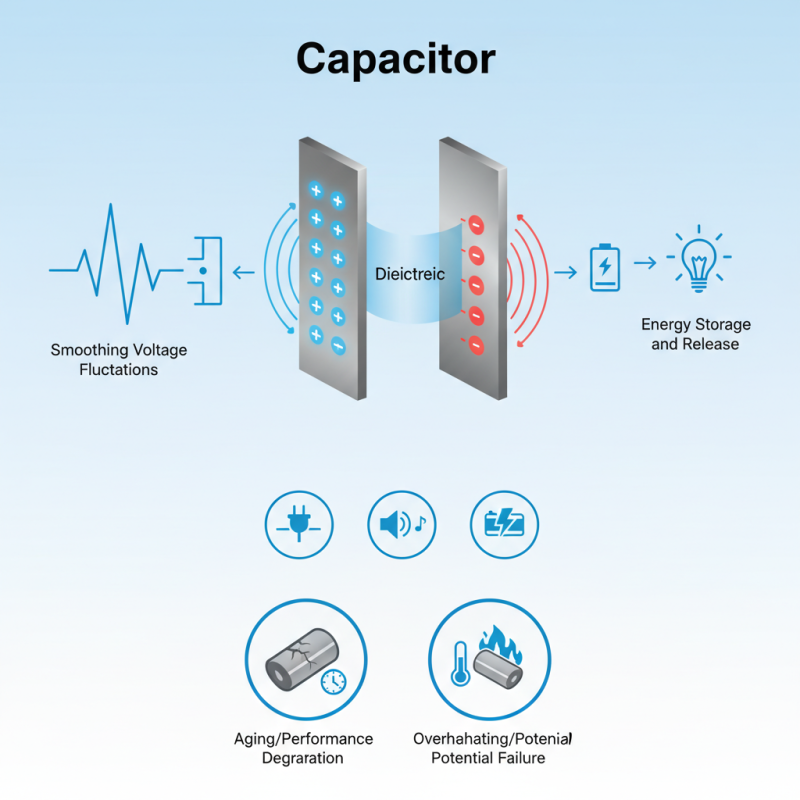
An Electric Capacitor is a crucial component in many electronic devices. Understanding its function helps us appreciate its importance in circuits. At its core, an electric capacitor stores and releases electric energy. This process is essential in smoothing out voltage fluctuations in power supplies.
The construction of an electric capacitor typically involves two conductive plates separated by an insulating material. This separator, or dielectric, allows the capacitor to hold a charge without the plates touching. Knowing how these components interact reveals the significant role capacitors play in filtering and energy storage.
In real-world applications, electric capacitors enhance performance. They stabilize power supplies, improve audio quality, and enable quick bursts of power in devices. Recognizing their contributions helps us understand modern technology's complexities. However, one must reflect on the limitations and potential failures of capacitors, such as aging or overheating. These factors can impact performance and reliability.
What is an Electric Capacitor?
An electric capacitor is a crucial component in electronic circuits. It stores electrical energy temporarily and releases it when needed. Capacitors are made of two conductive plates separated by an insulating material called a dielectric. This design allows them to accumulate charge. According to industry reports, the global capacitor market is anticipated to reach $30 billion by 2025, reflecting their importance in various applications.
Capacitors are widely used in power supply circuits, audio equipment, and even computing devices. They can smooth out voltage fluctuations and filter signals. However, selecting the appropriate capacitor for a specific application can be challenging. Factors like capacitance value, voltage rating, and temperature stability should all be considered. Capacitors also come in different types, each with distinct advantages and disadvantages.
Tip: Always check the specifications before purchasing a capacitor. A mismatch can lead to circuit failure.
Another essential aspect is recognizing a capacitor's limits. When a capacitor is overcharged, it can fail, sometimes catastrophically. Proper circuit design and safety measures are imperative to prevent such failures. Understanding the characteristics of various capacitors helps engineers optimize performance and enhance reliability in their designs.
Tip: Regular testing can identify potential issues with capacitors before they affect your systems.
The Basic Components of a Capacitor
A capacitor is a vital electronic component. It stores electrical energy for a short time. The basic components of a capacitor include two conductive plates and a dielectric material. The plates hold opposite charges when voltage is applied. This charge separation creates an electric field.
The conductive plates can be made from various metals. Common choices include aluminum and tantalum. The dielectric material separates these plates and affects the capacitor's performance. Materials like ceramic or plastic are commonly used. The type of dielectric also influences the capacitor's capacitance and voltage rating.
Capacitors come in different shapes and sizes. This variety enables their use in diverse applications. For example, larger capacitors might store energy for power supply smoothing. Smaller capacitors often filter signals in electronic circuits. Despite their importance, capacitors can fail. Understanding their components helps in identifying potential issues. This knowledge is crucial for reliable circuit design and maintenance.
Electric Capacitor Charge and Discharge Cycle
How Capacitors Store Electrical Energy
Capacitors are essential components in electrical circuits. They store energy in an electric field, enabling various applications. Capacitors are used in power supplies, filters, and electronic devices. Understanding how they store energy is crucial for many engineers.
When a capacitor is charged, positive and negative charges build up on its plates. This separation of charge creates an electric field. The amount of energy stored is proportional to the voltage and the capacitance, following the formula: \(E = \frac{1}{2} C V^2\). Reports indicate that the global capacitor market is expected to reach USD 50 billion by 2028, reflecting their growing importance.
**Tip:** Choose capacitors with the right voltage ratings for your application. Underestimating voltage can cause failure.
Capacitors have their limitations. They can leak charge over time. Temperature variations can also affect performance. Studies suggest that high-quality capacitors maintain stability under extreme temperatures better than their lower-quality counterparts.
**Tip:** Regularly check capacitors in critical systems to avoid unexpected failures.
Capacitor Charging and Discharging Process
Capacitors play a crucial role in countless electronic devices. Their primary function is the storage of electrical energy. This capability allows them to maintain voltage levels and smooth out fluctuations in power supply. Understanding the charging and discharging process is essential for utilizing capacitors effectively.
When a capacitor charges, it accumulates energy from an external circuit. The process involves electrons moving towards the positive plate, creating a potential difference. Data from the IEEE Power Electronics Magazine indicates that capacitors can charge to 63% of their maximum voltage in just one time constant. This rapid response time is critical in circuits requiring quick adjustments.
Discharging occurs once the power source is removed. The stored energy flows back into the circuit, often with a delay. Industry studies show that the discharge curve can vary widely depending on the capacitor’s type and its connected load. For instance, electrolytic capacitors can discharge quickly, while ceramic capacitors often release energy more gradually.
Tip: Always consider the capacitor’s voltage rating and ensure it matches your circuit's requirements. An incorrect rating can lead to failure or damage. Additionally, be mindful of discharge times, as they can affect the device's performance.
Another crucial point is that capacitors are not infallible. Over time, they may lose capacitance or develop internal faults. Regular checks and tests can mitigate unexpected failures. Emphasizing preventative maintenance will extend the lifespan of capacitors and enhance overall circuit reliability.
What is an Electric Capacitor and How Does it Work?
| Capacitor Type | Capacitance (µF) | Voltage Rating (V) | Charging Time (s) | Discharging Time (s) |
| Ceramic Capacitor | 10 | 50 | 0.01 | 0.02 |
| Electrolytic Capacitor | 100 | 25 | 0.1 | 0.5 |
| Tantalum Capacitor | 47 | 16 | 0.05 | 0.15 |
| Film Capacitor | 22 | 100 | 0.02 | 0.1 |
| Supercapacitor | 1000 | 2.7 | 5 | 60 |
Applications of Capacitors in Electronics
Capacitors play a vital role in modern electronics. They store electrical energy and release it when needed. This ability makes them essential in various applications. For instance, they filter noise in power supplies, ensuring clean and stable voltage. Without them, electronic devices could face performance issues.
In timing circuits, capacitors work with resistors to control how long a signal takes to change. This function is key in oscillators and timers. Capacitors also stabilize power supply voltages in devices like computers and smartphones. They help maintain a steady current, enabling efficient operation.
While capacitors are versatile, issues can arise. They can degrade over time or become faulty, impacting circuit performance. Understanding their limitations is crucial for effective use. Proper selection and placement can enhance device reliability. Designers must reflect on these factors during the design process.