Top Tips for Using Piston Ring Sealer Effectively?
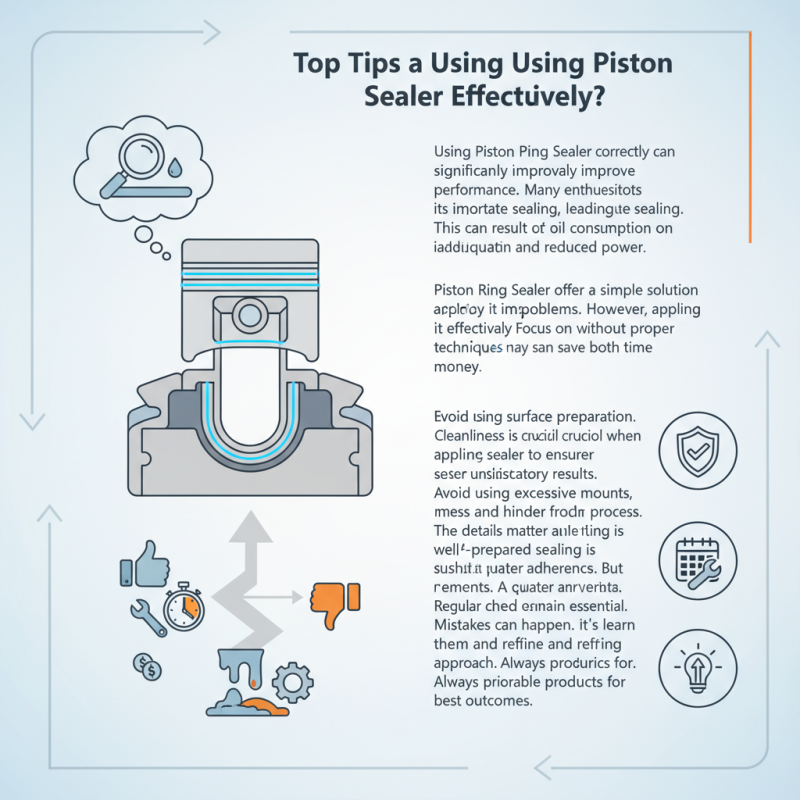
Using Piston Ring Sealer correctly can significantly improve engine performance. Many enthusiasts overlook its importance, leading to inadequate sealing. This can result in unwanted oil consumption and reduced power. Understanding how to apply it effectively can save both time and money.
Piston Ring Sealer offers a simple solution to common engine problems. However, applying it without proper techniques may lead to unsatisfactory results. Focus on surface preparation. Cleanliness is crucial when applying sealer to ensure a proper bond. Avoid using excessive amounts, as it can create a mess and hinder the sealing process.
The details matter with Piston Ring Sealer. A well-prepared surface ensures greater adherence. But remember, sealing is not a substitute for quality components. Regular checks and maintenance remain essential. Mistakes can happen. It's essential to learn from them and refine your approach. Always prioritize reliable products for the best outcomes.
Understanding Piston Ring Sealer: Its Purpose and Functionality
Piston ring sealer plays a crucial role in maintaining engine efficiency. Its primary function is to prevent oil from leaking into the combustion chamber. By creating a tight seal, it helps maintain proper compression. This ensures an effective combustion process, improving engine performance.
Understanding the components of piston ring sealer is essential. It usually consists of various sealing compounds that fill gaps where piston rings may fail. Ineffective sealing can lead to oil burning, excess emissions, or lowered horsepower. Applying it correctly is critical; even small mistakes can affect results. Many users find it challenging to apply evenly, resulting in uneven sealing.
Factoring in temperature and engine conditions is important when using sealers. Certain sealers work better under specific conditions. Users should take time to read application instructions thoroughly. Improper application often leads to unnecessary repairs or poor engine performance. Some users may overlook this detail, leading to frustration down the line. Being mindful of these factors can make a significant difference in longevity and efficiency.
Selecting the Right Piston Ring Sealer for Your Engine Type
Selecting the right piston ring sealer is crucial for optimizing engine performance. Different engine types demand specific sealers designed to withstand varying conditions. For example, high-performance engines may benefit from advanced sealers that can handle extreme temperatures and pressures. According to industry reports, selecting a sealer suited for your engine type can improve compression ratios by up to 10%.
When evaluating various sealers, consider their material composition. Silicone-based sealers might be suitable for certain applications, but they may not provide the best longevity in high-stress environments. On the other hand, polymer-based sealers often excel in durability and effectiveness. The right choice can reduce oil consumption significantly, as data suggests that improper sealing impacts efficiency greatly, increasing wear on engine components.
Take time to analyze your engine's specific needs. Factors such as operating temperature, the intended use of the vehicle, and longevity expectations are vital. Not all sealers work effectively across diverse engine configurations, and a mismatched product can lead to costly repairs. It is crucial to weigh this information carefully to make informed decisions that enhance your engine's reliability and performance.
Step-by-Step Application Process for Piston Ring Sealer
When applying piston ring sealer, preparation is crucial. Begin by thoroughly cleaning the piston rings and grooves. Use a soft cloth and a suitable solvent to remove any oil or debris. After cleaning, inspect the rings for signs of wear or damage. This step ensures that the sealer adheres properly for optimal performance.
Next, apply the sealer carefully. Squeeze a small amount onto the surface of the piston rings. Ensure that it covers the entire surface evenly. It's important not to overapply the sealer, as excess can lead to poor sealing. Make sure to let it sit for a few minutes to allow it to set slightly before reassembling the engine.
After the sealer application, patience is key. Allow sufficient curing time as per the product instructions. Rushing this process can lead to future leaks or performance issues. It’s also wise to monitor your engine after installation. Check for any signs of leakage, and be ready to address any problems. Reflect on the process to improve future applications. Each experience adds to your expertise.
Top Tips for Using Piston Ring Sealer Effectively
This bar chart illustrates the effectiveness rating of various tips for using piston ring sealer effectively. Each tip is rated on a scale of 1 to 10, helping users to identify where they can improve their application process.
Common Mistakes to Avoid When Using Piston Ring Sealer
When using piston ring sealer, several common mistakes can hinder its effectiveness. One major error is failing to thoroughly clean the piston and cylinder walls before application. Residual oil or dirt can prevent proper sealing. A clean surface ensures that the sealer bonds effectively. Many users overlook this crucial step, leading to poor results.
Another common mistake involves applying too much sealer. While it might seem beneficial, excess product can create a barrier rather than a seal. This can result in leaks and inefficient engine performance. A thin, even layer is all that’s needed for optimal sealing. If the application is hasty, it often leads to a sticky mess that complicates the process.
Not allowing sufficient curing time is yet another pitfall. Many people rush through their projects and assume a quick application is sufficient. However, proper curing is vital for the sealer’s effectiveness. If the engine is started prematurely, the sealer may not set correctly. This oversight can lead to costly repairs down the line. Careful attention to these details can greatly enhance the overall effectiveness of piston ring sealer.
Tips for Optimal Curing Time and Conditions of Piston Ring Sealer
When using piston ring sealer, understanding optimal curing time and conditions is crucial. The environment plays a significant role in the curing process. High humidity can extend curing time, while dry conditions typically allow for quicker results. Ideal temperatures range between 70°F and 100°F, which accelerates the curing process. Monitoring these conditions can help in achieving a reliable seal.
Timing often requires patience. While many might expect quick results, allowing extra time for curing is advisable. A common mistake is to rush to reassemble components. This can lead to leaks and failure of the seal. Many experts recommend a minimum curing time of 24 hours before subjecting the seal to engine pressure.
Regular checks on the sealed areas are important for long-term success. Even after seemingly perfect application, issues may arise. If leaks are discovered after curing, reassessment of the process is necessary. Reapplying the seal in different conditions may yield better results. Observing the curing process closely can foster better outcomes.