Top Tips for Choosing Wall Panel Special Adhesive?
Choosing the right wall panel special adhesive is crucial for any project. According to industry expert John Smith, “The right adhesive not only ensures durability but also enhances aesthetic appeal.” This statement underscores the importance of making an informed decision when selecting adhesives for wall panels.
The variety of options can be overwhelming. Each adhesive offers unique properties tailored to specific materials and environments. Understanding these nuances is essential to avoid potential pitfalls. Inadequate adhesion can lead to costly repairs or a disjointed look. Moreover, the choice must align with both functionality and design intent.
Consider the conditions where the adhesive will be applied. For instance, moisture levels and temperature fluctuations can impact performance. It’s vital to reflect on these factors. Not every adhesive will perform well under demanding scenarios. Thus, taking time to research and consult experts can pay off significantly in the long run.
Understanding Wall Panel Adhesive Types and Their Uses
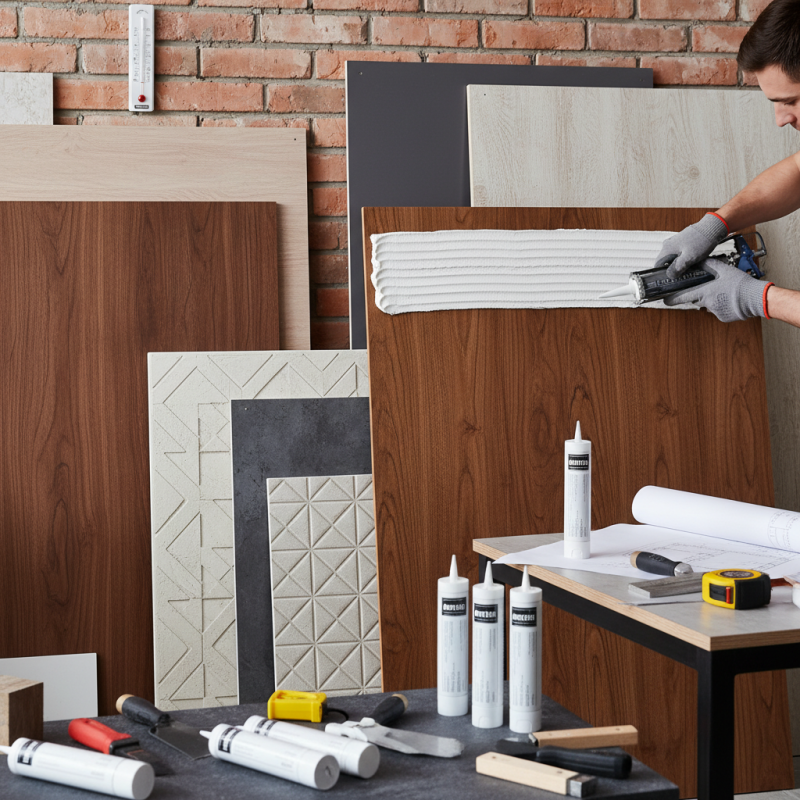
When selecting a wall panel adhesive, it's essential to understand the different types available. Various adhesives serve distinct purposes. For example, construction adhesives are robust and ideal for heavy panels. They bond quickly, providing a strong hold for materials like plywood and MDF. However, improper application can lead to weak spots or uneven surfaces.
Another option is pre-mixed adhesive. This type is user-friendly and great for DIY projects. It allows easy application without complicated mixing. Yet, it may not provide the same strength as construction adhesives in demanding situations. Evaluate your project requirements. An inappropriate choice can result in a frustrating outcome.
Consider the environment where your panels will be installed. Water-resistant adhesives are crucial for areas with high humidity. They prevent mold and panel warping. However, oversights in surface preparation can lessen effectiveness. Always ensure surfaces are clean and properly primed for the best results. Selecting the right adhesive requires careful thought and understanding of your specific needs.
Understanding Wall Panel Adhesive Types and Their Uses
Factors to Consider When Selecting Adhesive for Wall Panels
When selecting an adhesive for wall panels, multiple factors come into play. One important aspect is the panel material itself. According to a report by the Adhesive and Sealant Council, many materials respond differently to adhesives. For example, acrylic panels may require a stronger bond than traditional wood. Tile panels often demand specific adhesive types to ensure durability and aesthetics.
Moisture resistance is another critical factor to consider. In environments such as bathrooms or kitchens, the adhesive must withstand varying humidity levels. Data reveals that over 30% of adhesive failures come from moisture-related issues. Using the right adhesive can significantly reduce these risks.
Application method also impacts adhesive choice. Spray, roller, or trowel application each has its nuances. This aspect often leads to inconsistent results. Regardless of the application method, ensuring correct surface preparation is vital. Uneven or unclean surfaces can undermine adhesive performance. A detailed understanding of each factor helps achieve a lasting bond, but a perfect outcome is often elusive.
How to Assess the Surface Compatibility for Adhesives
Choosing the right adhesive for wall panels involves careful assessment of surface compatibility. Not all surfaces bond effectively with the same adhesive. A study published in the *Journal of Adhesive Science* indicated that specific wall materials, like drywall and concrete, require tailored adhesive properties to ensure a lasting bond. For instance, porous surfaces like concrete may absorb adhesives, affecting performance and durability.
When evaluating surface compatibility, first identify the material of your wall. Each type has unique characteristics. A report from the *International Journal of Construction Materials* highlights that shiny, non-porous surfaces often need primers or specialized adhesives to enhance adhesion. Mistakes in adhesive selection can lead to costly repairs. For example, using a general-purpose adhesive on a textured wall could result in peeling or lifting.
Look for surface cleanliness as well. Dust, oil, or moisture can degrade adhesive effectiveness. According to industry guidelines, a clean, dry surface ensures optimal bonding. However, even well-prepared surfaces sometimes fail. An adhesive that works well in theory may not perform in practice due to environmental variables. Rethinking and re-evaluating your choice before application can save time and resources. A proactive approach avoids pitfalls and encourages better bonding outcomes.
Evaluating the Environmental Conditions for Adhesive Performance
When selecting a special adhesive for wall panels, understanding environmental conditions is crucial. Factors like temperature, humidity, and exposure to sunlight can greatly influence adhesive performance. Studies show that adhesives applied in high humidity areas, such as bathrooms, can lose strength over time. An adhesive that performs excellently in dry conditions may not hold up in damp environments.
Temperature variations can also affect the adhesion quality. For example, adhesives may cure too quickly in higher temperatures, leading to weak bonds. A report by the Adhesive and Sealant Council indicates that about 30% of adhesive failures occur due to inadequate environmental assessments during installation. It’s important to check the recommended temperature range for the adhesive.
Sunlight exposure can degrade certain adhesives over time. Products exposed to UV light may become brittle, losing their effectiveness. Data suggests that adhesives designed for exterior use often utilize UV-resistant properties, but not all users consider this. Evaluating these environmental factors ensures that your chosen adhesive performs reliably, preventing future issues and avoiding costly repairs.
Application Techniques for Optimal Adhesive Bonding on Wall Panels
When applying adhesives for wall panels, careful technique is essential. Choosing the right special adhesive can reinforce the bond significantly. According to a report by the Adhesive and Sealant Council, improper application can reduce the adhesive’s effectiveness by up to 40%. Ensuring an even surface and correct environmental conditions play vital roles in optimizing the bond.
Clean and prepare the surface adequately before application. Dust, grease, and moisture can compromise the bond strength. A study by the Construction Adhesives Industry revealed that panels correctly installed in controlled conditions have a bond strength that exceeds 500 PSI. Use a notched trowel to spread the adhesive evenly. This can improve coverage and enhance adhesion.
Pay attention to the curing time as well. Insufficient curing can lead to peeling or bubbling after installation. It is estimated that an additional 24 hours can double the bond strength in some cases. Install panels promptly to avoid risking misalignment and other errors. Reflecting on these techniques may lead to more successful wall panel installations.
Top Tips for Choosing Wall Panel Special Adhesive
| Tip | Description | Application Technique |
| Consider the Surface Type | Different surfaces require different adhesive properties. Ensure compatibility. | Test adhesion on a small area before full application. |
| Choose the Right Adhesive Type | Consider moisture resistance, flexibility, and curing time based on panel use. | Follow manufacturer's guidelines for optimal results. |
| Preparation of the Surface | Cleaning and priming the surface will enhance bond strength. | Use a degreaser and primer where necessary. |
| Apply the Right Amount of Adhesive | Too much or too little adhesive can compromise the bond. | Use a notched trowel for even application. |
| Consider Curing Time | Allow ample time for the adhesive to cure before heavy use. | Perform bond tests after the recommended curing period. |