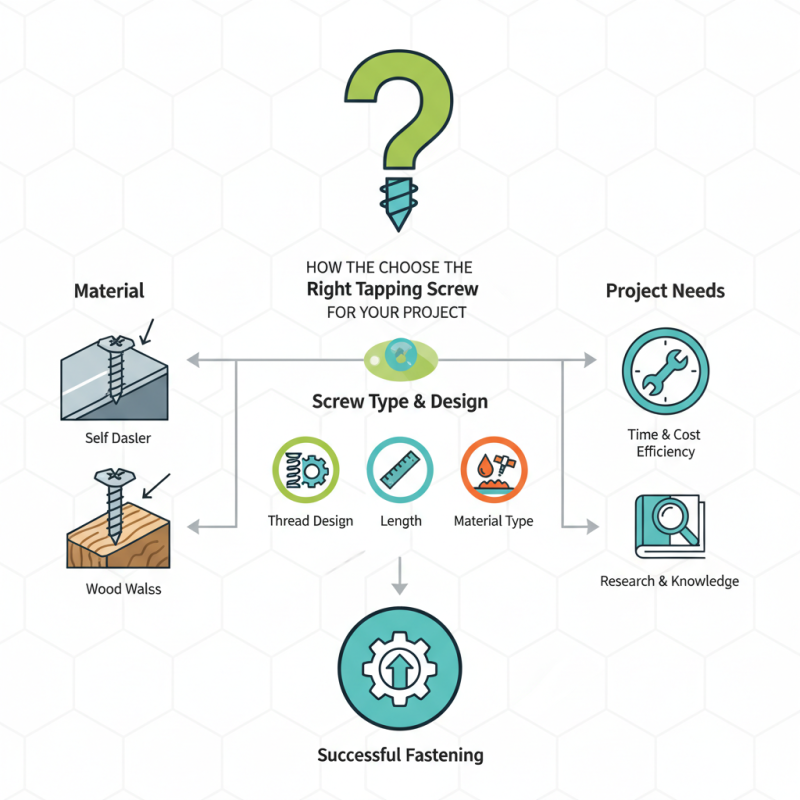
How to Choose the Right Tapping Screw for Your Project
Choosing the right Tapping Screw for your project can seem daunting. Many factors influence this decision. Tapping screws are versatile fasteners used in various materials, from metal to wood. Understanding their types is crucial for success.
Consider the specific requirements of your project. Not all tapping screws are created equal; thread design, length, and material matter. For instance, you might need self-tapping screws for metal applications. However, wood projects may require different options.
Reflect on your prior experiences with screws. Have you faced difficulties choosing the right one? Mistakes can cost time and money, so doing your research is essential. Seek guidance, explore reliable sources, and enhance your knowledge on tapping screws. This will lead you to make better choices in the future.
Factors to Consider When Selecting Tapping Screws
Choosing the right tapping screw involves careful consideration of several factors. One of the primary aspects is the material of the screws. The most common materials include steel, stainless steel, and nylon. Each has different characteristics affecting strength and corrosion resistance. According to a report from the American Society for Testing and Materials (ASTM), stainless steel screws are recommended for outdoor projects due to their resistance to rust.
Another critical factor is the screw size and thread type. The diameter and length must align with the project requirements. A study by Fastener Technology International indicates that screws with finer threads offer better holding power, especially in softer materials. This can critically impact the durability of the assembly. Additionally, the design of the screw head affects installation. A flat head allows for flush mounting, while a round head can provide added strength.
Consideration of the environment is also essential when selecting tapping screws. For instance, exposure to chemicals or extreme temperatures may degrade certain materials. According to data from the National Fastener Distributor Association, 30% of mechanical failures in structures can be traced back to inadequate fastener selection. Reflecting on these details can significantly enhance project outcomes and ensure the integrity of your assembly.
Types of Tapping Screws and Their Applications
When selecting tapping screws, understanding their types and applications is crucial. There are several categories of tapping screws, each designed for specific tasks. For example, thread-cutting screws create their own threads in materials. They are effective for metal, plastic, and wood. According to industry reports, thread-cutting screws account for approximately 35% of the tapping screw market due to their versatility.
Self-tapping screws are another popular choice. They are similar but designed specifically for more robust materials. Research indicates they dominate in heavy-duty applications and can handle a load of up to 2000 pounds. However, improper use can lead to failure, hence, careful selection is key. These screws can embed into metal with minimal effort, yet they require precise alignment during installation.
Collaboratively, sheet metal screws are an essential third type. They secure thin materials like steel sheets. A study showed that these screws are chosen in over 40% of applications involving sheet metal assemblies. Their sharp points ensure quick penetration, but they also risk stripping if over-tightened. Each type has its strengths and weaknesses, highlighting the importance of choosing wisely for specific project needs.
Types of Tapping Screws and Their Applications
Materials and Coatings for Tapping Screws: A Comparison
When selecting a tapping screw, material and coating play crucial roles. Steel is the most common option. It offers strength and durability for various applications. However, it can rust. Therefore, a protective coating is vital. Zinc plating is popular due to its corrosion resistance. It provides a shiny finish, enhancing aesthetics while protecting the metal beneath.
Stainless steel is another excellent choice. It resists rust and corrosion, ideal for outdoor projects or humid environments. However, it may be more expensive than carbon steel. For specific situations, consider other coatings. Nylon or epoxy coatings can offer added protection. They help prevent galvanic corrosion when different metals are in contact.
Don't overlook the importance of compatibility. The screw's material and the base material must work together. Corroding materials can lead to failure over time. It's essential to weigh the pros and cons of each option. Experimenting with various choices can help narrow down the right fit for your needs. Testing different combinations will refine your process, though this can add time to project completion.
Determining the Right Size and Length for Your Project
Choosing the right size and length for tapping screws is crucial for project success. The screw's diameter is determined mainly by the material it's securing. For instance, thin materials require smaller screws for effective hold without causing damage. Conversely, thicker materials need larger screws for stability. Measure the thickness of your material before selecting the screw size.
When considering length, the rule of thumb is that the screw should penetrate the base material adequately. A good guideline is to have at least two threads of the screw engage in the material. For soft materials, like wood, a longer screw is often necessary to achieve a strong grip. In harder materials, shorter lengths might suffice, but ensure enough engagement remains.
Tips: Always pre-drill holes for accuracy. This technique prevents splitting and ensures a better screw fit. Test different sizes if unsure—this can save you from costly mistakes. Measure twice, and choose once. Factors like screw head type also influence selection for specific projects.
Common Mistakes to Avoid When Choosing Tapping Screws
Choosing the right tapping screw can be tricky. Many common mistakes lead to project delays and increased costs. One frequent error involves selecting the wrong thread type. It's crucial to know whether you need coarse or fine threads, as this affects grip in different materials. According to a report by Fastener Technology International, nearly 30% of fastener failures stem from improper threading.
Another mistake is neglecting the material compatibility. For example, using steel screws in aluminum can cause galvanic corrosion. This might lead to structural failures over time. Industry studies show that using incompatible materials can reduce screw performance by up to 40%.
Tips: Always match screw materials to your project’s environment. Conduct a simple material test if unsure; it can save significant headaches later. Additionally, consider the screw head style. A poor choice here can complicate installation and maintenance.
Don't forget that torque specifications matter. Tightening screws too much can strip threads or break screws. Conversely, too little torque leads to loosening over time. Reviewing torque guidelines specific to your chosen tapping screws enhances long-term reliability. Pay attention to specifications; they are there for a reason.
How to Choose the Right Tapping Screw for Your Project - Common Mistakes to Avoid When Choosing Tapping Screws
| Parameter | Description | Common Mistakes |
| Screw Type | Choose between self-tapping, machine screws, etc. | Not considering the material to be tapped. |
| Thread Type | Select coarse or fine threads based on application. | Using fine threads in soft materials. |
| Material | Consider steel, stainless steel, or plastic. | Choosing incompatible materials for the project. |
| Length | Select appropriate length for material thickness. | Using screws that are too long or too short. |
| Coating | Choose according to environmental exposure, like zinc plating. | Ignoring corrosion resistance requirements. |