
How to Choose the Right PVC Layflat Hose

Choosing a Pvc Layflat Hose is not just a matter of matching a connection. The right hose must suit the fluid, operating pressure, flow rate, and working environment. A hose used to drain a field faces different demands from one used for temporary water transfer at a construction site. Small details matter.

Start with the basics. Check the inner diameter against the required flow and the pump or fittings. Confirm the hose’s working pressure, and allow for pressure changes during startup or shutdown. Do not rely on burst pressure as a normal operating limit. Temperature, fluid compatibility, sunlight exposure, and abrasion can also affect service life. A clear product datasheet is useful; if key ratings are missing, ask the supplier before ordering.

Construction deserves a close look. Many layflat hoses use a flexible PVC cover and textile reinforcement, but materials and build quality vary. Inspect the reinforcement description, wall construction, coupling options, and stated pressure ratings. Then consider practical handling: Will the hose be dragged over gravel? Stored wet? Rolled up every day? These conditions can change what “durable” means in practice. Easy to overlook.

This guide explains how to compare specifications, match a hose to its application, and check fittings before purchase. It also points out common selection mistakes, including choosing a diameter by appearance or pressure rating alone. No single option fits every job. Verify the manufacturer’s data, and review your actual operating conditions before deciding. The extra check may save time later.
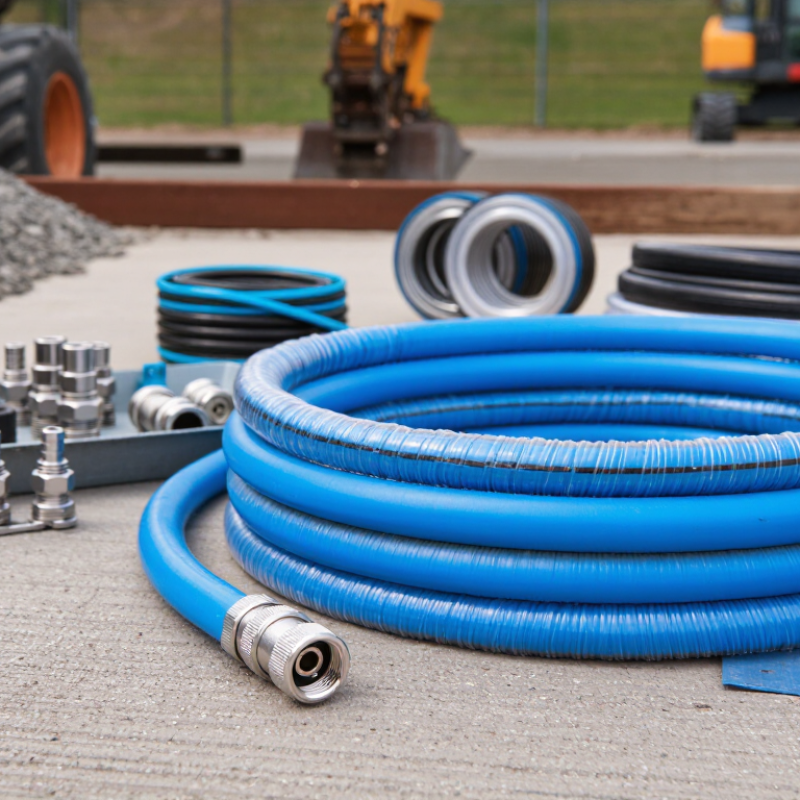
How to Choose the Right PVC Layflat Hose

Define Flow Demand and Choose a Bore from Common 25–300 mm Sizes

Size the hose for peak simultaneous demand, not the daily average. The U.S. Bureau of Reclamation’s Water Measurement Manual explains discharge using flow area and water velocity. Applying that relationship, a 25 mm internal bore moving water at 2 m/s carries about 0.98 L/s. A 100 mm bore carries about 15.7 L/s, while a 300 mm bore carries roughly 141 L/s. These are calculated estimates, not guaranteed operating rates.

Use the figures to narrow the 25–300 mm options, then check the actual internal diameter. Nominal size can differ. A 25 mm hose may suit a small transfer line; larger bores can serve high-volume drainage or irrigation. But longer runs, bends, couplings, and elevation changes increase resistance and can reduce delivered flow. Check them. Confirm the pump’s flow and pressure limits, too. A neat calculation can still mislead if the real setup adds friction. If demand varies, size around the highest flow likely to occur at once, and verify performance with a flow meter after installation.

Match Pump Duty to Working Pressure; PVC Layflat Ratings Often Span 2–10 bar

PVC layflat hose ratings often span 2–10 bar, but that range is only a starting point. Choose a hose rated above the pump’s highest expected operating pressure, not just its usual gauge reading. A pump starting against a closed valve can create a sudden pressure rise.

Pressure changes everything.

Check that the rating applies to your water temperature and hose diameter. Heat may reduce pressure capacity, while fittings, elevation, and line length affect the pressure the system needs.

Compare the pump curve with the hose’s working-pressure rating, and do not treat burst pressure as a safe operating limit. Leave a sensible margin for pressure fluctuations and check the ratings of couplings and clamps too; the weakest connection can leak first.

It is easy to select a hose from one pressure reading and miss the pump’s start-up conditions. Recheck the setup under realistic flow.

Small detail. Big consequence.

After installation, look for bulges, seepage, or movement at the connectors during a controlled test. A little extra care here can prevent an inconvenient failure in the field.

Check Product-Specific Temperature Limits, Commonly −5°C to 65°C

When choosing a PVC layflat hose, check its stated temperature range before comparing price or diameter. Many products list limits near −5°C to 65°C, but these figures are product-specific, not a universal guarantee. At low temperatures, PVC may stiffen and become harder to unroll. Kinks can form more easily. At the warm end, the hose may soften, and its safe working pressure can change. A printed range alone does not tell the whole story.

Check the product data sheet for the exact hose construction, fluid, pressure rating, and temperature conditions. Water moving through a hose in shade is not the same as warm liquid near a heater or hose left in direct sun. Ask whether the working pressure is reduced at higher temperatures, and confirm that the conveyed fluid is compatible with the hose material. These details are easy to overlook.

If the hose will be used near either temperature limit, test a short section under realistic conditions before relying on it for a full job. At the cold end, unroll it gently and look for cracks or unusual stiffness. At the warm end, check for softening, leaks, or bulging while operating within the stated pressure limit. A small test helps. Exact performance still depends on the specific product and setup.

Assess Reinforcement, Couplings, and ISO 1402 Hydrostatic Test Evidence

How to Choose the Right PVC Layflat Hose

A PVC layflat hose can look robust while hiding weak reinforcement or a poorly seated coupling. Look beyond the working-pressure label. Ask for construction details: reinforcement type, ply arrangement, hose diameter, and rated working pressure. Compare like with like. An unexplained burst figure is not enough. ISO 1402:2021 sets hydrostatic test methods for hoses and assemblies, including pressure, burst, and dimensional-change checks.

Request the actual test report, not just a certificate. Check the sample identification, test pressure, hold time, leakage observations, and recorded length or diameter changes. These details help distinguish a passing assembly from a hose tested without its couplings. Inspect coupling fit and retention too: clamps, tails, and hose walls should sit evenly, without visible cuts or bulges. Sharp folds and dragging over concrete can damage the cover; a laboratory result cannot predict every handling mistake. That caveat matters. ISO 1402 evidence aids comparison, but it cannot replace checking real flow, pressure cycles, and temperature.

Compare Abrasion and UV Resistance Against the Intended Service Conditions

A PVC layflat hose dragged across concrete faces a different risk from one left beneath open sky. Check the outer jacket, reinforcement exposure, and likely contact surfaces before comparing specifications. Gravel can score the cover; repeated rubbing at a pump outlet can wear one small area quickly. Small details matter.

For abrasion, request test results that identify the method, load, and abrasive wheel. ISO 9352:2012 measures plastics’ resistance to wear using abrasive wheels, but results only compare fairly when test conditions match. A test value alone cannot predict service life on a wet, gritty worksite. Inspect sample hose after flexing and rubbing it against the actual surface, if possible.

For UV exposure, consider daily sunlight and storage habits, not just the hose’s color. The WHO/WMO Global Solar UV Index guide classifies UVI 8–10 as “very high”; repeated exposure can accelerate surface aging. Ask whether UV-weathering data, such as results from ASTM G154 exposure testing, are available, and check for cracking or fading over time. A lab cycle is not a direct promise of outdoor years. That distinction is easy to overlook.

Optimized by Optimole