
Why Choose the Right Anchor Chain for Your Vessel?

A vessel’s Anchor Chain is more than a length of steel between the anchor and the windlass. It helps absorb sudden loads, resist abrasion, and keep the anchor working at a useful angle. The wrong choice may look fine at the dock. In a squall, details matter: chain diameter, grade, length, connector fit, and the condition of the windlass all affect performance.

Marine author and systems specialist Nigel Calder is associated with a practical way of thinking about onboard equipment: “Judge each component as part of the whole system.” This is a paraphrased principle, not a verbatim quotation. Applied to anchor gear, it means matching the chain to the vessel, anchor, operating depth, and expected conditions—not choosing by price or appearance alone.

This guide explores the decisions behind that match, including material, sizing, corrosion, compatibility, and inspection. A heavier chain is not automatically safer; it can exceed a windlass’s capacity or add unnecessary weight at the bow. And even a correctly specified chain needs care. Look for stiff links, wear near the connecting hardware, and signs of corrosion. Small clues. Easy to miss. Specifications help, but real use can reveal limits that a catalogue cannot. Good selection begins with evidence—and a little humility.
Why Choose the Right Anchor Chain for Your Vessel?

How an Anchor Chain Helps Keep a Vessel Secure

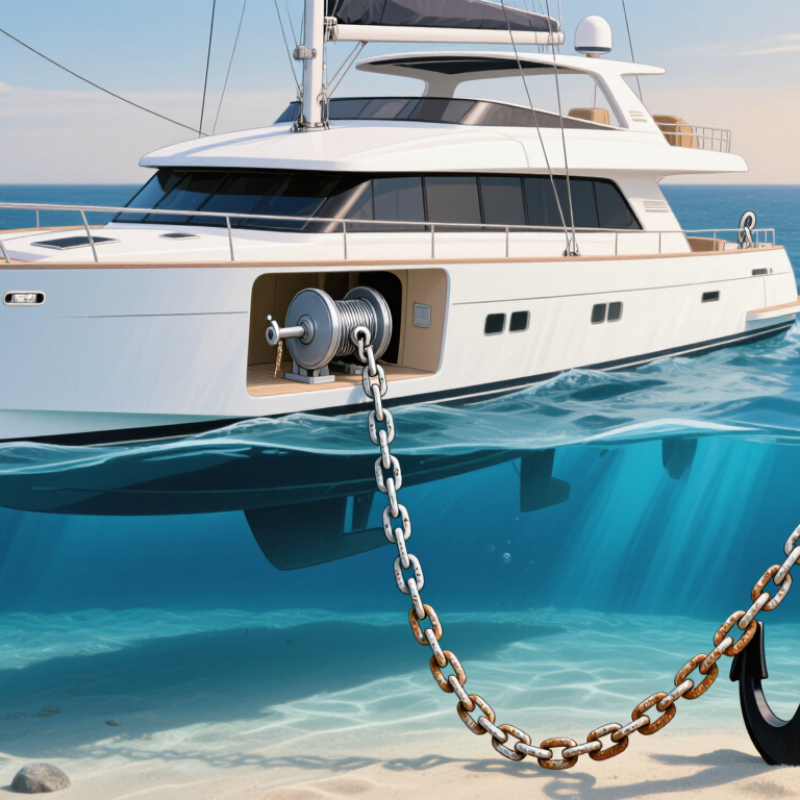
An anchor chain connects the anchor to the vessel, but its weight and flexibility also help the anchoring system work. As wind or current pulls the boat, a suitable length of chain can form a curve between the bow and seabed. That curve softens sudden tugs and can keep the pull on the anchor more horizontal. It is not a guarantee of security; depth, seabed, weather, and available scope all matter.

Small details count. A chain that runs freely over the bow roller is less likely to snag during deployment. Its links and connecting shackle should match the vessel’s anchoring setup, and the shackle pin must be secured as specified. At the end of a trip, look for stiff links, deep corrosion, or worn contact points. These signs are easy to miss when the chain is wet.

More chain is not automatically better. Excess weight can strain handling equipment, while too little scope may leave the anchor under a steep pull. Check the vessel’s guidance and conditions before anchoring, then monitor the boat’s position after setting. Even a familiar anchorage can behave differently when the wind shifts. I would not rely on chain condition alone. The anchor, rode, and crew’s judgment must work together.
Which Vessel and Sea Conditions Determine Chain Requirements?

Your vessel’s size and displacement set the starting point for anchor-chain selection. A heavier boat usually needs a chain with greater strength and mass, while a high-sided vessel catches more wind and may place extra load on the ground tackle. Check that the chain fits the windlass, bow roller, and specified working load. Details matter.

Sea conditions can change the answer. Short, sheltered trips may call for different equipment than regular anchoring in exposed bays or strong tidal flows. In gusty weather, a vessel may surge against its anchor, increasing shock loads. Water depth affects the amount of chain deployed, and a rocky or foul seabed can create different demands from soft sand. Not always.

Consider the vessel’s actual use, not just its length. A boat that spends nights at anchor in changing weather needs a more conservative setup than one anchoring briefly in calm water. Manufacturer guidance and advice from a qualified marine professional can help confirm chain size, grade, and compatibility. A chart is useful, but it cannot capture every gust, tide, or worn fitting. Inspect the full anchoring system regularly; even a well-chosen chain can be let down by a damaged shackle or windlass.

Why Choose the Right Anchor Chain for Your Vessel? - Which Vessel and Sea Conditions Determine Chain Requirements?
Vessel or condition What matters How it affects chain requirements Practical selection guidance
Vessel displacement and size Loaded displacement, not just the vessel’s length; include fuel, water, equipment, and stores. A heavier vessel generally places greater loads on the anchor system when wind or current causes it to surge or swing. Choose chain diameter and working-load capacity using the vessel and anchor manufacturers’ specifications. Do not size chain by length alone.
Windage and hull profile Cabin height, canvas, superstructure, and the amount of hull exposed above the water. High-windage vessels can experience substantial anchor loads, even when their displacement is moderate. Consider the vessel’s exposed area and expected gusts, and ensure the anchor, chain, shackles, and deck fittings form a compatible system.
Protected harbor or sheltered anchorage Limited fetch, modest wind, and little wave action. Loads are usually less demanding than in an exposed anchorage, although gusts, traffic, and changing water levels still matter. A commonly used starting point is a scope of about 5:1, measured as rode length to the vertical distance from the bow roller to the seabed. Follow equipment guidance and allow for tide.
Exposed anchorage or strong conditions Gusty winds, waves, swell, strong current, or limited shelter. Repeated snatching and vessel movement can increase peak loads on the chain and its connections. Where room and conditions permit, a longer scope—often around 7:1 or more—is commonly used. Set the anchor carefully and avoid exceeding the safe capacity of any component.
Water depth and tidal range Depth at the time of anchoring, expected high water, bow-roller height, and seabed clearance. These determine the vertical distance used to calculate scope and the total rode length needed as the tide changes. Calculate scope using the maximum expected vertical distance, not just the depth shown at the time of arrival. Keep enough chain available for the intended anchorage.
Seabed type Sand, mud, gravel, weed, or rock; holding ability varies with the anchor design and bottom condition. Chain does not make an unsuitable anchor or poor holding ground reliable. Rough or abrasive bottoms can also increase wear. Match the anchor to the seabed where possible. Check local charts and guidance, and inspect chain links for abrasion, distortion, and corrosion after use.
Chain material and grade Corrosion resistance, proof load, link dimensions, and compatibility with the windlass gypsy. Two chains with the same nominal diameter may have different strength and fit characteristics depending on material and grade. Use marine-suitable chain with documented specifications. Confirm that the chain, windlass, gypsy, shackles, and anchor are compatible; never assume that equal diameter means equal strength.
Chain-only or mixed rode Whether the rode is all chain or chain joined to rope, plus the vessel’s bow arrangement and handling equipment. A mixed rode behaves differently from an all-chain rode under load. The rope-to-chain connection and its chafe protection become important. Use a properly rated connection and protect rope from chafe. Check that the windlass and bow roller are designed for the chosen rode type.
Inspection and service life Visible corrosion, seized or stretched links, damaged galvanizing, and wear at shackles or the anchor connection. Wear or damage can reduce the strength of the system and may be concentrated at high-contact points. Rinse and inspect the rode periodically, check connections and markings, and replace damaged components using the manufacturer’s guidance.
Important: Scope figures are general anchoring practice, not a chain-sizing rule. Final chain size and system capacity depend on the vessel, anchor, equipment specifications, and anticipated conditions. Consult the vessel and equipment manufacturers’ load guidance.

How Chain Materials and Construction Affect Performance

Why Choose the Right Anchor Chain for Your Vessel?

How Chain Materials and Construction Affect Performance

An anchor chain must withstand repeated loading, saltwater exposure, and contact with the seabed. Material choice affects its strength, weight, and corrosion resistance. Galvanized steel is common because its protective coating helps limit rust and provides substantial strength. Stainless steel resists corrosion, but suitability depends on its grade, construction, and maintenance. No material is maintenance-free. After a muddy anchorage, rinsing and inspecting the chain can reveal early wear before it becomes harder to spot.

Construction matters just as much. Consistent link dimensions help the chain run smoothly through a compatible windlass, while sound welds reduce weak points. Match chain size and specifications to the vessel, windlass, and anchor system; heavier is not automatically better. A chain that looks robust may still be poorly matched. I would check manufacturer specifications and inspect for stretched links, cracked welds, or a damaged coating. Small details matter. It is easy to overlook wear when the chain is wet and piled in the locker.

How to Match Chain Size and Grade to the Anchor and Windlass

Choosing chain diameter by vessel length alone can leave a poor fit at the bow. Match the chain to the anchor’s rated load, then verify that its link shape and dimensions suit the windlass gypsy. ISO 4565:2002 provides dimensional tables and tolerances for small-craft anchor chains. Use the relevant table to check nominal size, link pitch, and width against the chain specified for your equipment. Close is not always compatible.

Grade matters, too. It describes the chain’s material strength, not its physical fit. A higher grade does not correct an incompatible link profile or an undersized windlass. Check the anchor, chain, and windlass manuals together, and confirm the chain’s proof-load and breaking-load data with its supplier. Keep the figures in writing. That detail helps avoid guesswork during replacement.

On deck, a chain that climbs unevenly over the gypsy may jerk, bind, or pile up in the locker. That is a warning, not a reason to force it. Inspect a few links against the gypsy pockets and measure them; rust and wear can hide a mismatch. I still recheck this. Vessel setups vary, and even a correctly sized chain can behave poorly when the locker leads it at a sharp angle.

How Inspection and Maintenance Support Safe Anchoring

Choosing the right anchor chain is only part of safe anchoring; its condition matters every time it goes overboard. Before departure, lay out accessible sections and check for cracked links, deep gouges, sharp burrs, or uneven wear. Pay close attention near the joining shackle, where movement can hide damage. Small signs matter. A stiff link may point to corrosion or distortion, while reddish flakes around a joint deserve a closer look. Rinse salt and grit away with fresh water, then let the chain drain before stowing it.

Inspect the chain locker too. Mud and standing water can speed corrosion, and a blocked drain leaves the bottom links wet. Check the bitter end attachment and the windlass connection for secure fit and unusual movement. Follow the chain maker’s guidance for wear limits; visual judgment alone can miss thinning metal. It is easy to hurry this check when weather is changing. That is exactly when a slow, deliberate look helps. Record any suspect links, and have a qualified marine technician assess damage before relying on the chain again. During deployment, listen for jerking or scraping, and watch for links that fail to feed smoothly.

Optimized by Optimole