How to Choose the Right 1 Pole Circuit Breaker for Your Needs?
Choosing the right 1 Pole Circuit Breaker can seem daunting. There are various factors to consider based on your specific needs. A 1 Pole Circuit Breaker is designed for single-phase circuits primarily in residential applications.
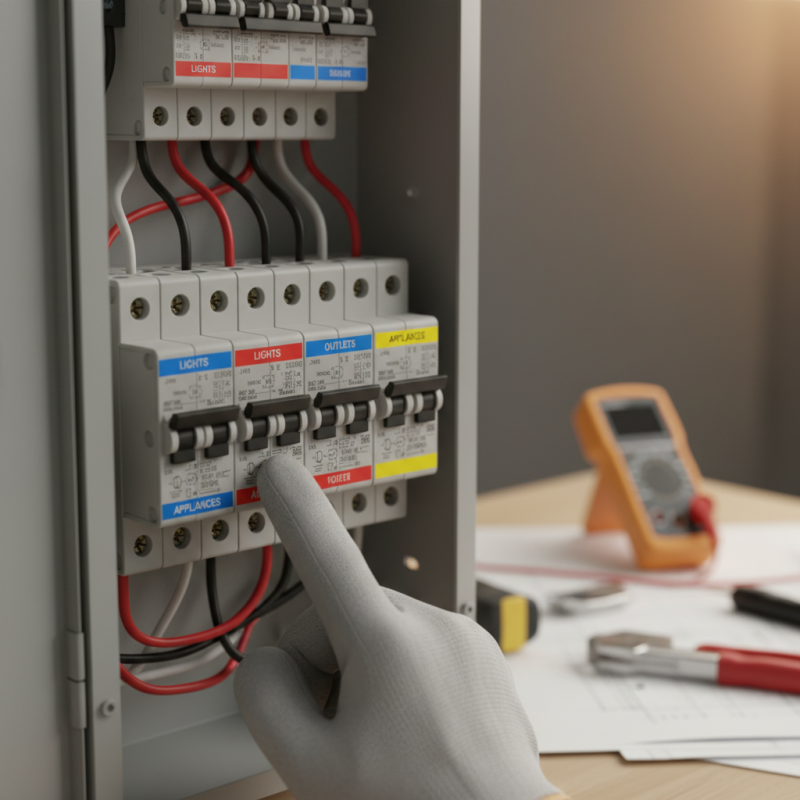
When selecting a breaker, think about the load it must protect. Are you powering lights, outlets, or appliances? Understanding your needs helps narrow your options. Not all 1 Pole Circuit Breakers are created equal. You may end up with one that is either too powerful or inadequate for the job.
Pay attention to the amperage rating. An overload can damage your devices and cause safety hazards. Sometimes, the best choice is not the most expensive one, but the most suitable for your circumstances. Finding the right balance may require some trial and error. This process encourages careful reflection on your electrical requirements and safety.
Understanding the Basics of 1 Pole Circuit Breakers and Their Functionality
When selecting a 1 pole circuit breaker, it’s essential to grasp their basic functionality. These devices serve as critical safety components in electrical systems. They protect circuits from overloads and short circuits. A properly functioning circuit breaker interrupts the current flow when abnormalities occur. Understanding how these breakers operate can save you from potential electrical hazards.
Choosing the appropriate breaker involves consideration of specific details. Evaluate the voltage and current ratings suitable for your application. It’s imperative to match these ratings with your electrical load. Neglecting this can lead to system failures. Additionally, installation location matters. Indoor and outdoor settings might require different environmental protections.
Take time to reflect on your needs. Assessing your circuit's demands can reveal essential insights. It’s not just about choosing a breaker; it's about understanding how it fits into your overall setup. Many users overlook these factors, leading to costly mistakes. Ensure you weigh all aspects before making a decision.
How to Choose the Right 1 Pole Circuit Breaker for Your Needs?
| Feature | Description | Recommended Use |
| Break Current (A) | The maximum current the breaker can handle before tripping. | Residential circuits, lighting, small appliances. |
| Voltage Rating (V) | The maximum voltage the breaker is rated for. | Used in various applications, primarily home wiring. |
| Trip Type | Indicates the mechanism of tripping: thermal, magnetic, or a combination. | Specific applications requiring fast response or overload protection. |
| Short Circuit Rating (kA) | The maximum fault current the breaker can withstand. | Critical systems where high fault currents may occur. |
| Mounting Type | How the breaker is installed, e.g., panel mount or din rail. | Preference based on installation environment and ease of access. |
| Dimensions | Physical size of the breaker for fitting in electrical panels. | Ensuring compatibility with existing panel sizes. |
Evaluating Your Electrical Load Requirements for Optimal Breaker Selection
When choosing the right one-pole circuit breaker, evaluating your electrical load is crucial. Over 70% of electrical fires stem from overloaded circuits. Understanding your load requirements helps prevent such risks. Take a moment to assess what devices you will power. The total wattage of your appliances will guide you in selecting an appropriate breaker.
For an average home, circuits typically carry 15 to 20 amps. If your appliances use high wattage, you may need to adjust your choices. An air conditioning unit, for instance, can require as much as 30 amps. Keep in mind that older homes may have outdated wiring, impacting load capacity. It’s important to consider the age of your electrical system when evaluating your needs.
Moreover, experts suggest calculating your peak load for a more accurate assessment. You can do this by adding the wattage of all devices that could operate simultaneously. Jotting down daily usage patterns may reveal patterns of peak demand. Recognizing these peaks can guide you toward a circuit breaker that meets your specific requirements. Making a choice without proper evaluation may lead to inefficiencies or failures.
Identifying Different Types of 1 Pole Circuit Breakers and Their Applications
When selecting a 1 pole circuit breaker, understanding its types and applications is crucial. Basic variants include standard breakers, ground fault circuit interrupters (GFCIs), and arc fault circuit interrupters (AFCIs). Each serves specific purposes. For example, GFCIs are vital in wet areas, reducing shock hazards by interrupting the circuit when a ground fault is detected. Data from the National Electrical Manufacturers Association indicates that GFCIs prevent over 50% of electrocutions.
On the other hand, AFCIs detect arcing conditions, which could lead to fires. They are essential in living spaces and properties where appliance wear and tear is a concern. Reports show that AFCIs could reduce home fire risks by about 60%. Notably, not every circuit requires a GFCI or AFCI; sometimes, a standard breaker suffices. It’s essential to consider the location and load of your circuits.
Choosing the right breaker isn't always straightforward. Consulting with local electrical codes can be beneficial. Not considering environmental factors can lead to improper installations. It’s a common oversight, yet one that consequences can be severe. Ultimately, an informed choice can enhance safety and performance.
Assessing Voltage Ratings and Current Ratings for 1 Pole Circuit Breakers
When selecting a 1 pole circuit breaker, voltage ratings and current ratings are crucial factors. Voltage ratings define the maximum voltage the breaker can handle. Common voltage levels include 120V and 240V. It’s essential to match the voltage of your electrical system. An incorrect voltage rating can lead to failures or hazards.
Current ratings indicate how much current the breaker can safely carry. They are typically measured in amperes (A). Assess the load connected to the circuit. A circuit breaker should be rated higher than the maximum load. However, choosing a breaker with excessively high ratings can also risk safety. It’s a balance between efficiency and protection.
Think about future needs too. An upgrade could require higher ratings. Conversely, downsizing may call for a lower-rated breaker. Each choice should meditate on safety, efficiency, and adaptability. Neglecting these aspects can lead to significant issues down the line. Choose wisely.
Ensuring Compliance with Safety Standards and Regulations in Breaker Selection
When selecting a 1 pole circuit breaker, safety regulations are crucial. Many builders overlook compliance. Yet, it can lead to significant hazards. They must understand local codes. Seek recommendations from professional inspectors. This ensures the breaker meets all local safety standards.
It’s essential to assess the specific needs of your electrical system. What power requirements do you have? Is the installation in a residential or commercial area? Each setting has different demands. The amperage rating must match your application. Too high or too low poses risks.
Don’t forget to consider future needs. Will you expand your electrical system? Overestimating current requirements can cause issues down the line. Research is key. Review all specifications carefully. Sometimes, consulting an expert can save trouble later. Reflect on the decisions made in breaker selection. A small oversight can lead to larger problems. Always prioritize safety over cost.