
Why Choose Solvent Adhesive for Industrial Use?
Industrial production rarely gives adhesives perfect conditions. Metal panels may arrive cool, plastic housings may hold a little dust, and assembly lines cannot pause for long curing times. In these settings, Solvent Adhesive can offer dependable wetting, fast initial grab, and useful bonding across selected substrates. Performance still depends on formulation, surface preparation, coat weight, and drying conditions. No adhesive is a shortcut around testing.
Adhesive formulation specialist Steven Abbott’s technical work highlights the importance of understanding how materials interact. A concise editorial principle—not a verified verbatim quotation—is: “Choose the adhesive for the surfaces and process, not the label.” That distinction matters. A bond that holds on a clean laboratory coupon may behave differently on an oily production part or after temperature changes. Small details count.
This guide examines why manufacturers choose Solvent Adhesive, where it performs well, and what trade-offs deserve attention. We will consider setting speed, substrate compatibility, application methods, and practical handling. The answer is not always obvious. Solvent-based systems can suit demanding workflows, but they require suitable ventilation and careful process control. Even experienced teams can overlook a changing surface condition. A thoughtful trial, measured against real production requirements, is more reliable than a broad claim of “strong adhesion.”
What Solvent Adhesives Are and How They Work
Solvent adhesives are polymer mixtures carried in a volatile liquid. The solvent helps the adhesive spread across a surface, then evaporates as the bond forms. In many formulations, polymer remains behind and creates the adhesive layer. That is the basic mechanism. Not magic—just chemistry and timing. NIST’s Chemistry WebBook reports acetone vapor pressure at about 24.6 kPa at 20°C, illustrating why some solvents evaporate readily. Acetone is only one possible ingredient; formulations vary.
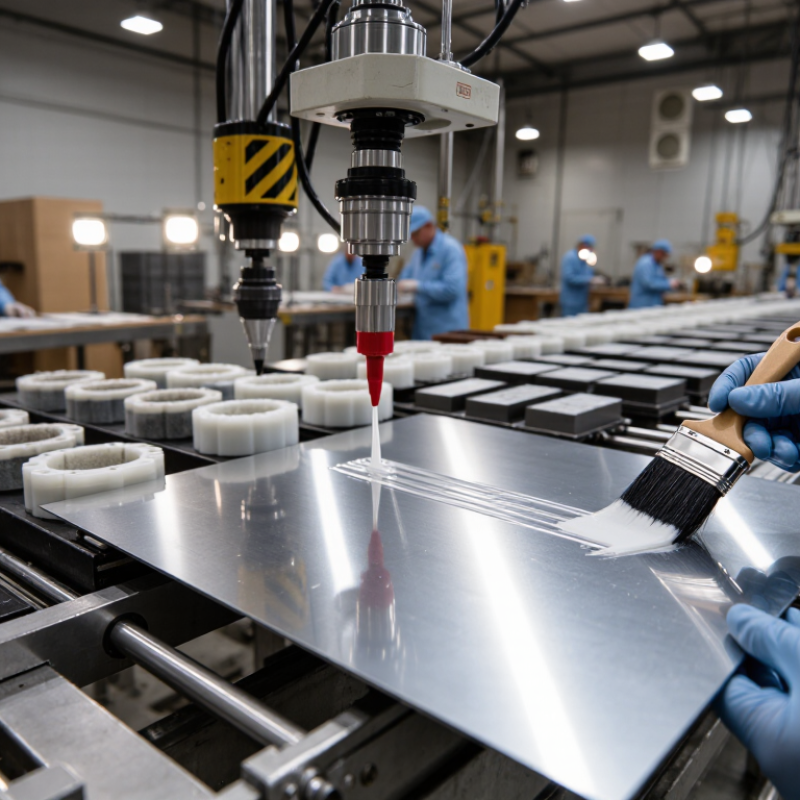
On a factory floor, an operator may apply a thin coat to two panels, wait until it feels tacky, then press them together. Too little drying time can leave trapped solvent; too much may reduce initial tack. Surface texture, coating thickness, temperature, and airflow all affect the result. The workable window can be narrow. For acetone-containing products, NIOSH lists a recommended exposure limit of 250 ppm as an eight-hour time-weighted average. The actual solvent blend matters, so ventilation and product-specific safety data deserve attention. One awkward truth: a bond that feels firm can still be poorly cured. Checking process settings and adhesion on representative samples helps catch that gap.
Why Choose Solvent Adhesive for Industrial Use? — What Solvent Adhesives Are and How They Work
| Topic | How It Works or Typical Characteristics | Industrial Relevance | Important Considerations |
|---|---|---|---|
| What a solvent adhesive is | An adhesive in which polymer or elastomer is dissolved or dispersed in an organic solvent. The solvent keeps the adhesive spreadable during application. | Used in applications such as laminating, footwear assembly, upholstery, packaging, and bonding selected rubber, plastic, leather, or metal components. | Formulations vary considerably; suitability depends on the adhesive chemistry and the materials being joined. |
| How the bond forms | The adhesive is applied to one or both surfaces. As the solvent evaporates, the adhesive becomes more concentrated and forms a polymer film. Some contact adhesives are joined after a specified flash-off period. | Fast solvent loss can support practical production cycles when ventilation, application conditions, and process timing are properly controlled. | Drying time depends on formulation, coating thickness, temperature, airflow, humidity, and substrate porosity. |
| Common adhesive families | Solvent-based formulations may use polymers such as polychloroprene, polyurethane, acrylic, or rubber-based materials. | Different chemistries can be selected for requirements such as flexibility, initial tack, heat resistance, or adhesion to particular substrates. | No single polymer family is suitable for every substrate or service condition; consult technical data for the specific formulation. |
| Substrate compatibility | Bonding performance depends on surface energy, cleanliness, porosity, and the adhesive’s chemical compatibility with the substrate. | Can bond combinations of materials used in manufactured goods, including some elastomers, coated fabrics, foams, and plastics. | Some plastics can be softened or damaged by solvents. Test representative materials and check whether a primer or surface treatment is needed. |
| Production and handling | Many solvent adhesives can be applied by brush, roller, spray, or automated coating equipment, depending on viscosity and product design. | May suit production lines that need controlled coating and a defined open or flash-off time before assembly. | Consistent results require control of coating weight, drying conditions, assembly pressure, and the manufacturer’s recommended working time. |
| Bond performance | Once the solvent has evaporated, the remaining adhesive layer provides the bond. Performance may include useful flexibility or resistance to repeated movement, depending on formulation. | Relevant where components experience vibration, flexing, or handling during service. | Final strength and resistance to heat, water, chemicals, and aging are product-specific and should be confirmed with test data. |
| Advantages to evaluate | Potential benefits include rapid development of handling strength, good wetting of certain surfaces, and compatibility with established coating processes. | Can be a practical option when its bonding profile and process requirements match the production application. | Compare total process performance with water-based, hot-melt, reactive, or pressure-sensitive alternatives rather than selecting on drying speed alone. |
| Safety and environmental controls | Many organic solvents produce vapors that can be flammable or harmful if inhaled. Some formulations are subject to workplace and emissions regulations. | Industrial use may require local exhaust ventilation, suitable storage, ignition-source control, and worker training. | Follow the product safety data sheet and local regulations. Use specified protective equipment and assess fire, exposure, and waste-management risks. |
| When to consider another adhesive | A solvent adhesive may be unsuitable where solvent emissions cannot be controlled, the substrate is solvent-sensitive, or the required bond conditions do not match the formulation. | Alternative technologies may offer a better fit for a particular line, material, or regulatory requirement. | Validate alternatives through application trials and performance testing under actual operating conditions. |