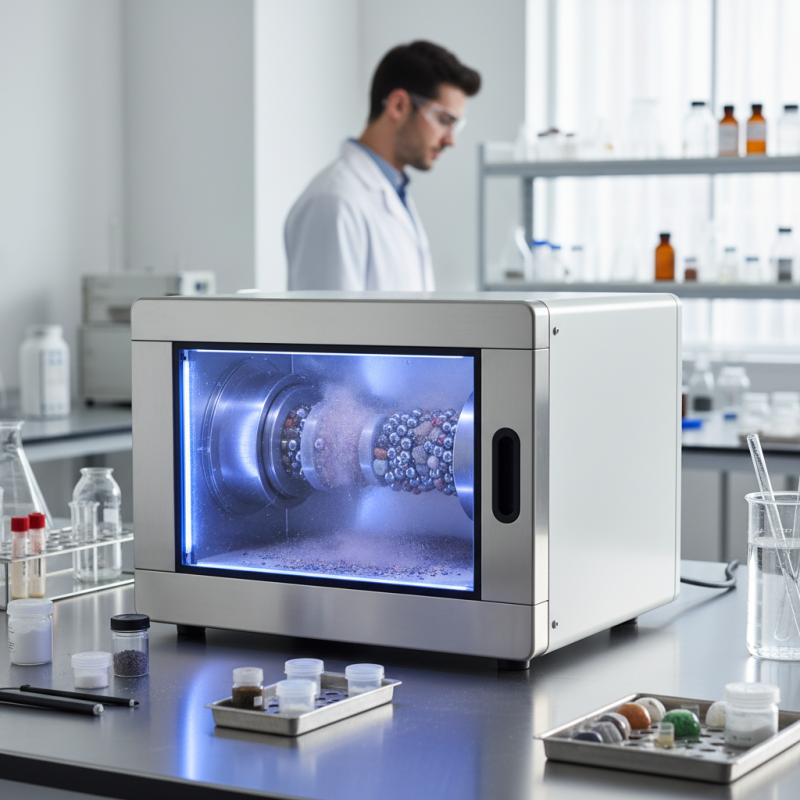
How to Choose the Best Laboratory Sample Pulverizer for Your Needs?
Choosing the right laboratory sample pulverizer can significantly impact your research and analysis. This equipment is vital in many fields, including pharmaceuticals and environmental science. Hence, making an informed choice is crucial.
When selecting a laboratory sample pulverizer, consider your specific needs. Different models vary in size, capacity, and features. Some are designed for harder materials, while others excel at softer samples. An appropriate tool enhances efficiency and accuracy during your testing processes.
It's essential to assess the quality of the pulverizer. A well-built machine leads to reliable results, while a poorly constructed one might compromise your samples. Reflect on your requirements, and don't hesitate to ask for expert guidance. In the end, the aim is to find a lab sample pulverizer that meets your expectations and supports your research effectively.
Understanding the Purpose of a Laboratory Sample Pulverizer
A laboratory sample pulverizer is essential for many research projects. It helps refine materials for testing and analysis. Understanding its purpose is crucial when selecting the right model for your needs.
These machines reduce samples into fine powders. This process enhances consistency and accuracy in results. Various types and specifications exist, which can be overwhelming. It is vital to consider the materials you'll be working with. Not all pulverizers handle every type of sample effectively. Some may break down tougher materials easily, while others might struggle.
Not every pulverizer is as versatile as it seems. Some users find that their models fail to deliver desired results. It’s important to evaluate performance through trials. Assess how well it meets your specific requirements. Sometimes, common challenges arise, like inconsistent particle sizes. Reflect on these factors before making a choice. This careful consideration will lead to better outcomes in your laboratory work.
Laboratory Sample Pulverizer Selection Criteria
Key Factors to Consider When Choosing a Sample Pulverizer
When selecting a laboratory sample pulverizer, several key factors must be considered. One of the most important aspects is the material type. Different materials require specific pulverization methods. For instance, hard materials may need heavy-duty grinders. Soft materials can be handled by lighter equipment. It's crucial to assess the material's hardness and abrasiveness.
The desired particle size is another critical factor. According to industry data, optimal particle sizes can affect extraction efficiency. For example, smaller particles may enhance chemical reactions in analytical applications. If your research requires fine particles, you may need a grinder with adjustable settings.
Maintenance is often overlooked but is essential. Frequent calibration may be needed for precise operations. Depending on usage, some pulverizers require regular cleaning to avoid contamination. Not all models are easy to clean, which can hinder workflow efficiency. Ultimately, it's essential to weigh these factors against your specific needs and constraints.
Types of Laboratory Sample Pulverizers and Their Applications
When selecting a laboratory sample pulverizer, understanding the types and their applications is crucial. Different pulverizers serve various purposes. For instance, a ball mill is excellent for fine grinding. It can process hard materials well. An impact pulverizer, on the other hand, is suitable for softer materials. These machines use high-speed impact to break down samples quickly.
Try to assess the material you'll be working with. The size, hardness, and moisture content can impact your choice. If you're unsure, consult your lab team. Explore the features of each pulverizer type carefully. Some offer adjustable settings for better customization. This flexibility may enhance your results.
Tips: Always prioritize user safety. Ensure that the pulverizer has adequate safety features. Regular maintenance is necessary to maintain performance. Additionally, consider the ease of cleaning. A user-friendly design saves time and reduces cross-contamination risks. Lastly, don’t overlook the noise levels. Some pulverizers can be loud, which may be a concern in shared lab spaces.
Evaluating the Technical Specifications of Pulverizers
When selecting a laboratory sample pulverizer, evaluating the technical specifications is crucial. The grind size, throughput capacity, and materials of construction often dictate a pulverizer's performance. Recent reports indicate that the optimal particle size for many applications is below 100 microns. However, achieving this can be challenging. Some pulverizers struggle under high loads, affecting consistency.
The power requirements of a pulverizer also play a vital role. A machine designed to operate continuously may require more horsepower than a lab setup running sporadically. Additionally, vibration levels can indicate potential issues. For example, excessive vibration may lead to premature wear or even failure. It's essential to note that a more powerful unit doesn’t always guarantee better results; the relationship between power and efficiency is complicated.
Dust control features should not be overlooked. These contribute significantly to workplace safety and sample integrity. Reports show that inadequate dust management can lead to contamination. Missteps in this area often arise from a lack of proper equipment or planning. Each of these factors requires careful consideration, ensuring that the selected pulverizer aligns with specific operational needs and constraints.
How to Choose the Best Laboratory Sample Pulverizer for Your Needs?
| Specification | Description | Importance |
| Capacity | The volume of materials that can be processed in one operation. | Affects throughput and efficiency of the sample preparation process. |
| Power Source | Electrical or manual operation for grinding samples. | Determines ease of use and operational flexibility. |
| Granulometry | Size distribution of the pulverized material. | Critical for reproducible results in laboratory analyses. |
| Material Compatibility | Types of materials that can be effectively pulverized. | Ensures that the pulverizer is suitable for the intended applications. |
| Size and Dimensions | Footprint and overall dimensions of the pulverizer. | Important for fitting the equipment into laboratory space. |
| Ease of Cleaning | How easily the pulverizer can be disassembled and cleaned. | Impacts maintenance and cross-contamination prevention. |
| Cost | Overall investment required for a pulverizer. | Must align with budget constraints and expected ROI. |
Maintenance and Operational Considerations for Sample Pulverizers
When considering the maintenance of laboratory sample pulverizers, regular cleaning is essential. Contaminated samples can lead to inaccurate results. Studies indicate that up to 30% of precision issues stem from poor equipment upkeep. Every lab should create a routine schedule for cleaning and inspection. This ensures all components are functioning properly.
Operational considerations are equally vital. The choice of materials being pulverized can affect equipment longevity. Some materials are more abrasive and can wear down machines faster. It's crucial to assess the compatibility of the pulverizer with the sample type. Neglecting this can lead to unexpected downtime and costly repairs.
Moreover, understanding the energy consumption of the pulverizer can impact laboratory efficiency. According to industry reports, high-energy equipment can lead to significant operational costs. Regular monitoring of power usage may reveal inefficiencies. This insight can prompt necessary adjustments. Simple modifications can enhance both performance and cost-effectiveness. Equipment performance should not just be about speed; reliability matters too.