2026 How to Choose the Best Agriculture Pesticide Spraying Machine?
In the ever-evolving world of agriculture, selecting the right Agriculture Pesticide Spraying Machine is crucial. Expert Dr. Emily Carter, a leading authority in agricultural technology, once stated, "The efficiency of pest control largely depends on the equipment used." This highlights the importance of choosing the best spraying machine for effective pest management.
A quality Agriculture Pesticide Spraying Machine can make or break crop yields. It must be reliable, efficient, and tailored to specific agricultural needs. Options abound, from hand-held sprayers to advanced drone applications. Each type offers unique advantages and presents distinct challenges. New technologies can improve efficacy, but complexity may arise from their operation.
Farmers must consider various factors when selecting a machine. These include the size of their land, pest types, and budget constraints. It's essential to balance cutting-edge features with ease of use. As with any equipment choice, there’s a risk of over-investing in unnecessary technology. Reflecting on these choices can lead to better decision-making and, ultimately, a more prosperous harvest.
Understanding the Importance of Pesticide Spraying Machines in Agriculture
Agriculture is heavily reliant on effective pesticide management. Pesticide spraying machines play a vital role in protecting crops from pests and diseases. These machines ensure that pesticides are evenly distributed. This even application minimizes waste and maximizes effectiveness. Understanding their importance can help farmers make informed decisions.
Choosing the right spraying machine involves considering specific needs. Different crops and pest situations require different equipment. It's essential to assess the size of the farm and the type of terrain. A machine suitable for flat fields may not perform well on hilly areas. The capacity of the tank and the spraying width are also crucial factors. Adequate capacity reduces downtime for refills.
Tips: Always check for latest features. New technologies can improve efficiency. Regular maintenance is necessary for optimal performance. Inadequate care can lead to inefficient spraying. Farmers should also reflect on past experiences. What worked? What didn’t? Learning from each season helps refine choices. Selecting the right pesticide spraying machine is a significant investment. It warrants careful thought and planning.
2026 Agriculture Pesticide Spraying Machines Effectiveness
Key Factors to Consider When Selecting a Spraying Machine
Choosing the right pesticide spraying machine is crucial for effective agricultural practices. One key factor to consider is the machine's compatibility with various crops. Different crops have unique needs. The selected machine should be able to adapt to these variations. This adaptability affects both efficiency and crop health.
Another important aspect is the machine's capacity and range. A larger capacity allows for more extensive coverage. However, it may lead to inefficiencies in smaller fields. So, evaluating your specific farming area is essential. A balance is needed between capacity and accessibility. Many machines are equipped with advanced features, like GPS technology. This can enhance precision, but it may also raise complexity. Users need to think about their comfort level with technology.
Finally, maintenance is often overlooked. Some machines require more upkeep than others. Regular maintenance can be time-consuming. It’s vital to consider the long-term impact of this on your operations. A seemingly simple machine may become a burden if it demands too much time and effort. Keeping these factors in mind will guide you in making an informed decision for your agricultural needs.
Types of Pesticide Spraying Machines Available on the Market
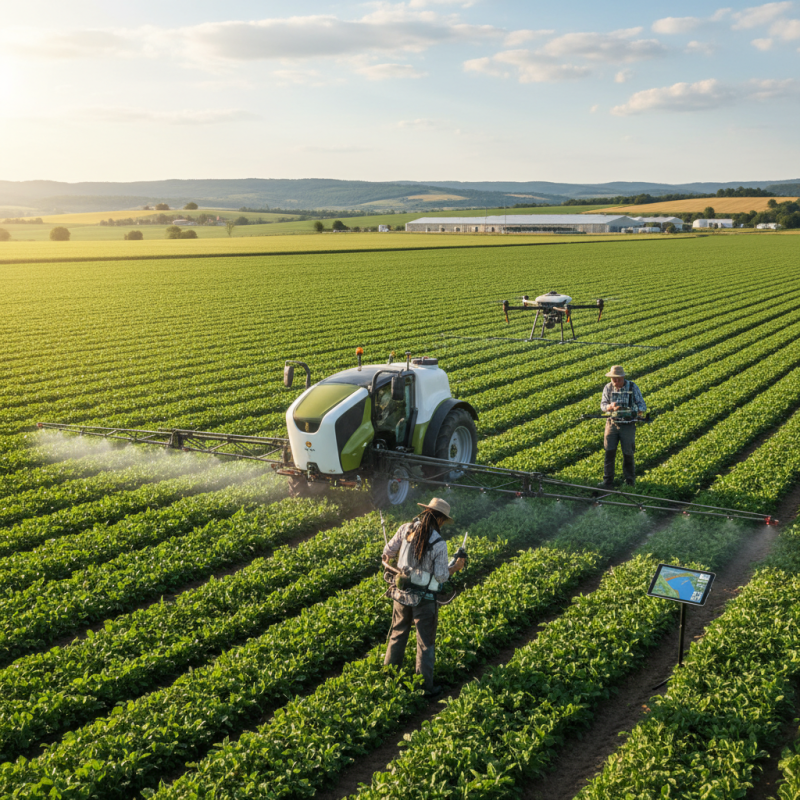
When selecting a pesticide spraying machine, understanding the available types is crucial. Typically, you will find three main categories: backpack sprayers, tractor-mounted sprayers, and UAV (drone) sprayers. Each type serves distinct purposes, making them suited for specific applications. Backpack sprayers are ideal for small areas and precision applications, while tractor-mounted sprayers cover larger fields efficiently. Drones have gained popularity for their ability to reach difficult terrains, providing uniform coverage.
In recent reports, nearly 45% of farmers prefer tractor-mounted options for their versatility and capacity. However, this statistic also challenges manufacturers to improve their designs for ease of use and maintenance. Drones, on the other hand, represent a growing segment, expected to see a 25% increase in usage in the next five years. This growth highlights the need for operators to adapt to emerging technologies.
Tips: Always ensure the nozzle types and spray patterns match your crop requirements. Maintenance is vital for optimal performance. Regularly inspect machinery for wear and tear. Operators should also familiarize themselves with local regulations regarding pesticide application methods. Adapting equipment to the specific needs can enhance efficiency and reduce environmental impact.
Evaluating the Efficiency and Cost-Effectiveness of Spraying Options
Choosing the right pesticide spraying machine is critical for farmers. Efficiency and cost-effectiveness directly impact crop yield and profitability. An efficient machine ensures better coverage, leading to effective pest control. Farmers must consider the type of crops, the scale of the land, and the specific pests they are targeting.
Cost is another significant factor. Invest in a machine that offers a good balance between initial expense and long-term savings. While some may rush to purchase the most affordable option, this could lead to higher operational costs over time. Reliability and maintenance are often overlooked but are essential in an agricultural setting.
Farmers should evaluate their unique needs before making a decision. Consulting with agricultural experts can provide valuable insights. Testing different machines in real conditions can help farmers find the right fit. This process may reveal unexpected challenges, such as difficulties in reaching certain areas or adjusting spray patterns. Reflection on these experiences is crucial for making informed choices.
Maintenance and Safety Tips for Pesticide Spraying Machines
Maintaining your pesticide spraying machine is crucial for effective operation. Regular checks on hoses and nozzles prevent blockages. A clogged nozzle can lead to uneven spray patterns. This might waste products or harm crops. Inspect the machine after every use. Look for signs of wear or damage.
Safety is just as important as maintenance. Always wear protective gear, including gloves and masks. Read the manual before use. Understand how to operate your machine correctly. Training is essential, even for experienced users. Familiarize yourself with emergency procedures. Know how to handle spills.
Storing your machine properly is key. Keep it in a dry, cool place to avoid moisture damage. Maintaining records of maintenance can help track the machine's performance. This ensures you catch issues early. Reflect on your practices regularly. Consider changes that improve both safety and efficiency.
2026 How to Choose the Best Agriculture Pesticide Spraying Machine? - Maintenance and Safety Tips for Pesticide Spraying Machines
| Machine Type | Tank Capacity (Liters) | Max Spray Width (Meters) | Weight (Kg) | Fuel Type | Maintenance Frequency (Hours) | Safety Features |
| Tractor-Mounted Sprayer | 500 | 15 | 300 | Diesel | 100 | Automatic shut-off, Splash guards |
| Backpack Sprayer | 20 | 2 | 10 | Electric | 20 | Ergonomic design, Leak-proof |
| Riding Sprayer | 300 | 10 | 150 | Gasoline | 50 | Safety goggles, Roll-over protection |
| Drone Sprayer | 10 | 4 | 5 | Battery | 15 | GPS tracking, Emergency stop |