How to Choose the Right Claas Bevel Gear for Your Needs?
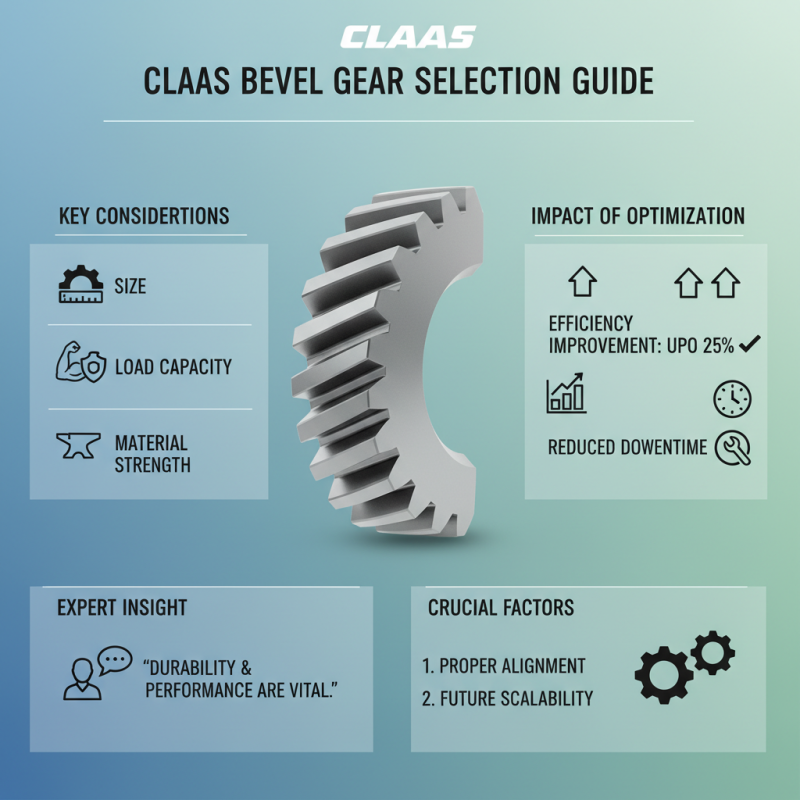
Choosing the right Claas Bevel Gear can significantly impact machinery efficiency. According to a recent industry report by GearTech Insights, optimizing gear selection can improve performance by up to 25%. This is crucial for businesses relying on precision engineering.
Industry expert John Smith emphasizes, “Selecting the appropriate bevel gear is vital for durability and performance.” Without the right gear, operations may face unexpected downtimes. Each application demands specific attributes from the Claas Bevel Gear, including size, load capacity, and material strength.
Understanding your needs might require more than surface-level knowledge. Many operators overlook the importance of proper gear alignment. This can lead to costly repairs and inefficiencies. As you navigate your options, consider both current demands and future scalability. The right Claas Bevel Gear should provide a balance between performance and reliability.
Understanding the Functionality of Claas Bevel Gears
Claas bevel gears play a crucial role in machinery. They help transfer power between shafts at a 90-degree angle. This is essential in many applications, including agriculture and construction. Understanding how these gears function can lead to better choices for your needs.
These gears are designed with precision. The gear teeth engage smoothly, allowing for efficient power transfer. However, they also require regular maintenance. Over time, wear and tear can affect their performance. It’s important to inspect them frequently. Look for signs of damage or misalignment.
Choosing the right bevel gear involves consideration of several factors. Size, material, and load capacity are all key elements. Each application may have unique requirements. Sometimes, what seems ideal may not perform as expected. Testing different options could reveal surprising results. It’s beneficial to reflect on past choices to make better decisions in the future.
How to Choose the Right Claas Bevel Gear for Your Needs?
Identifying Your Specific Application Requirements
When selecting a bevel gear, understanding your specific application requirements is crucial. Different tasks demand different gear specifications. Are you working with heavy loads or light machinery? The gear's strength must match these demands. The environment where it will operate is equally important. Will it be exposed to dust, moisture, or extreme temperatures? These factors can significantly impact performance.
Consider the gear ratio needed for your project. A higher ratio often means greater torque. However, this could also affect speed. Is your application more speed-focused or torque-focused? Evaluating these needs can be challenging. Many overlook the importance of these details, leading to possible performance issues. Each choice has its consequences, and some may find it difficult to navigate through them.
Dimensions of the bevel gear also play a critical role. Choosing the wrong size can disrupt your machinery and cause inefficiencies. Precision is vital here. Sometimes, a seemingly small mistake can lead to operational failures. Reflecting on your requirements and potential challenges will guide you to the perfect bevel gear for your needs.
Evaluating Gear Material and Durability Options
When selecting bevel gears, understanding material options is crucial. Durability plays a vital role in performance. Common materials include steel, aluminum, and bronze. Each type has distinct qualities. Steel excels in strength, while aluminum is lightweight and corrosion-resistant.
Data from industry reports indicates that gear failure often results from material fatigue. About 30% of gear failures occur within the first year of use. Choosing a durable material can extend gear life significantly. For instance, heat-treated steel can withstand higher stresses and extend service life.
In many applications, a balance of weight and strength is necessary. Aluminum gears might be suitable for lower-load tasks. However, they may deform under high pressure. Users must carefully consider their specific needs. Often, this choice requires more than just cost considerations. Analyzing the operational environment is equally essential. This can lead to unexpected challenges if overlooked.
Assessing Gear Ratio and Size Considerations
When selecting bevel gears, assessing the gear ratio is crucial. A gear ratio defines the relationship between the input and output speeds. For example, a ratio of 2:1 means the output shaft turns half as fast as the input shaft. According to industry reports, optimal gear ratios can enhance machinery efficiency by up to 15%. Understanding your application helps in choosing an appropriate ratio.
Size considerations also play a significant role. Larger gears can handle more torque, but they require more space. If space is limited, smaller gears may be necessary. However, compact gears often result in higher wear rates. Reports indicate that proper sizing can extend gear life by over 20%. It's essential to find a balance.
Reflect on your specific needs and constraints. You may prioritize space over torque, or vice versa. Each choice carries its consequences. It’s vital to analyze your operational demands carefully. Ignoring these factors could lead to inefficiency or premature failure. Consider testing different configurations before committing to a final decision.
Consulting with Experts for Optimal Gear Selection
Selecting the right bevel gear involves careful consideration of various factors. Consulting with industry experts is essential. Their experience can highlight crucial aspects often overlooked. For instance, specific torque and load requirements are vital to ensuring optimal performance. According to a recent industry report, up to 45% of mechanical failures stem from improper gear selection.
Experts can provide insights into the materials used in gears. Steel, aluminum, and plastic each have unique properties suitable for different applications. A professional can help interpret data on wear rates and fatigue resistance, crucial when selecting materials. In fact, studies show that selecting the wrong material can reduce a gear’s lifespan by more than 30%.
However, even expert advice cannot eliminate all uncertainties. Gear specifications may change based on actual operational conditions. Miscalculations happen, whether due to environmental factors or unexpected forces. Continuous feedback from equipment performance can guide necessary adjustments. This iterative process is crucial for ongoing safety and efficiency.