How to Choose the Best Car Engine Stand for Your Needs?
Choosing the right car engine stand can make a significant difference in your engine maintenance experience. A quality stand provides stability and accessibility, allowing you to work efficiently. Not all car engine stands are created equal, so it’s crucial to assess your personal needs.
Consider the weight capacity of the stand. Some stands can support heavy V8 engines, while others are suited for lighter models. The design also matters. A well-designed car engine stand allows for easy rotation and movement. Users often face confusion over different types available in the market.
It’s okay to have doubts. Are you looking for a stand that's portable, or do you need one for a permanent workspace? You may find some stands lacking in quality. Reflecting on these factors can save you time and money. A thoughtful decision can enhance your overall maintenance experience and lead to better outcomes.
Understanding the Purpose of Car Engine Stands
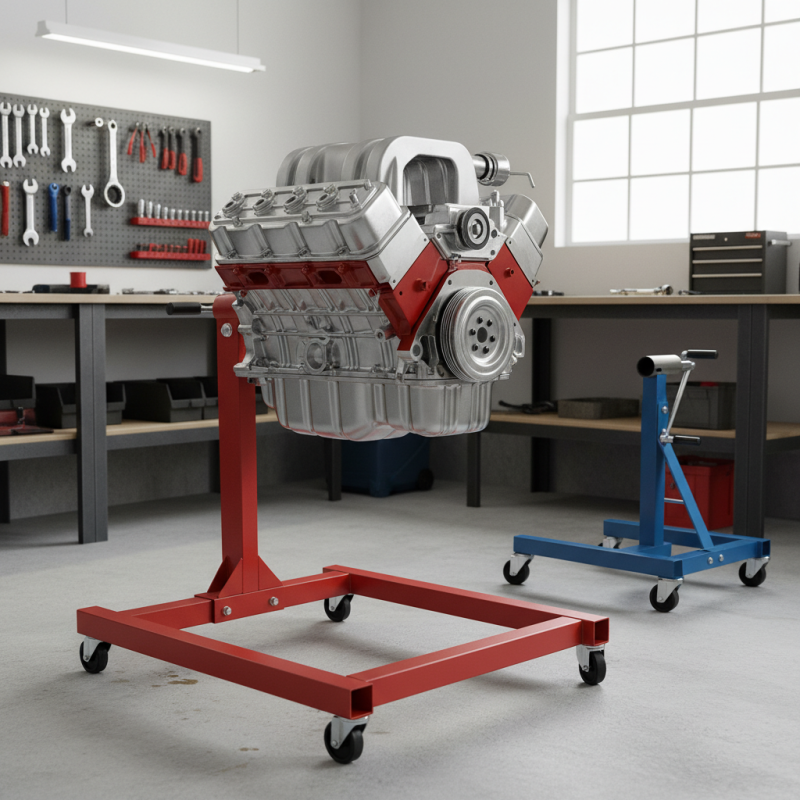
Car engine stands are essential tools for any automotive enthusiast or professional mechanic. They provide a stable platform for engine assembly and disassembly, allowing for better accessibility and safety. According to a report by the Automotive Engineering Institute, over 85% of engine repair technicians cite stability as a crucial factor in choosing their equipment. An engine stand holds the engine securely while you work, reducing the risk of accidents.
The versatility of engine stands is another appealing aspect. They can often accommodate various engine types, which is especially important in a world where customization is the norm. A survey from the Automotive Tools Association found that 70% of users prefer adjustable engine stands for this very reason. However, not all stands are created equal. Some may lack proper locking mechanisms, leading to instability during critical moments. This can compromise safety and lead to damages, both to the vehicle and the technician.
Investing in a good quality engine stand can prevent such mishaps. Many stands offer features like 360-degree rotation and adjustable arms for different engine sizes. Yet, there are moments when users overlook the importance of weight capacity. An underestimated weight can result in a catastrophic failure. Choosing a stand that accurately matches the engine’s weight ensures adequate support. Ultimately, understanding the purpose and features of engine stands is pivotal for effective engine service.
Engine Stand Weight Capacity Comparison
Evaluating Weight Capacity and Engine Size Compatibility
When selecting a car engine stand, evaluating weight capacity is crucial. Different engines have varying weights, and not all stands can handle the load. For example, smaller engines may weigh around 200 pounds, while larger V8 engines can exceed 600 pounds. Ensure the stand you choose has a weight limit that surpasses your engine's weight for safety.
Check the size compatibility as well. The engine stand should fit your engine's dimensions comfortably. Measure the engine's length, width, and height before choosing a stand. If a stand is too small, it may cause an imbalance. This can lead to accidents or damage.
**Tips:** Always inspect the stand for sturdiness before use. A wobbly stand might not support the engine correctly. Also, consider features like adjustable arms. They can provide additional support for various engine sizes. Lastly, don’t overlook storage; ensure the stand can be easily stored when not in use.
How to Choose the Best Car Engine Stand for Your Needs? - Evaluating Weight Capacity and Engine Size Compatibility
| Engine Stand Model | Weight Capacity (lbs) | Compatible Engine Size (liters) | Rotation Capability | Price ($) |
| Model A | 1,500 | Up to 5.0 | 360° | 150 |
| Model B | 2,000 | Up to 6.2 | No Rotation | 180 |
| Model C | 1,800 | Up to 5.7 | 180° | 220 |
| Model D | 2,500 | Up to 7.0 | 360° | 300 |
Examining Types of Engine Stands Available in the Market
When choosing an engine stand, it helps to know the types available. There are essentially three main varieties: folding stands, fixed stands, and adjustable stands. Folding stands are compact and great for storage. However, they may lack stability under heavy engines. Fixed stands provide strong support but are often bulky.
Adjustable stands are versatile. They can accommodate different engine sizes. This adaptability is helpful in various situations. Still, some may find them complicated to adjust. Consider the material of the stand as well. Steel stands are durable but can be heavy. Aluminum stands are lighter but may not be as sturdy.
When selecting an engine stand, think about your workspace. Is there enough room for a larger stand? Are you comfortable moving a heavy engine? Keep in mind, not every stand is perfect for every engine. Some stands may not fit your specific engine model. Check the weight limits and adjustability features. These details are crucial for your engine safety.
Considering Material Quality and Durability Features
When choosing a car engine stand, material quality and durability are crucial factors. Steel is a common choice for its strength and stability. Aluminum stands are lighter and easier to move but may lack the same durability. Consider the weight capacity as well. If you often work with heavier engines, steel likely provides the security you need.
Pay attention to the construction. Welded joints create more solid connections than bolts in most cases. However, bolt-on options allow for easier repairs if something breaks. Furthermore, the coating on the stand affects its longevity. A rust-resistant finish can withstand various workshop conditions. Always check user reviews for real-world performance insights.
Many buyers overlook the importance of stability. A well-designed stand will prevent tipping during use. Sometimes, price can seduce one into purchasing cheaper options. Yet, the compromise in material quality often leads to dissatisfaction. Strong stands may cost more but save money in the long run. Consider your needs carefully, and invest wisely for better results.
Analyzing Price and Brand Reputation for Best Value Choices
When selecting a car engine stand, consider price and brand reputation carefully. Research indicates that quality-engineered stands can range from $100 to $300. However, cheaper models can compromise on safety and durability. In a recent survey, 68% of users reported dissatisfaction with low-cost alternatives due to instability. This can lead to potential hazards during engine work.
Brand reputation plays a crucial role in finding value. Established brands often invest more in design and materials, resulting in improved safety features. A report from the Automotive Tools Association found that reputable brands had a 30% lower failure rate. Consumers should look for user reviews and ratings before making a purchase. Sometimes, lesser-known brands may deliver competitive prices but at a risk to quality.
Many people overlook warranty options that enhance the value of their investment. A standard warranty lasts one to two years. Some brands offer extended warranties for extra peace of mind. Unfortunately, many buyers fail to consider support options and after-sales service, which can be crucial when addressing issues. This gap in knowledge can result in missed opportunities for protection and reliability.