
China Top Welded Tantalum Tube Manufacturer for Buyers?

Choosing a China-based manufacturer for a Welded Tantalum Tube takes more than comparing price and delivery time. Tantalum serves demanding applications because of its corrosion resistance and high-temperature performance, but a material’s reputation cannot replace process evidence. Buyers should ask how the manufacturer controls strip chemistry, forming, weld consistency, and final inspection.

The U.S. Geological Survey’s Mineral Commodity Summaries 2025: Tantalum provides useful context on global mine production and supply. It does not rank tube manufacturers or verify a supplier’s claims. That distinction matters. For product requirements, ASTM B521 covers tantalum and tantalum-alloy seamless and welded tubes. Buyers can use it as a reference when discussing material grades, dimensions, and testing, while confirming the applicable requirements for their own project.

Request traceable material records, inspection reports, and clear details about weld examination. A practical review may include tube diameter and wall-thickness tolerances, surface condition, and sample documentation. Ask how defects are handled, too. Not always. A polished sample does not prove consistent production. A reliable supplier should answer technical questions directly and explain what its certificates do—and do not—confirm. I would also compare lead times against production capacity; a confident promise is not the same as a verified schedule. These checks help buyers assess whether a Chinese manufacturer can meet the application’s real requirements, not just provide an attractive quotation.
China Top Welded Tantalum Tube Manufacturer for Buyers?

Tantalum’s 3,017°C Melting Point and Corrosion Resistance in Tube Service

Tantalum’s melting point is about 3,017°C, or 3,290 K, according to NIST reference data. That figure signals exceptional heat tolerance, but it is not a tube’s continuous service-temperature rating. Weld quality, wall thickness, pressure, and the surrounding atmosphere all matter. A tube exposed to hot process fluids may face thermal cycling at its weld seam. Small defects can become important there.

Corrosion resistance is often the stronger reason to consider tantalum tubing. It performs well in many aggressive chemical environments, including exposure to hydrochloric acid, but it is not resistant to every medium; hydrofluoric acid is a notable limitation. The Tantalum-Niobium International Study Center’s technical guidance describes these chemical limits, which buyers should match against actual concentration and temperature data. A material name alone is not enough.

Supply also deserves attention. The USGS Mineral Commodity Summaries 2025 estimates global tantalum mine production at roughly 2,500 metric tons in 2024, underscoring a relatively small supply base. For welded tube procurement, request material certificates, weld inspection records, and operating-condition details. Ask how the seam was qualified. It is easy to overlook. A useful specification should identify the fluid, temperature swings, and inspection method—not just the tantalum grade.
ASTM B521: Welded Tantalum Tube Grades, Dimensions, and Requirements

ASTM B521 covers seamless and welded tubes made from tantalum and tantalum alloys. For buyers, the grade is more than a label: it affects chemistry, mechanical properties, and suitability for the service environment. R05200 is commercially pure tantalum; R05252 and R05255 are tungsten-bearing grades. Confirm the exact grade against the applicable ASTM edition and purchase specification, since similar-looking material descriptions can hide important differences.

Dimensions should be stated clearly on the order: outside diameter, wall thickness, length, and permitted tolerances. A tube drawing with a 0.5 mm wall, for example, still needs an agreed tolerance and measurement method. Small details matter. ASTM B521 also sets requirements for composition, mechanical properties, workmanship, and product identification. For welded tubing, buyers should specify any additional inspection or documentation they require, rather than assuming every test is included by default. Check the weld area and tube surface for defects against the agreed acceptance criteria. A drawing can still miss something; service temperature, corrosive media, and forming needs should be reviewed before selecting the grade and dimensions.

R05200 and 99.95% Purity: Key Material Checks for Buyers

For buyers comparing welded tantalum tubes, R05200 and stated purity deserve separate checks. R05200 identifies a material grade, but it does not replace a review of the applicable specification. Ask for a lot-specific material certificate showing chemical composition and the test method used. A 99.95% figure can be meaningful only when its basis is clear. Check whether the certificate defines the reported elements and measurement units. Keep the grade and purity records tied to the tube’s heat or production lot.

Tips: Request a certificate, dimensional inspection results, and weld inspection details before approval. Compare the stated wall thickness with your drawing. Ask how the longitudinal seam is examined. Small details matter.

For a welded tube, inspect the seam as well as the base material. Review weld continuity, visible surface condition, and dimensional variation, especially near the joint. For critical service, discuss suitable non-destructive examination and acceptance criteria with the supplier. Do not rely on a polished sample alone; it may not represent the delivered lot. Clear records help, though paperwork cannot replace agreed inspection and incoming checks. If a document leaves the purity basis or test method unclear, ask for clarification before placing an order.

China Top Welded Tantalum Tube Manufacturer for Buyers? - R05200 and 99.95% Purity: Key Material Checks for Buyers

Buyer Check Relevant Detail What to Verify Buyer Action
Material designation UNS R05200 is a designation for unalloyed tantalum. The grade and applicable product specification should be stated clearly on the order. Check that the quotation, drawing, purchase order, marking, and inspection documents all identify the same grade. Specify UNS R05200 and agree on the applicable specification and edition before production.
Purity target 99.95% tantalum is a commonly requested commercial purity target, but the required chemistry should be confirmed against the ordered specification. Review the material test certificate for the reported chemical composition and the test or analysis method. Do not rely on a catalogue statement alone. Define whether 99.95% is a minimum requirement and clarify how tantalum content and impurities are reported.
Interstitial elements Oxygen, nitrogen, hydrogen, and carbon can affect tantalum's mechanical properties and processing behavior. Check whether the agreed specification or purchase order sets limits and whether the certificate reports the required elements. List any required interstitial-element limits explicitly; do not assume they are covered by a purity figure alone.
Tube standard and construction ASTM B521 covers seamless and welded tantalum and tantalum-alloy tubes. The required grade and applicable edition should be confirmed with the supplier. Verify that the offered product form is welded tube and that the standard, grade, and edition match the order. State the required standard and edition, or provide the project's own acceptance requirements.
Dimensions Tube size is normally specified by outside diameter, wall thickness, and length. Tolerances depend on the agreed standard, size, and order requirements. Compare measured dimensions with the drawing and the tolerances agreed for the specific size. Provide nominal dimensions, tolerances, length, and any required straightness or end-condition limits.
Weld seam quality A welded tube has a longitudinal seam; seam condition and inspection requirements should be agreed for the intended service. Request details of weld inspection, visual acceptance criteria, and any specified nondestructive examination. Define inspection method and acceptance criteria in the purchase documents rather than assuming a particular test is included.
Surface condition Surface finish can be supplied to different requirements and may affect cleaning, assembly, and inspection. Check for visible cracks, laps, scratches, contamination, or other defects against the agreed surface criteria. Specify the required finish, cleanliness, and any restrictions on surface defects or handling residues.
Corrosion-service suitability Tantalum is known for strong corrosion resistance in many chemical environments, but suitability depends on the specific medium, temperature, concentration, and conditions. Assess the actual process environment; do not treat general corrosion resistance as a guarantee for every service condition. Provide operating conditions for a material-compatibility review before finalizing the tube specification.
Traceability and documentation Material certificates and lot identification help link delivered tubes to their material and inspection records. Check that certificate details and product markings or packing labels are consistent and traceable to the shipment. State required certificate type, lot traceability, inspection records, and marking requirements in the order.

Note: Values and requirements should be confirmed against the purchase specification, applicable standard edition, and intended service conditions. The table is a buyer-check guide, not a substitute for a material standard or engineering review.

How Welded Tubes Are Formed, Joined, and Inspected for Weld Integrity

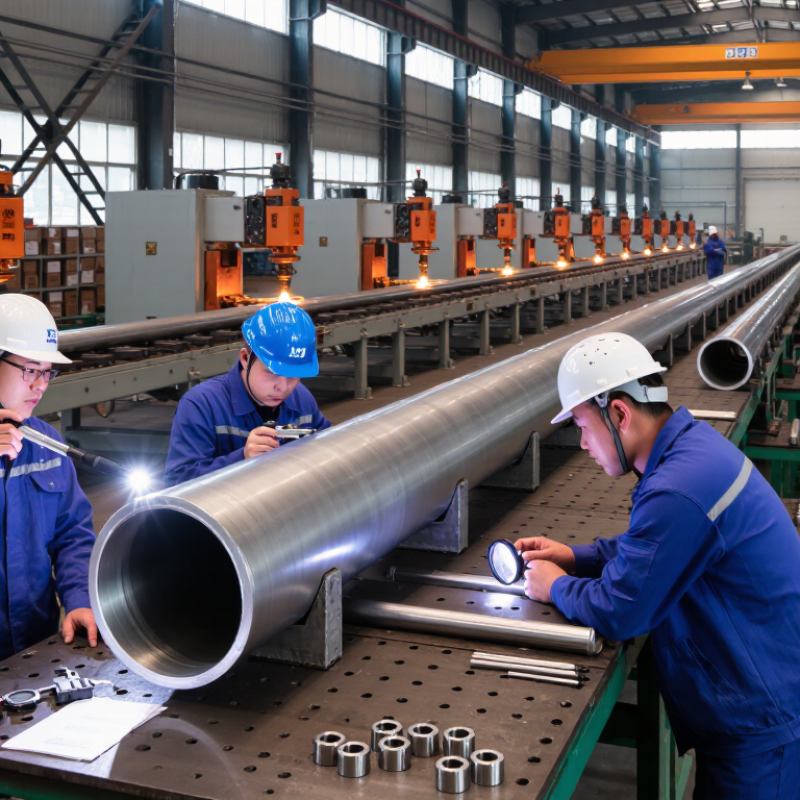
A welded tantalum tube begins as clean strip, formed around a mandrel until its edges meet. The longitudinal seam is joined under controlled shielding, often using high-purity inert gas or vacuum conditions. Tantalum’s high melting point makes heat control important: NIST’s Chemistry WebBook lists it at about 3,290 K (3,017°C). That figure describes the metal, not a recommended welding temperature. ASTM B521 covers welded and seamless tantalum tubing, providing a useful specification reference for buyers.

After welding, inspectors check the seam’s appearance, tube dimensions, and surface condition. Depending on the product specification, non-destructive tests may include radiography, penetrant testing, or eddy-current examination. Each method has limits. A smooth bead can still conceal a flaw, while a test may miss defects outside its detection range. For that reason, weld records, calibrated equipment, and agreed acceptance criteria matter alongside inspection results. One detail is easy to overlook: cleanliness before welding can affect reliability as much as the final examination.

Tips: Ask for the applicable ASTM B521 grade, test method, and inspection records. Confirm how the supplier evaluates the full seam—not just visible sections.

Comparing China Manufacturers by Traceability, Testing, Capacity, and Delivery

China Top Welded Tantalum Tube Manufacturer for Buyers?

Comparing suppliers means looking beyond quoted price. Traceability should connect each tube to its material heat, production lot, and inspection records. Ask whether certificates identify chemistry, dimensions, and the applicable product specification. For welded tubes, request weld-process records and non-destructive examination results. Details matter.

Testing should match the tube’s intended service. Check dimensional tolerances, weld integrity, and any required pressure or leak tests. ASTM B521 covers seamless and welded tantalum and tantalum-alloy tubes; buyers should confirm the relevant edition and contract requirements. A certificate alone is not proof that every inspection step was completed. Request sample reports, and check that their lot numbers match the shipment.

Capacity claims also need context. The USGS Mineral Commodity Summaries 2024 estimated global tantalum mine production at about 2,100 metric tons in 2023, underscoring the value of dependable material sourcing. Ask manufacturers to distinguish installed capacity from slots available for your order. Compare lead times from material allocation through testing, packing, and dispatch—not just the stated production cycle. One detail is easy to miss: a fast production promise may exclude inspection or export packing. That gap matters.

Optimized by Optimole