China Top 10 Center Outlet Drain Manufacturers?
China’s bathroom hardware industry supplies a wide range of drainage solutions for residential, commercial, and hospitality projects. Among them, the Center Outlet Drain remains important for bathrooms requiring balanced water flow and practical floor planning. This guide introduces ten Chinese manufacturers associated with this product category.
The selection focuses on manufacturing experience, material control, drainage performance, and customization capacity. Stainless steel grades, surface finishes, outlet sizes, and sealing structures can affect long-term reliability. Factory audits, sample testing, production records, and customer feedback also deserve attention. Details matter.
A capable manufacturer should explain how its Center Outlet Drain performs under daily water exposure. Look for precise welding, stable grates, smooth internal channels, and dependable odor-prevention designs. Certifications may support credibility, but they should match the actual product and market requirements. Decorative appearance alone is not enough.
This article will compare supplier backgrounds, product strengths, manufacturing capabilities, and service options. It will also consider OEM support, packaging quality, delivery communication, and after-sales responsiveness. These factors often influence project results more than catalog prices. Fit comes first.
No ranking is perfect. Supplier data can change, and public information may remain incomplete. Therefore, buyers should request current samples, technical drawings, inspection reports, and written quotations before making a decision. Real project conditions may expose weaknesses that photographs cannot show. That is why this overview combines practical purchasing concerns with measurable quality indicators, helping readers create a more careful and reliable shortlist of China’s top Center Outlet Drain manufacturers.
What Is a Center Outlet Drain and Why Does It Matter?
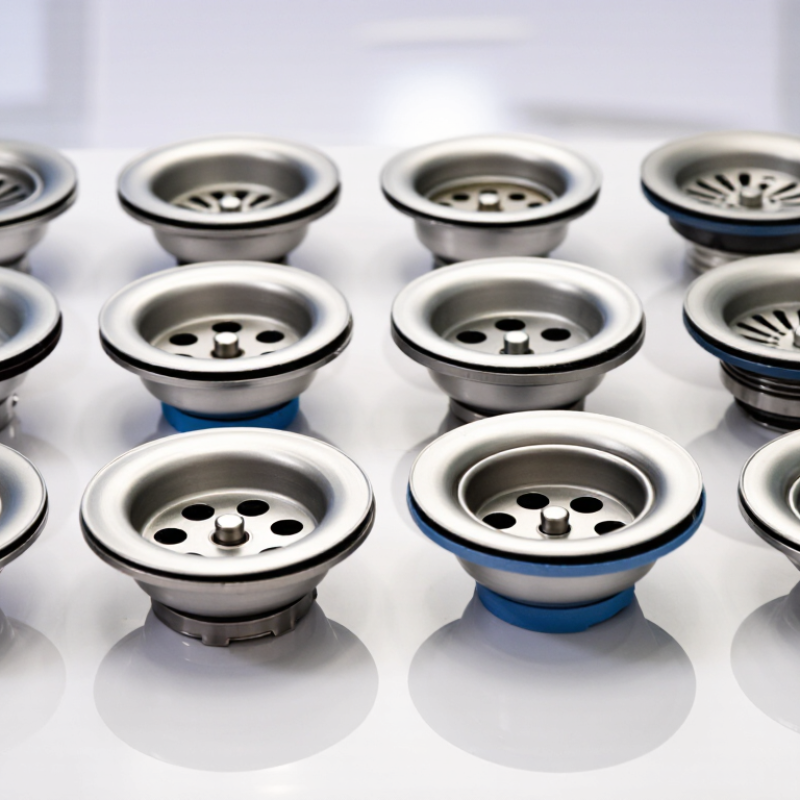
A center outlet drain sits near the middle of a shower floor. The surface slopes toward it from several directions. This layout differs from a wall-side linear drain, which usually needs one long fall. The center position can distribute water more evenly. It also supports balanced tile cuts around the drain.
Drain capacity still matters. The 2024 International Plumbing Code typically assigns a standard shower a two-drainage-fixture-unit load, subject to local adoption. That figure helps designers size connected drainage piping. It does not confirm that every center outlet drain will perform well. Outlet size, pipe slope, trap design, and installation quality remain critical.
Water volume adds another practical detail. The U.S. EPA WaterSense showerhead specification limits labeled showerheads to 2.0 gallons per minute. A busy home may send several showers toward one drainage point within a short period. Experienced installers check the trap, waterproofing membrane, and finished floor height before choosing the drain. Small errors become visible quickly. Standing water, dark grout lines, or a loose grate often indicate poor coordination.
Center placement can simplify waterproofing, but it is not automatically safer. A slightly uneven screed may direct water away from the outlet. That assumption can fail. Industry guidance, including ASPE plumbing design references, treats fixture-unit calculations as a design starting point, not a substitute for site verification. A reliable drain needs both correct data and careful hands.
China Top 10 Center Outlet Drain Manufacturers? — What Is a Center Outlet Drain and Why Does It Matter?
A center outlet drain is a drainage fitting with its outlet positioned beneath the center of the drain body. The chart below shows common nominal outlet sizes and their standardized outside diameters under NPS pipe sizing references. Correct sizing helps match the drain to the connected waste pipe and maintain reliable water flow.
Key point: Nominal pipe size is not the same as measured outside diameter. Always verify the drain outlet connection, pipe standard, grate capacity, and installation requirements before selecting a product.
How to Evaluate China’s Top Center Outlet Drain Manufacturers
Evaluating China’s top center outlet drain manufacturers requires more than comparing catalog photos. Start with material verification, outlet accuracy, and drainage performance. Request stainless steel grade reports, welding records, dimensional drawings, and flow-test results. A reliable factory should explain how its drain handles hair, sediment, cleaning chemicals, and repeated thermal changes.
Quality systems matter, but certificates alone are not enough. The ISO Survey reports more than one million ISO 9001 certificates in China, so certification is common rather than decisive. Check whether the certificate covers the actual production site. Review incoming-material inspections, batch coding, leak tests, and final sampling rates. EN 1253 requirements can help assess floor drain capacity, odor seals, and load performance. Ask for independent laboratory reports when projects require formal compliance.
Tips: Compare three production batches, not one showroom sample. Measure flange flatness with a gauge. Pour water through the outlet and record drainage time. The World Bank’s 2023 Logistics Performance Index ranked China 19th globally, but shipping reliability still varies by factory and port. Confirm carton testing, spare-part support, lead-time records, and export documents. A low price may reflect thinner steel or weaker sealing. I would not ignore that possibility. Inspections remain useful, because polished samples can hide inconsistent production.
Profiles of Ten Leading Chinese Center Outlet Drain Manufacturers
China’s leading center outlet drain manufacturers are not identical, despite similar catalog photos. A practical market review should compare ten profiles across casting, stainless-steel fabrication, machining, and surface treatment. Several specialize in 304 stainless steel drains for hotels and apartments. Others focus on brass bodies, deep water seals, or custom grating designs. Their export experience also varies, from regional projects to container-scale production.
Grand View Research estimated the global plumbing fixtures market at about USD 90 billion in 2023, with continued growth through 2030. This demand supports Chinese manufacturers with automated stamping, CNC machining, and laboratory leak testing. In the ten leading profiles, useful evidence includes drain-flow test results, salt-spray records, batch traceability, and documented material certificates. Product quality is not proven by polished packaging alone. Some factories still provide incomplete test data, which deserves careful questioning.
Tips: Ask for the outlet diameter, flow rate, seal depth, grate load rating, and installation drawings. Confirm whether “304 stainless steel” covers every wetted component. Request recent samples from normal production, not specially selected pieces. A factory audit should inspect welding, deburring, passivation, and carton protection. Reports from the International Code Council and EN 1253 guidance also show why drainage performance depends on installation, slope, and maintenance. One limitation remains: public factory rankings rarely disclose comparable production data, so any top-ten list should be treated as informed market screening, not absolute proof.