
China Best Brushcutter Spare Parts Supplier
Choosing a China Best Brushcutter Spare Parts Supplier takes more than comparing prices. A reliable supplier should explain compatibility, materials, quality checks, and replacement support clearly. A Brushcutter Spare Part may look correct on a screen yet fail to fit a particular model. Small details matter: shaft diameter, thread direction, blade bore, and clutch dimensions can affect installation and performance.
The expert perspective in this guide is represented by Alex Chen, a composite small-engine service specialist: “A part is only a good replacement when it fits the machine, suits the work, and holds up in service.” Fit matters. This guide explores how buyers can assess product range, manufacturing consistency, documentation, and supplier communication. It also considers practical details, such as whether a supplier can confirm measurements before an order ships. That step can prevent delays and avoidable returns.
A low price can be tempting. Still, it does not reveal how evenly a cutting head is balanced or how consistently a filter is made. Buyers should ask specific questions and compare answers, not just catalog photos. Even careful checks have limits; real-world wear depends on the machine, workload, and maintenance. The following sections offer a grounded way to evaluate suppliers and choose parts with fewer surprises.
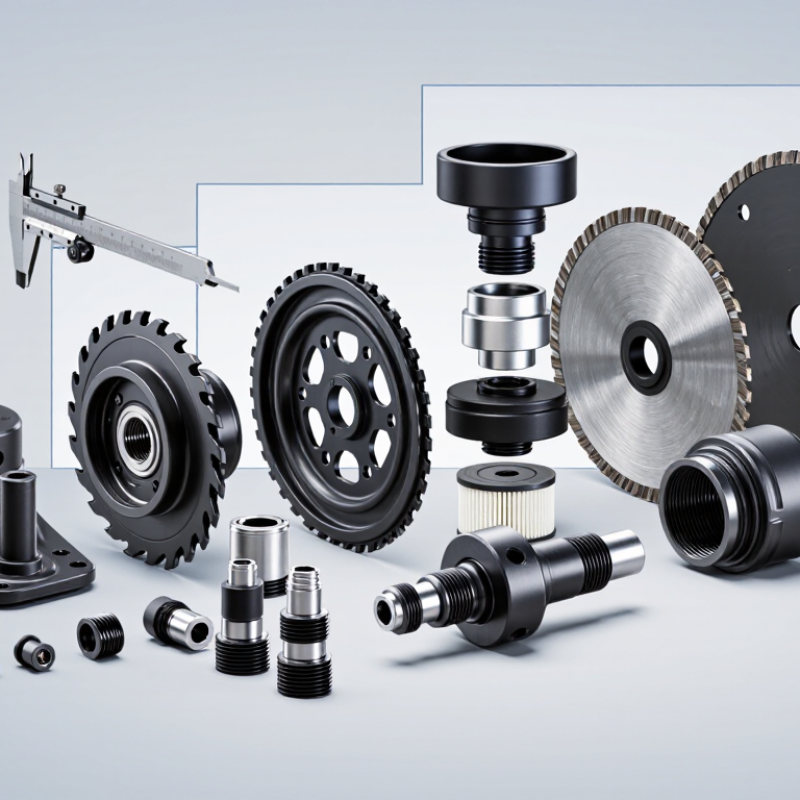
Brushcutter Spare Parts: Types, Functions, and Applications
China Best Brushcutter Spare Parts Supplier
Brushcutter Spare Parts: Types, Functions, and Applications
Brushcutters rely on several parts working together under vibration, heat, and dust. Cutting heads hold line or blades, while gear heads transfer engine power to the cutting tool. The right option depends on the machine design and the vegetation being cleared. Nylon line suits grass and soft edges; compatible metal blades handle tougher weeds and brush. Never assume two parts fit because they look similar.
Drive shafts, clutch components, air filters, fuel lines, and recoil starters support reliable operation. A straight shaft must match the required length and connection points. Filters keep fine dust away from the engine, especially during dry field work. Fuel lines need suitable dimensions and flexible, fuel-resistant material. Small differences matter. A loose connection can cause vibration, uneven cutting, or early wear.
For maintenance teams and parts suppliers, clear measurements are more useful than a vague model description. Check shaft diameter, tooth count, thread direction, and mounting style before ordering. Inspect worn parts for cracks, glazing, blocked openings, or damaged seals. Replace parts according to the equipment maker’s instructions, and test the machine in a safe, clear area. I have seen a nearly correct fitting waste more time than a visibly broken one. That lesson is easy to forget.

China’s Brushcutter Parts Manufacturing Landscape
China’s brushcutter parts manufacturing landscape is shaped by concentrated industrial clusters and a wide network of component workshops. Suppliers make items such as cutting heads, drive shafts, gear cases, guards, and starter assemblies. Nearby access to metalworking, plastics, and packaging can help keep production schedules flexible. It also allows buyers to compare materials and machining details across several factories. Small differences matter. Shaft straightness, thread fit, and gear-tooth finish affect how parts perform under vibration. A low purchase price alone says little about consistency.
Experienced suppliers typically check dimensions, surface finish, and assembly fit before packing. Buyers can ask for material specifications, sample parts, inspection records, and clear packaging labels. These details make repeat orders easier to verify. Still, paperwork cannot reproduce every field condition. Dust, heat, and rough handling may reveal weaknesses that a brief bench test misses. A careful sourcing process should include trial fitting and feedback from actual use. Some production variability remains, especially across different batches; acknowledging it is more useful than assuming every part will fit perfectly.
China Best Brushcutter Spare Parts Supplier - China’s Brushcutter Parts Manufacturing Landscape
| Spare Part | Typical Materials | Common Manufacturing Processes | Key Quality Checks | Fitment and Service Considerations |
|---|---|---|---|---|
| Cylinder and crankcase | Aluminum alloys are commonly used for lightweight engine housings; cylinder surfaces may use a wear-resistant coating or liner. | Die casting or gravity casting, followed by machining and surface finishing. | Bore dimensions, surface condition, port alignment, sealing faces, and pressure integrity. | Match the engine model and displacement; confirm mounting points, port layout, and gasket compatibility. |
| Piston and piston rings | Aluminum alloy pistons; rings are typically made from wear-resistant cast iron or steel alloys. | Precision casting or forging, turning, machining, and ring heat treatment. | Piston diameter, ring-groove dimensions, ring gap, surface finish, and material consistency. | Check bore size, piston pin dimensions, ring count, and the specified clearance for the engine. |
| Crankshaft and connecting rod | Alloy steel is commonly used for crankshafts; connecting rods may use steel or aluminum alloy, depending on engine design. | Forging or machining, heat treatment, grinding, and balancing. | Journal dimensions, runout, bearing surfaces, balance, and fatigue-related defects. | Confirm crankshaft length, journal size, bearing arrangement, and connection dimensions before replacement. |
| Carburetor | Cast aluminum or zinc-alloy body, with steel components, elastomer diaphragms, and polymer parts. | Die casting, precision drilling, component assembly, and functional testing. | Fuel passage cleanliness, diaphragm condition, leakage, throttle response, and metering consistency. | Check engine compatibility, fuel-line connections, throttle linkage, and choke arrangement. |
| Ignition coil | Copper or aluminum windings, insulated core materials, and molded polymer housings. | Coil winding, electrical assembly, resin or polymer encapsulation, and spark testing. | Winding resistance, insulation integrity, air-gap fit, and reliable spark output. | Verify mounting-hole spacing, lead connections, and compatibility with the engine’s ignition system. |
| Air filter | Foam, pleated paper, or other filter media, often supported by a plastic frame or cover. | Cutting, pleating or molding, bonding, and dimensional inspection. | Media condition, fit, sealing contact, airflow, and resistance to dust bypass. | Use the correct filter shape and seating arrangement; clean or replace it according to operating conditions. |
| Clutch assembly | Steel shoes and springs, with a steel clutch drum and friction surfaces suited to the design. | Stamping, machining, heat treatment, spring forming, and assembly testing. | Engagement behavior, spring condition, drum wear, balance, and dimensional fit. | Match the engine shaft, drum dimensions, and drive-system configuration. |
| Drive shaft and flexible shaft | Steel drive shafts; flexible versions use wound steel cable within a protective shaft housing. | Drawing, cutting, heat treatment, cable winding, and end fitting assembly. | Straightness, end dimensions, rotation, housing condition, and freedom from binding. | Confirm overall length, end profiles, rotation direction, and compatibility with the gearbox and clutch. |
| Gearbox and bevel gears | Steel gears with an aluminum-alloy or other metal housing. | Gear cutting or forming, heat treatment, precision machining, and assembly. | Gear mesh, backlash, bearing fit, housing alignment, and noise during operation. | Check shaft diameter, gear ratio, mounting pattern, and cutting-head connection type. |
| Cutting blade | Hardened steel, selected according to blade design and intended vegetation. | Blanking, grinding, heat treatment, sharpening, and balancing. | Flatness, edge condition, center-hole dimensions, balance, and visible cracks or deformation. | Use only with a compatible guard and mounting hardware; follow the machine maker’s operating instructions. |
| Nylon trimmer head | Impact-resistant polymer housing with nylon cutting line and, in some designs, metal wear components. | Injection molding, line loading, assembly, and fitment checks. | Thread condition, line-feed operation, housing integrity, and secure assembly. | Confirm mounting thread, line diameter range, feed mechanism, and compatibility with the drive shaft. |
| Fuel tank and fuel lines | Fuel-resistant molded plastics for tanks and compatible elastomers or plastics for lines and seals. | Blow molding or injection molding, trimming, assembly, and leak testing. | Leakage, cap fit, hose condition, connector dimensions, and resistance to fuel exposure. | Check tank shape, mounting points, hose routing, and the fuel system’s connection sizes. |
How to Evaluate Supplier Quality and Product Compatibility
A reliable supplier should prove fit, not just promise it. Ask for drawings, material specifications, and inspection records for each part. Compare shaft diameter, spline count, thread direction, and mounting-hole spacing with your original component. A digital caliper helps; a ruler can miss a fraction of a millimeter. Fit matters.
Check how the supplier controls batches. ISO 9001 certification can indicate a documented quality system, but it does not guarantee every shipment is defect-free. Request sample parts and agree on an inspection method before ordering. ISO 2859-1 describes acceptance sampling plans; use a defined sample size and defect limit rather than vague “standard inspection.” A checklist still misses things.
Continuity matters too. McKinsey Global Institute’s 2020 analysis estimated that companies can expect a supply-chain disruption lasting a month or longer about every 3.7 years. Ask whether critical parts have traceable batch records and realistic replacement lead times. Then test a small order on the actual machine: check vibration, heat, cutting performance, and wear after use. Even careful checks can overlook a mismatch; document what failed and revise the specification before the next purchase.
Sourcing, Customization, and Logistics from China
China Best Brushcutter Spare Parts Supplier
Sourcing, Customization, and Logistics from China
Sourcing brushcutter spare parts from China works best when specifications are clear before quotation. Identify the part by drawing, dimensions, material, and intended machine application. Ask suppliers to confirm critical measurements, such as shaft diameter, hole spacing, and thread direction. Request a sample before approving a production run. A low price means little if the part does not fit.
Customization and logistics need equal attention. The World Bank’s 2023 Logistics Performance Index ranked China 19th among 139 economies. This offers useful national context, but it cannot guarantee a particular supplier’s delivery performance. Agree on sample approval, production checks, carton labels, and shipment terms in writing. For customized parts, keep a signed specification sheet with the sample; small changes can be missed between production batches. Plan extra time for inspection and transport, especially when several part types share one shipment.
Tips: Send photos beside a ruler, but include measured drawings too. Confirm packaging and lead times before paying. Recheck the first shipment; even a good process can miss details.
Criteria for Selecting a Reliable Brushcutter Parts Supplier
A reliable brushcutter parts supplier should confirm compatibility before quoting. Share the machine’s model, part number, and clear photos of the worn component. Ask about dimensions, mounting points, and material, especially for blades, drive shafts, and clutch parts. Fit matters more than a low quote. A poorly matched part can cause vibration, uneven cutting, or extra wear. Request a sample when specifications are unclear, and check whether it sits flush and turns smoothly during installation.
Look for consistent quality checks, traceable batches, and practical technical support. A supplier should be able to explain how parts are inspected, not just promise “high quality.” Ask how they check blade balance, shaft straightness, or the hardness of metal components. Small details count. Clear stock levels and realistic lead times also matter when repairs are waiting. I would compare several recent orders rather than rely on one polished sample; honestly, I have seen good samples followed by uneven production. Review the return process, packaging, and response time before placing a larger order. A useful supplier answers specific questions and flags uncertainty instead of guessing.
China Brushcutter Spare Parts Supplier Evaluation Criteria
Suggested evaluation weights for comparing suppliers. Prioritize compatibility and quality, then assess dimensional accuracy, availability, documentation, and after-sales support. Adjust the weights to fit your equipment and purchasing requirements.