China Best HDPE Floater Manufacturer for Global Buyers?
Choosing the right China HDPE Floater manufacturer requires more than comparing prices and product photos. According to Grand View Research, the global high-density polyethylene market reached approximately USD 79 billion in 2023. It is expected to expand steadily through 2030, supported by demand for durable infrastructure and marine applications. The report also highlights the importance of material performance, processing quality, and sustainability.
Marine conditions are unforgiving. Saltwater, ultraviolet exposure, wave impact, and repeated loading can reveal weak welds quickly. A capable manufacturer should provide resin-grade information, UV-stabilization details, buoyancy calculations, wall-thickness data, and documented quality controls. ISO 9001 certification helps, but it does not replace production evidence. Ask for test reports, sample inspection records, and references from comparable floating projects.
Dr. Ramani Narayan, a polymer sustainability expert at Michigan State University, has emphasized, “The real value of plastics is in the products they make.” This principle matters for every HDPE Floater used in ports, aquaculture farms, marinas, and temporary platforms. A floater should deliver stable buoyancy, manageable maintenance, and a realistic service life.
Not every supplier presents these facts clearly. That is a warning sign. Grand View Research data describes market growth, not individual factory reliability. Buyers still need careful audits, prototype testing, and contract specifications. The best China HDPE Floater manufacturer combines practical engineering, consistent welding, traceable materials, and responsive after-sales support. Price matters. Performance matters more.
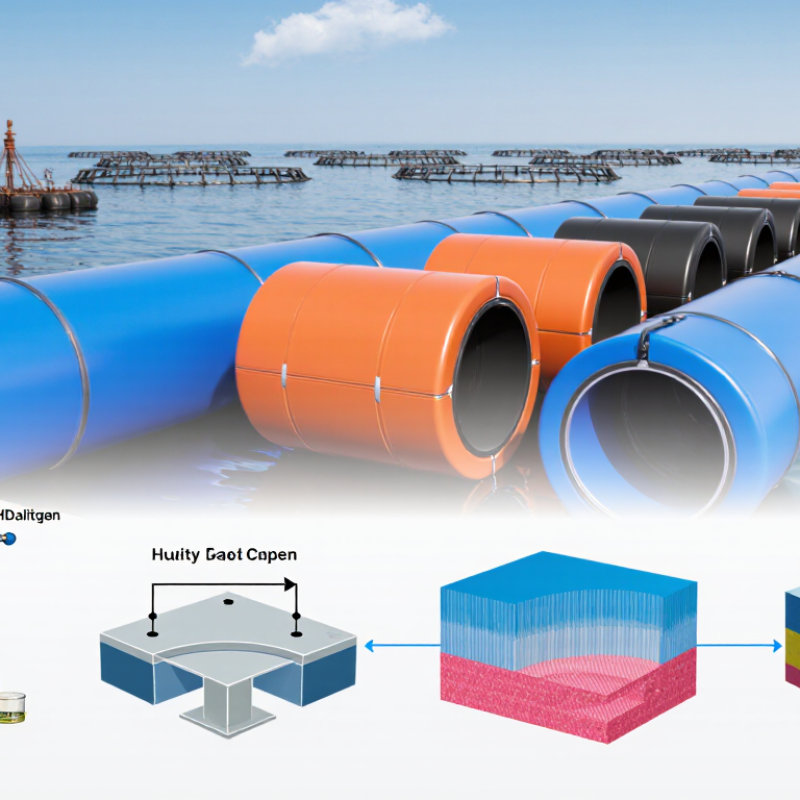
What Is an HDPE Floater and Where Is It Used?
An HDPE floater is a hollow, buoyant structure made from high-density polyethylene.
It supports floating walkways, pontoons, aquaculture cages, and temporary work platforms.
It stays afloat.
HDPE resists moisture, corrosion, sunlight, and many common chemicals. Rotational molding can create thick, seamless walls with fewer weak joints. Internal ribs may improve stiffness, but design choices depend on load and water conditions.
In marinas, floaters carry people, small boats, and utility lines above changing water levels.
In fish farms, modular units support nets and service paths near saltwater.
Construction projects may use them for access across calm rivers or reservoirs.
Engineers should calculate dead load, live load, waves, wind, and connection forces before installation. A floater can look stable but perform poorly when joints flex.
Global buyers should check dimensions, buoyancy, wall thickness, UV stabilization, anti-slip surfaces, and hardware compatibility.
Request material certificates, load calculations, and inspection records.
Samples can reveal warping, brittle corners, or uneven molding. Not every floater suits every climate.
I would not trust buoyancy claims without a clear testing method.
How to Evaluate China-Based HDPE Floater Suppliers
When evaluating a China-based HDPE floater supplier, begin with material evidence, not polished photographs. Grand View Research valued the global HDPE market at approximately USD 80.6 billion in 2023. This scale creates options, but also inconsistent quality. Request resin certificates, melt-flow data, density results, and batch traceability. Virgin or recycled content should be clearly declared. Ask whether testing follows ISO 527 for tensile performance and ISO 4892-3 for accelerated weathering. A factory audit matters. So does a live production visit.
Check the floater’s wall thickness, welding method, buoyancy calculation, and drainage design. Require load testing with documented fixtures and failure observations. For marine use, ask for saltwater exposure records, UV results, and dimensional checks after cycling. Inspect sample units yourself; small weld voids can enlarge under repeated movement. Grand View Research also forecasts continued HDPE market growth through 2030, increasing supplier competition and the need for sharper verification. Do not rely on one laboratory report. Independent retesting is wiser, although it adds time and cost. A perfect spreadsheet still misses handling damage, poor packaging, or careless assembly. Request production samples from different batches. Compare them physically. Suppliers should explain tolerances, tooling ownership, replacement terms, and delivery controls in writing. Claims without raw data deserve caution.
What Manufacturing and Quality Processes Should Buyers Check?
For global buyers, a reliable HDPE floater supplier should show more than attractive samples. The factory should provide resin certificates, batch numbers, and production records. Verify density, melt flow rate, tensile strength, and impact performance against the approved specification. ISO 1133 supports melt flow testing, while ISO 527 measures tensile properties. These records reveal whether each batch behaves consistently.
Inspect the manufacturing floor closely. Rotational molding should control heating time, mold temperature, and cooling conditions. Welded or assembled parts need visual checks and destructive seam testing. Ask for dimensional reports, buoyancy tests, water absorption results, and load testing. For outdoor use, request accelerated weathering data under ISO 4892-3. UV protection must be blended into the material, not painted onto the surface. A glossy shell can still hide weak seams.
Environmental exposure deserves careful attention. The OECD Global Plastics Outlook reports that global plastic production reached 460 million tonnes in 2019, nearly double the 2000 level. This scale increases the need for traceability and responsible material control. Buyers should examine recycled-content claims and disposal guidance, even when virgin HDPE is specified. PlasticsEurope reported global plastics production of about 400.3 million tonnes in 2022, showing the market’s continuing scale. I would not rely on one laboratory report. Independent retesting is wiser. Some suppliers may document the plastic compound well but overlook fittings, plugs, or rope connections. Those small parts often fail first.
How Can Global Buyers Select the Best HDPE Floater Partner?
How Can Global Buyers Select the Best HDPE Floater Partner?
Global buyers should evaluate engineering evidence, not only price or production capacity. PlasticsEurope’s Plastics—The Fast Facts 2023 reported 400.3 million tonnes of global plastics production in 2022. This scale increases the importance of resin traceability and responsible sourcing. Grand View Research forecasts the HDPE market to grow at about 4% annually through 2030. A reliable manufacturer should disclose resin grade, density, wall thickness, UV stabilizer content, and welding procedures. HDPE density commonly ranges from 0.94 to 0.97 g/cm³. Ask for batch records, not vague claims. Small details matter.
Request independent test results for tensile strength, impact resistance, water absorption, and accelerated weathering. ASTM D638 supports tensile testing, while ASTM G154 is widely used for simulated UV exposure. These tests do not replace real marine trials, but they reveal weak formulation or inconsistent processing. Check floatation calculations under full working load, including people, equipment, waves, and freeboard. Inspect sample seams by hand. Look for uneven weld beads, trapped air, and sharp edges. A certificate alone proves little. This step is easy to skip. Factory audits should review calibration records, incoming-material checks, mold maintenance, and corrective-action reports. No supplier is perfect, and published test data may still need local verification before long-term deployment.
How Can Global Buyers Select the Best HDPE Floater Partner?
The suggested procurement weighting highlights the factors that most directly affect HDPE floater performance and long-term project value. Buyers should verify material documentation, dimensional tolerances, UV and weathering resistance, buoyancy calculations, quality-control records, customization capability, delivery reliability, and after-sales support before selecting a manufacturing partner.
Technical verification may reference internationally recognized methods such as ISO 1183 for density, ISO 527 for tensile properties, ASTM D570 for water absorption, and ISO 4892-3 for accelerated weathering.