Which XYZ Positioning System Is Best for 2026?

Which Xyz Positioning System is best for 2026? The answer depends on what you need to move, how precisely it must arrive, and the conditions on your production floor. No single platform fits every application. A system designed for a compact inspection station may not suit a large gantry or a high-speed assembly line. Small details count.

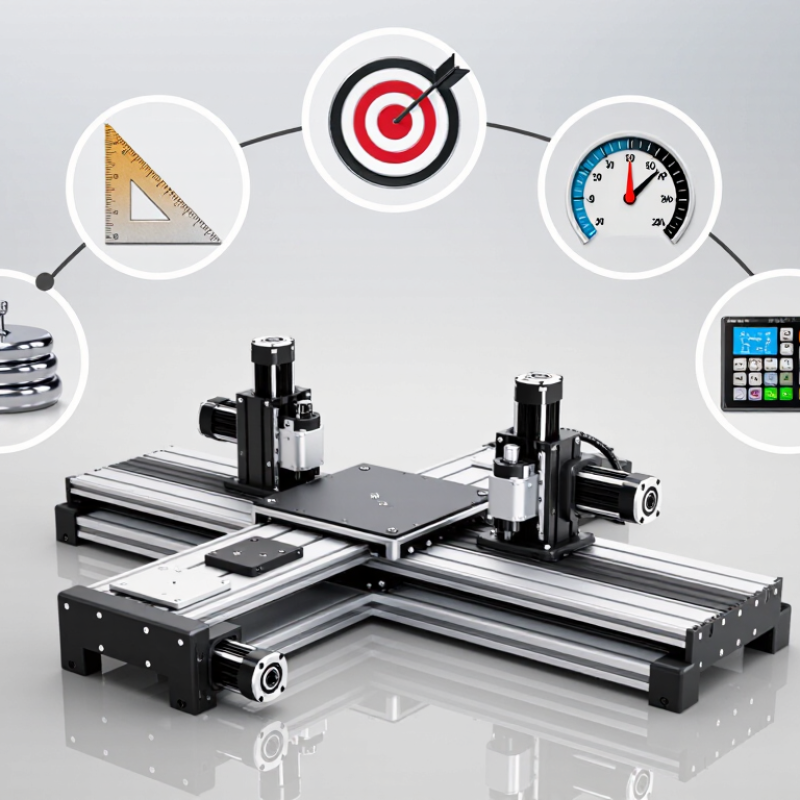
This guide compares the factors that shape a sound choice: travel range, repeatability, payload, motion speed, control compatibility, and service support. Consider a camera that must return to the same inspection point throughout a shift. Its positioning system needs dependable repeatability, but speed, vibration, and mounting rigidity also affect results. Published specifications help, yet they should be checked against the real task and operating environment. A precise number on a datasheet is not the whole story.

We will also look at integration effort, maintenance needs, and total ownership cost—not only the purchase price. Ask vendors how they test accuracy, what conditions their specifications assume, and which components require regular inspection. Those answers can reveal gaps that a product comparison table misses. Even a careful guide has limits: performance varies with installation, tuning, and workload. The goal is not to name one universal winner, but to help you identify the Xyz Positioning System that fits your requirements and verify that choice with reliable technical evidence.
Which XYZ Positioning System Is Best for 2026?

What an XYZ Positioning System Is and How It Works

An XYZ positioning system moves a tool, sensor, or sample along three perpendicular axes: X, Y, and Z. X and Y usually describe a flat plane; Z describes height or depth. A controller sends the system to defined coordinates, such as 120 millimeters across, 60 millimeters forward, and 8 millimeters up. The same basic idea supports inspection, assembly, imaging, and laboratory measurement. Three axes, one coordinate.

Movement comes from actuators, often motors driving screws, belts, or linear stages. Encoders or other position sensors report movement to the controller. In a closed-loop system, the controller compares the measured position with the target and corrects the difference. Many systems also home before use, moving toward a reference switch to establish a known zero point. This step matters: a coordinate is only useful when its origin and units are clear.

Real accuracy depends on more than the displayed coordinates. Backlash, vibration, temperature changes, payload weight, and cable drag can all affect motion. A stage may repeat a position well yet still have a calibration offset. That distinction is easy to miss. For critical work, check travel limits, measure repeatability under the actual load, and verify positions with a suitable reference. Specs help, but the setup tells the fuller story.
Main Types of XYZ Positioning Systems

XYZ positioning systems generally fall into four layouts: stacked linear stages, Cartesian gantries, articulated robot arms, and parallel platforms such as hexapods. Each moves a tool or workpiece along three axes, but their mechanics shape reach, stiffness, speed, and accuracy. The right choice depends on the task. Small parts on a fixed bench need different motion than a large panel moving across a production line.

Stacked linear stages place one axis on another, making compact, precise motion practical for inspection and assembly. Their upper axes carry the lower ones, so moving mass can limit acceleration.

Cartesian gantries span a work area with overhead or side-mounted rails. They suit large, rectangular work envelopes, though frame deflection can become a real concern.

Hexapods move a platform through coordinated legs, offering fine adjustment and multi-axis orientation in a compact space. Setup is less intuitive.

Articulated arms provide flexible reach around obstacles, but their paths and payload deflection need careful validation.

Selection should start with payload, travel, repeatability, cycle time, and the working environment—not headline accuracy alone. The International Federation of Robotics reported 541,302 industrial robot installations worldwide in 2023 in its World Robotics 2024 report. That figure shows the scale of industrial automation; it does not prove one XYZ layout is best. For a fair comparison, test the actual tool, load, and motion path. A design that looks precise on paper may behave differently after cables, heat, and vibration enter the picture.

Key Performance Factors for Comparing Systems

Choosing an XYZ positioning system in 2026 starts with the task, not the biggest accuracy figure. Map the required travel, payload, speed, and smallest feature you need to place. Separate resolution from accuracy and repeatability; they describe different performance traits. A one-micrometer command step does not prove one-micrometer placement. Measure the full workspace.

Test motion at the center and near each corner. Repeatedly command the same point, then record the spread in final positions. Check settling time, too: a stage that reaches a target quickly but vibrates afterward may slow real production. Add your actual payload during testing. A heavier tool can expose flex, backlash, or longer settling that unloaded specifications hide.

Watch temperature as well. Even modest changes in room or motor temperature can shift alignment over a long run.

Control quality matters as much as mechanics. Look for clear feedback, stable motion at low speeds, and software that makes coordinate setup and error checks practical. Confirm cable routing and available space around the stage; both can affect usable travel.

A neat specification sheet can still mislead. I would compare systems using the same load, travel path, and measurement method, then keep the raw results. One imperfect test is better than an untested assumption.

How to Match a Positioning System to Its Application

Which XYZ Positioning System Is Best for 2026?
How to Match a Positioning System to Its Application

Choosing an XYZ positioning system starts with the task, not the headline accuracy. A microscope scanning a 20-millimeter sample needs smooth, low-vibration motion; a pallet-handling cell needs reach, speed, and load capacity. Those are different machines. The International Federation of Robotics’ World Robotics 2024 report recorded 4,281,585 industrial robots operating worldwide in 2023, with 541,302 installations that year. That scale highlights the need for application-specific integration, not one universal stage.

Map the real motion envelope: X, Y, and Z travel, payload, acceleration, cycle time, and mounting space. Then set tolerances from the process. A camera inspection station may prioritize repeatability and low settling time, while dispensing may require steady velocity and resistance to contamination. Check whether quoted accuracy holds across full travel, under working load, and after warm-up. ISO 230-2 defines tests for positioning accuracy and repeatability in numerically controlled machine tools. Verify the assembled system under its actual load and temperature.

Choose screw-driven motion when force and cost dominate; consider direct linear drive when speed, smoothness, and reduced backlash matter. Neither option wins everywhere. Sealing, cable routing, controller compatibility, and service access can outweigh finer catalog resolution. A tidy specification sheet can mislead. I would still question any selection based on resolution alone. Measure the part, fixtures, and worst-case duty cycle first; small oversights can become expensive tuning work.

Which XYZ Positioning System Best Meets 2026 Requirements?

Choosing an XYZ positioning system for 2026 starts with the actual task, not a headline accuracy figure. Define the working volume, payload, travel speed, and required repeatability. A camera inspection station may need smooth, repeatable motion more than rapid acceleration. A fixture carrying a heavy part may need stiffness and carefully managed vibration. Small details matter. A loose cable near the moving carriage can affect reliability over time. Check how accuracy is specified, including measurement conditions and calibration intervals. Numbers without context can mislead.

The system should also fit its operating environment. Dust, temperature changes, limited space, and long duty cycles all influence component choice. Review encoder feedback, controller compatibility, service access, and the availability of replacement parts. Ask for test data under a load close to yours, not just an unloaded demonstration. That is more useful. I would still question any selection based on a single specification; real installations rarely behave like clean test benches. Leave room for future fixtures or software changes, but avoid paying for travel or speed the process will never use. The best match is the one that meets measured needs consistently, with setup and maintenance your team can realistically support.

Which XYZ Positioning System Best Meets 2026 Requirements?

Typical position-error ranges vary by technology and operating conditions. Lower error is better.

How to read this chart: Bars show indicative error ranges in centimeters on a logarithmic scale. Standalone GNSS and RTK GNSS figures generally refer to horizontal accuracy; actual results depend on conditions such as satellite visibility, multipath, calibration, and installation. The accuracy figures are not perfectly comparable across technologies, so validate performance in the intended environment. For open-sky outdoor work, RTK GNSS can be a strong choice; UWB is often suitable for indoor tracking, while optical tracking can serve applications requiring very fine accuracy in a controlled space.

Optimized by Optimole