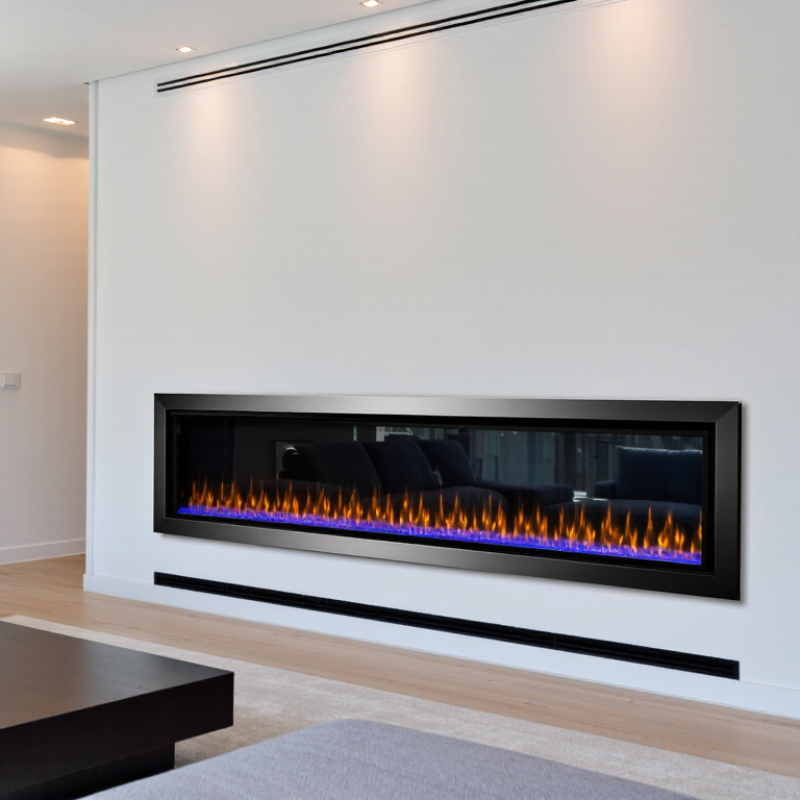
2026 Best Recessed Electric Fireplace for Global Buyers

The 2026 search for the best Recessed Electric Fireplace is no longer driven by appearance alone. Global buyers now compare heating performance, installation depth, electrical compatibility, safety certification, and long-term operating cost. A slim black glass unit may look impressive, yet poor ventilation planning can reduce comfort and increase installation risk.

Market data supports this wider evaluation. Allied Market Research valued the global electric fireplace market at approximately USD 2.8 billion in 2021 and projected continued growth through 2031. Grand View Research also identifies steady expansion in electric heating appliances, supported by renovation demand and cleaner indoor alternatives. However, these reports use different product definitions. Their figures should guide decisions, not replace product-level verification.

This guide examines leading recessed models through practical buyer criteria. We consider heat output, thermostat accuracy, flame realism, noise, remote controls, wall dimensions, and service support. We also review compatibility with regional voltage systems and relevant safety frameworks, including IEC 60335-2-30 where applicable. Certification requirements can vary by destination market, so buyers should confirm documentation with manufacturers and local professionals.

Small details matter.

For example, a 2-inch installation error can affect trim alignment, while a weak remote sensor may frustrate daily use. Energy performance also depends on room insulation, climate, and heating habits. No single model is best everywhere. That is the uncomfortable part. A fireplace recommended for a Canadian living room may perform poorly in a humid coastal home. Our comparisons therefore combine published specifications, installation experience, user feedback, and manufacturer reliability, while acknowledging gaps in available data.

2026 Best Recessed Electric Fireplace for Global Buyers

What Is a Recessed Electric Fireplace and How Does It Work?

A recessed electric fireplace is an electric heating and display unit fitted inside a wall cavity or prepared frame. Unlike a wood-burning model, it needs no logs, chimney, or combustion air. Its visible flame usually comes from LEDs, reflective panels, and programmed light patterns. The effect can look surprisingly deep, although it is still light, not fire. Behind the glass, a metal heating element warms incoming room air. A quiet fan moves that air through the outlet. Many units also include a thermostat, timer, and separate flame control.

During installation, the cavity must match the unit’s listed dimensions.

This detail matters. A gap that looks harmless can affect support, airflow, or finishing materials. Keep curtains, furniture, and other heat-sensitive items outside the stated clearance zone. In my installation checks, the power connection is often overlooked. Buyers should confirm voltage, frequency, plug type, and circuit requirements before ordering internationally. An adapter may change the plug shape, but it does not correct incompatible voltage or load capacity.

A recessed model can provide visual warmth year-round
with heat switched off in mild weather. It is often easier to control than a traditional fireplace, but it is not maintenance-free. Dust can collect around the intake, and a blocked outlet may reduce performance. Clean accessible surfaces after the unit cools, following the supplied instructions. One limitation deserves honest attention: flame realism varies by viewing angle and room lighting. Check dimensions, electrical data, and local installation rules carefully.

A beautiful wall opening cannot compensate for poor planning.

Key Features to Evaluate for Global Buyers in 2026

For global buyers in 2026, a recessed electric fireplace should fit the room and the market. Measure the cavity carefully before comparing features. A few millimeters can complicate installation. Check voltage, frequency, plug type, and local electrical requirements. International compatibility is never automatic.

Heating performance deserves practical testing. Look for adjustable heat levels, reliable thermostatic control, and protection against overheating. A realistic flame effect should remain visible in daylight, not only in a dark showroom. Multiple flame colors can improve design flexibility, but excessive effects may look artificial. Energy use matters too, especially in regions with high electricity costs. An independent energy test is more useful than vague efficiency claims.

Controls should include a clear display, remote access, and manual operation. Wi-Fi features are convenient, yet they may fail during network changes. I would not treat app control as essential. Safety instructions should be available in understandable local languages. Buyers should also examine certification marks accepted in the destination country, warranty terms, spare-part access, and installer support. Strong packaging protects glass and trim during long-distance shipping. Still, packaging alone does not prove product reliability. Ask for inspection records, testing evidence, and clear documentation. A lower price can become expensive when replacement parts are unavailable.

2026 Best Recessed Electric Fireplace for Global Buyers - Key Features to Evaluate for Global Buyers in 2026
Global buyer evaluation matrix for recessed electric fireplaces
Evaluation Dimension Recommended 2026 Benchmark Verified Technical Data Why It Matters for Global Buyers Buyer Verification Point
Heating and Energy Performance
Rated heating output Prefer a selectable output range rather than a single fixed setting. 1.0–1.5 kW is a common electric-heating range for residential units; 1.5 kW equals approximately 5,118 BTU/h. Selectable heat levels improve comfort and help users manage electricity consumption. Confirm the rated output at each heat setting and check whether the heating function can operate independently from the flame effect.
Heating control Electronic thermostat with adjustable temperature control. A thermostat cycles the heater on and off after the selected room temperature is reached. Thermostatic control is more practical than continuous manual operation, especially in variable climates. Check temperature-adjustment range, remote-control access, and whether the thermostat sensor can read room temperature accurately.
Flame-only operation Available as a standard operating mode. The flame and ember visuals can operate without activating the heating element. Allows year-round decorative use in warm regions or during summer. Verify that flame-only mode does not energize the heater or increase the rated electrical load.
Energy consumption Choose the lowest output that meets the room’s heating requirement. A 1.5 kW heater consumes up to approximately 1.5 kWh per hour when operating continuously at full rated power. Actual energy cost depends on operating time, thermostat cycling, and the local electricity tariff. Calculate estimated cost using: rated power in kW × operating hours × local electricity price.
Electrical Compatibility for International Markets
Nominal supply voltage Use a model specifically rated for the destination market. Common residential systems include 100 V, 120 V, and 220–240 V nominal supplies. Voltage mismatch can cause unsafe operation, malfunction, or permanent equipment damage. Read the product rating label; do not rely on a plug adapter to convert voltage.
Operating frequency Match the product to the local supply frequency. Common grid frequencies are 50 Hz, 60 Hz, or dual-frequency operation. Fans, timers, motors, and control electronics may behave differently when frequency compatibility is not confirmed. Look for a rating such as 50 Hz, 60 Hz, or 50/60 Hz on the nameplate and installation manual.
Approximate full-load current Check circuit capacity before installation. At 1.5 kW, the approximate current is 12.5 A at 120 V and 6.25 A at 240 V, excluding minor control loads. Higher current at lower voltage may affect circuit selection, plug type, and installation requirements. Confirm whether a dedicated circuit, fixed wiring, or a specific overcurrent protection rating is required by local regulations.
Plug and wiring configuration Destination-market plug or approved fixed-wiring arrangement. Plug shapes and wiring rules vary by country; an inexpensive travel adapter is not a substitute for compliant installation. Correct connection is essential for grounding, thermal safety, and warranty validity. Verify plug standard, cable length, grounding method, and whether installation must be completed by a qualified electrician.
Recessed Installation and Physical Dimensions
Typical visible width options Select the width according to the wall opening and room proportions. Common residential formats are approximately 760–1,520 mm wide, equivalent to about 30–60 inches. Width affects visual balance, framing requirements, shipping volume, and installation labor. Use the manufacturer’s exact cutout drawing rather than the external glass or trim dimensions.
Typical visible height Confirm whether the unit is a landscape, portrait, or multi-sided design. Many landscape units are approximately 400–600 mm high, although designs vary significantly. Height determines the required wall cavity and the relationship between the fireplace and television or mantel. Check external height, trim height, glass height, and minimum clearance above the floor.
Typical installation depth Choose a shallow model when wall cavity depth is limited. Many recessed electric units require approximately 180–300 mm of cavity depth, depending on construction. Depth affects compatibility with stud walls, masonry walls, media walls, and decorative surrounds. Confirm the required cavity depth, ventilation space, cable route, and whether the unit can also be surface-mounted.
Wall opening tolerance Use the specified cutout dimensions exactly. Cutout width, height, and depth are product-specific and are not interchangeable with nominal fireplace dimensions. An oversized or undersized opening can create structural, alignment, and heat-clearance problems. Require a dimensioned installation drawing before cutting the wall or ordering custom cabinetry.
Front-glass and trim design Tempered safety glass with a removable or properly fitted trim system. Glass temperature, thickness, and trim construction differ by model and must be confirmed in the technical documentation. Front-glass design affects appearance, cleaning, child safety, and installation finish quality. Check glass-care instructions, replacement availability, edge temperatures, and whether the trim conceals the full cutout.
Safety, Compliance, and Reliability
Overheat protection Mandatory evaluation criterion. An independent thermal safety device should interrupt heating if abnormal temperature conditions occur. Provides an additional layer of protection against blocked airflow or overheating components. Confirm the protection method in the manual and identify whether the unit automatically resets or requires service.
Clearance requirements Follow the product-specific minimum clearances on every side. Clearances vary according to heater location, airflow design, combustible materials, and installation method. Incorrect clearance can increase fire risk and may invalidate local approval or warranty coverage. Check clearances to flooring, curtains, furniture, combustible wall materials, mantels, and televisions.
Regulatory documentation Purchase only products with destination-market compliance documentation. Applicable requirements differ by market and may include electrical safety, electromagnetic compatibility, radio equipment, and environmental rules. Documentation supports customs clearance, legal sale, insurance, and safer installation. Request the declaration of conformity, test reports or certification references, user manual, and rating label before purchase.
Ingress and installation location Use indoors in a dry location unless the product is explicitly rated for another environment. Standard indoor electric fireplaces are generally not suitable for outdoor, wet, or splash-prone areas without a specific environmental rating. Moisture can damage electronics and create an electrical safety hazard. Confirm the stated environmental rating and prohibit installation in bathrooms or exposed outdoor areas unless specifically approved.
Controls, Appearance, and Ownership Value
Flame and ember adjustment Prefer independently adjustable flame brightness, ember-bed brightness, and color options. LED-based visual effects generally produce less heat and consume less power than the heater, but exact lighting power varies. Independent adjustment improves realism and allows a low-light setting for bedrooms or hospitality spaces. Check adjustment steps, memory function, remote-control range, and whether the display can be dimmed or disabled.
Noise level Prefer a low-noise fan and quiet flame-effect mechanism. Noise depends on fan speed, airflow path, motor design, and installation enclosure; there is no universal acceptable value for every room. Audible fan noise is more noticeable in bedrooms, study rooms, and quiet hospitality spaces. Request a measured sound-level value, test conditions, and whether the value was measured at a defined distance.
Remote and smart controls Basic remote control should remain available even if app or voice functions are offered. Wireless features may require a specific Wi-Fi band, app region, account, or internet connection. Regional software support and network compatibility may differ between countries. Confirm app availability, data requirements, firmware support, offline operation, and manual control access.
Warranty and spare parts Prioritize written warranty terms and long-term availability of heating and control components. Warranty duration, coverage, labor terms, and cross-border service conditions vary by seller and destination. Large recessed appliances can be costly to remove and replace if a control board, fan, or heater fails. Confirm service location, replacement-part process, return freight responsibility, and warranty exclusions before ordering.
Shipping and installation logistics Assess packaged dimensions, weight, damage protection, and delivery method. Glass panels and large trim pieces require protective packaging; final shipping weight is higher than the appliance’s net weight. International freight damage, import duties, and access restrictions can materially change the total purchase cost. Obtain packed dimensions, gross weight, tariff information, insurance terms, and an inspection procedure for delivery.
Important purchasing note: The figures above are practical evaluation benchmarks and common electrical or dimensional reference values, not a specification for one particular product. Always verify the exact rating label, cutout drawing, safety clearances, certification documents, and local electrical requirements for the destination country before purchase or installation.

How to Choose the Right Size, Heating Capacity, and Installation Type

When choosing a recessed electric fireplace, start with room size, not screen size. The 2020 U.S. Energy Information Administration Residential Energy Consumption Survey found that space heating used about 42% of household energy. This makes heating capacity worth checking carefully.

Electric resistance heating converts nearly 100% of incoming electricity into heat at the point of use, according to the U.S. Department of Energy. A 1.5-kilowatt heater produces about 5,118 BTU per hour. As a practical starting point, allow roughly 10 watts per square foot in a reasonably insulated room. A 400-square-foot space may need around 4,000 watts, but climate, ceiling height, windows, and insulation can change that estimate. The rule is imperfect. Test the room’s actual comfort before buying the largest unit.

Recessed installation needs more than a wall opening. Measure the cavity depth, framing width, ventilation space, and nearby electrical access. Do not assume every model fits a standard stud bay. For renovation projects, a wall-mounted or three-sided installation may reduce structural work. Global buyers should also match voltage, frequency, plug configuration, and local certification requirements. The National Fire Protection Association advises following product clearances and local electrical rules. A qualified electrician should verify the circuit, especially for units above 1.5 kilowatts. Small details matter. A beautiful fireplace can still underperform when installed in a poorly insulated room.

Safety, Energy Efficiency, Certifications, and Regional Compatibility

2026 Best Recessed Electric Fireplace for Global Buyers

A reliable recessed electric fireplace should make safety visible, not merely promise it. Look for overheat protection, automatic shutoff, a cool-touch screen, and stable wall mounting. Keep curtains, paper, and furniture away from the heater outlet. A dedicated, grounded circuit is often safer than a crowded extension lead. In damp areas, regional electrical rules may require additional protection. Installation mistakes remain a common weakness.

Energy efficiency needs careful interpretation. Electric resistance heating converts nearly all consumed electricity into heat at the point of use. However, operating cost still depends on local tariffs, room insulation, and thermostat settings. Flame-only mode can improve atmosphere without activating the heater. A timer and open-window detection may reduce waste. Check the actual wattage, not only the advertised room size. Room ratings can feel optimistic.

Certification is region-specific. A valid safety mark should match the destination market and be supported by traceable test documentation. Confirm voltage, frequency, plug type, and hardwiring requirements before ordering. A unit designed for one electrical system may be unsafe elsewhere, even with an adapter. Regional compatibility also includes language, warranty support, replacement parts, and installer availability. Certification is not a universal passport. Buyers should verify current requirements with local authorities or a qualified electrician, because regulations and product specifications can change.

2026 Best Recessed Electric Fireplace for Global Buyers

Regional electrical compatibility is a primary safety and installation consideration when selecting a recessed electric fireplace.

Safety

Select a unit tested for the destination market and follow the required clearance, grounding, circuit, and installation instructions.

Energy efficiency

Electric resistance heating converts nearly all consumed electricity into heat at the point of use. Actual operating cost depends on power rating, usage time, and local electricity tariffs.

Certification and compatibility

Common regional requirements include UL 2021 or CSA requirements in North America and EN or IEC 60335-2-30-based requirements in many European markets. Verify the exact approval and voltage before purchase.

Chart data shows typical nominal household supply voltage. Country-level variations exist: Japan commonly uses 100 V, while Brazil and several other markets may use more than one nominal voltage. Frequency is typically 60 Hz in North America, 50 Hz in most of Europe and Australia, and varies by region in Japan.

Installation, Maintenance, and Long-Term Buying Considerations

A recessed electric fireplace should be planned like a permanent appliance, not a decorative screen.

Measure the wall cavity twice, including studs, insulation, wiring, and finished trim. Measure twice. A qualified electrician should confirm the circuit capacity and follow local installation requirements. Keep the heater’s clearances exactly as stated in the product manual. Do not place furniture, curtains, or storage directly in front of the outlet.

Long-term reliability depends on small maintenance habits.

Dust can collect around the intake grille and reduce airflow, especially in homes with pets or renovation debris. Turn the unit off, unplug it, and clean the grille with a soft brush or vacuum attachment. Inspect the power cord and wall connection occasionally. Never ignore unusual smells, rattling, or repeated shutdowns. Those signs may indicate overheating or a failing component.

Buying decisions should include more than flame appearance.

Check whether replacement remotes, heating elements, thermostats, and control boards remain available. Review the warranty terms carefully, including labor coverage and service arrangements in your country. Compare heat output with the room’s insulation, ceiling height, and winter climate. A quiet blower may matter more than extra lighting effects. I would also test the controls before final installation, because repairing a recessed unit later can require removing trim or drywall. Plan for failure. That sounds pessimistic, but accessible service parts can save substantial cost over many years.

Optimized by Optimole