What Is the Best Powder Sieve Machine in 2026?
Choosing the best Powder Sieve Machine in 2026 depends on the material, production target, and required separation—not just the machine’s advertised capacity. A fine, dry powder behaves differently from a damp, cohesive blend. That difference can affect screen selection, feed rate, cleaning time, and results. There is no universal winner.
A practical comparison should examine mesh options, throughput, vibration settings, product-contact materials, noise, and access for maintenance. Ask suppliers how stated capacity was measured, and request a trial with a representative sample when possible. Watch for uneven feeding, material buildup near the screen edge, and difficult changeovers. Small details matter.
This guide will compare common machine types and explain where each may fit. It will also cover operating costs, installation needs, and questions to ask before purchase. A low purchase price may look attractive, but frequent screen changes or slow cleaning can erode that advantage. And specifications alone are not proof. Use them as a starting point, then verify performance against your own powder, operating conditions, and quality requirements. Some recommendations remain uncertain without sample testing; that is worth admitting. The best choice is the one that reliably meets your process needs, not the one with the most impressive brochure.
What a Powder Sieve Machine Does and How It Works
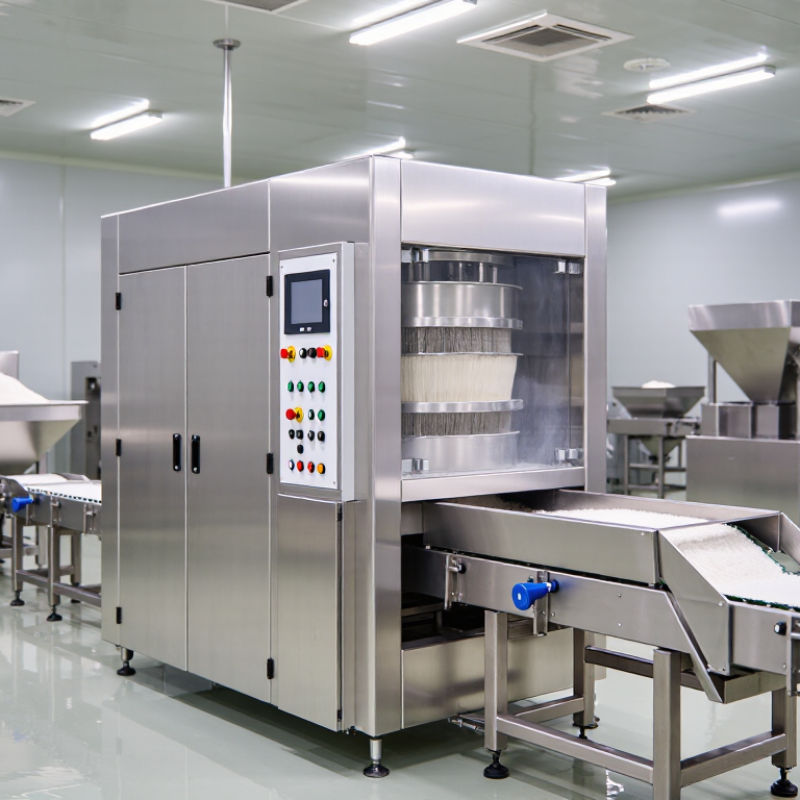
A powder sieve machine separates particles by size using a woven screen or perforated plate. Powder enters the machine and spreads across the screening surface. Vibration, rotation, or gentle mechanical motion keeps material moving. Smaller particles pass through the openings; larger particles travel toward a separate outlet. The screen does not identify particles chemically. It sorts them by whether they can pass through its apertures.
Screen size sets the basic separation range, while motion and feed rate affect performance. Too much feed can bury the mesh and reduce accuracy. Damp or static-prone powder may cling to the screen and block openings. Not always. Operators can check the feed, inspect the mesh, and adjust settings using measured results rather than guesswork. A useful test compares samples from both outlets and checks for visible damage or blinding. In practice, a finer mesh is not automatically better; it may slow production or clog sooner. That trade-off is easy to underestimate. The right machine depends on the powder’s flow, the required particle range, and the amount processed per hour. A short trial with the actual material often reveals more than a catalogue specification.
What Is the Best Powder Sieve Machine in 2026?
What a Powder Sieve Machine Does and How It Works
How to read the chart: These are common nominal aperture sizes in the ISO 3310-1 test-sieve series, not machine performance ratings. Powder is fed onto a sieve screen; particles small enough to pass through its openings move to the next collection stage, while larger particles are retained. Actual separation also depends on particle shape, feed rate, moisture, and operating conditions.
Main Types of Powder Sieve Machines in 2026
Powder sieve machines separate particles by size, but their mechanisms suit different materials. Vibratory sieves use a mesh deck that shakes particles across the screen. They work well for routine grading and removing lumps from free-flowing powders. Rotary centrifugal sifters push material through a cylindrical screen with rotating paddles. They can handle steady production, though heat-sensitive powders need careful testing.
Gyratory or tumbler sieves move in a controlled circular path. This gentle action can help when particles are fragile or several size fractions are needed. Ultrasonic systems add high-frequency vibration to the mesh, helping reduce blinding with fine, cohesive powders. They are not magic. Moisture and static can still cause problems. Grand View Research valued the global food processing equipment market at $52.37 billion in 2023; this broad figure signals equipment investment, not sieve-machine sales.
MarketsandMarkets estimated the industrial filtration market at $31.8 billion in 2023, with a forecast of $47.3 billion by 2028. Filtration is not sieving, but both industries reflect demand for controlled material separation. For a practical choice, test the actual powder, target cut size, throughput, and cleaning needs. A mesh that performs well with dry granules may fail with a sticky blend. Pilot trials matter. Data sheets alone rarely reveal that.
What Is the Best Powder Sieve Machine in 2026? — Main Types of Powder Sieve Machines in 2026
| Machine Type | How It Works | Best Suited For | Key Advantages | Points to Consider |
| Vibratory Round Sieve | A circular screen vibrates, spreading material across the mesh and separating particles by size. | General-purpose screening, grading, and removal of oversized particles from free-flowing powders and granules. | Compact layout; versatile for different screening duties; screen decks can often be changed for different cut sizes. | Fine or cohesive powders may blind the mesh. Performance depends on feed rate, screen condition, and material behavior. |
| Linear Vibrating Sieve | Vibration moves material in a straight path across one or more inclined or horizontal screen decks. | Higher-throughput classification and conveying of relatively free-flowing powders or granules. | Can handle continuous, larger-volume flows and separate material into multiple size fractions with stacked decks. | May be less suitable for very fine, sticky, or easily agglomerated powders without additional measures. |
| Gyratory Sieve | A controlled gyratory motion moves material gently across a large screening area. | Accurate grading of dry powders and granules where gentle handling and screening efficiency are priorities. | Broad screening area and relatively gentle product movement can support effective separation across multiple decks. | Typically needs more floor space than compact round sieves; the best configuration depends on the required capacity and cut points. |
| Ultrasonic-Assisted Sieve | High-frequency ultrasonic energy is applied to the screen mesh alongside mechanical vibration. | Fine powders that tend to block, blind, or adhere to conventional screen mesh. | Can help keep fine apertures clear and improve screening stability for difficult-to-screen materials. | More complex than a standard sieve; results depend on powder properties, mesh selection, and correct system setup. |
| Centrifugal Sifter | A rotating internal rotor drives powder through a cylindrical screen, separating oversize particles from the passing material. | Continuous screening of dry, free-flowing powders, especially in enclosed conveying or production lines. | Compact, enclosed design can suit in-line processing and continuous operation. | Not a universal choice for fragile, highly cohesive, or moisture-sensitive materials; screen and rotor selection should match the product. |
Selection note: There is no single best powder sieve for every application. Choose based on particle size, flowability, moisture and cohesion, required throughput, separation accuracy, cleaning needs, and available installation space. Actual capacity and achievable separation vary with the material and machine configuration.
Key Factors for Evaluating Machine Performance
Choosing a powder sieve machine in 2026 starts with the material, not the advertised capacity. Check the required particle-size range and compare it with the mesh opening and sieve area. A fine mesh may improve separation, but it can also reduce throughput or blind more quickly. Ask for test results using a representative sample, not an easy substitute. Small tests matter.
Measure actual output over a realistic operating period. Record kilograms per hour, the proportion of oversize particles removed, and any usable powder lost with rejects. Watch the feed point: a pile that forms there may signal uneven distribution. Vibration should move material across the screen without making the machine unstable or excessively loud. Ask how settings can be adjusted for different batches.
Construction and maintenance affect performance, too. Inspect screen tension, seals, contact surfaces, and access panels; these details influence leakage, cleaning time, and downtime. If powder is sensitive to heat or moisture, monitor product conditions during a longer trial. The awkward part is that one test rarely predicts every shift. Even a promising result needs checking with routine operators, realistic feed rates, and cleaning between batches. Request spare-screen availability and a clear maintenance schedule before comparing total operating costs.
Comparing Sieve Machines by Material and Application
The best powder sieve machine depends on what the powder does, not just its target particle size. Dry, free-flowing sugar or mineral powder often suits a vibratory sieve: a shallow bed moves across the screen, and oversized grains stay visible. Fine, cohesive powders may need ultrasonic assistance to reduce blinding. For fragile granules, gentler screening can limit breakage. No machine fixes a poor screen choice.
Application changes the decision. In food processing, cleanable contact surfaces and quick screen changes matter; in chemical production, abrasion resistance may matter more.
Grand View Research valued the global food processing equipment market at USD 58.6 billion in 2023 and forecast 6.1% annual growth from 2024 to 2030. That market figure is not sieve-specific, but it signals the scale of processing needs.
For reliable sizing, specify aperture, throughput, moisture, and the acceptable oversize rate. Then test a representative batch. Small samples can mislead. A sieve that handles dry powder may clog when humidity rises, and that detail is easy to miss.
ISO 3310-1 provides specifications for test sieves, giving buyers a useful basis for checking aperture quality. Real production still varies. I would compare retained material, screen wear, and cleaning time before choosing.
How to Choose a Powder Sieve Machine for Your Process
What Is the Best Powder Sieve Machine in 2026?
Choosing a powder sieve machine starts with the material and the job. Record the target particle size, hourly output, and whether the powder is dry, damp, or prone to clumping. A fine mesh may improve separation, but it can also reduce throughput or clog. Small details matter. Consider the contact surfaces, cleaning access, and how quickly operators can change screens between batches.
Tips: Ask for a trial using your own powder, not a similar substitute. Check the separation result, output rate, noise, and residue left on the mesh. Test before buying. A short demonstration helps, but it may not represent a full production shift.
Match the sieve design to your available space and feed method. Compare vibration, screening area, and discharge arrangements against your process needs. Ask how mesh tension is maintained and how worn screens are replaced. Also check guarding, emergency stops, and dust-control connections where relevant. A bench test still cannot predict every shift condition, so leave room for adjustment. It is easy to focus on capacity and overlook cleaning time; that trade-off deserves a realistic estimate.