What Is the Best New Energy Car Production Line for 2026?
The best New Energy Car Production Line for 2026 is not simply the one with the fastest advertised cycle time. It is the line that can build safe, consistent vehicles while adapting to changing battery designs, model mix, and demand. That judgment depends on the factory’s goals, product architecture, labor skills, and available utilities. There is no universal winner. A useful assessment should compare battery-module assembly, body welding, paint operations, final assembly, and end-of-line testing as one connected system. A bottleneck in one area can leave expensive equipment waiting elsewhere. Small details matter: a misaligned battery tray, a missed vision-system alert, or a delayed component cart can affect output and quality.
This outline examines the capabilities that matter when selecting a New Energy Car Production Line, including automation, flexible tooling, worker safety, digital traceability, energy use, and service support. It also considers practical measures such as takt time, first-pass yield, uptime, and changeover duration, rather than relying on supplier claims alone. Ask vendors for reference installations, acceptance-test methods, spare-parts plans, and evidence of performance under comparable conditions. A polished demonstration is not a production record. Battery handling and high-voltage work require carefully engineered controls, trained personnel, and clear procedures. Yet even a well-designed line can underperform if software integration or daily maintenance is weak. That deserves honest scrutiny. The best choice is a documented fit, not a fashionable technology package. This guide offers a grounded framework for comparing options in 2026—and for identifying what still needs verification before investment.
What Defines a New Energy Vehicle Production Line in 2026?
What Is the Best New Energy Car Production Line for 2026?
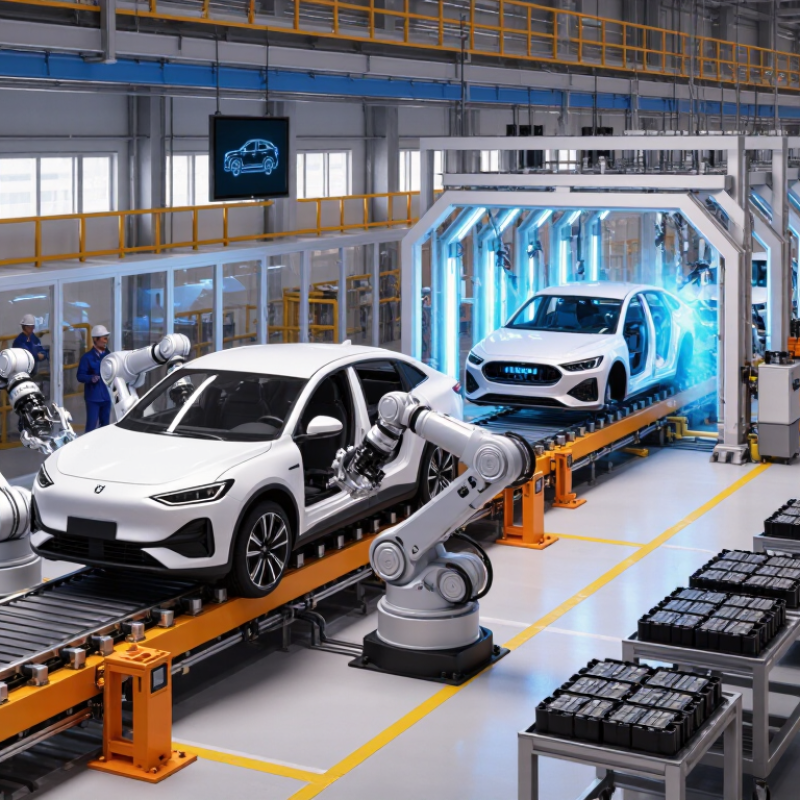
In 2026, a new energy vehicle production line is defined less by one machine than by how reliably its stations work together. It must coordinate battery-pack installation, electric-drive assembly, software configuration, and end-of-line testing with traceable process data. At a battery station, torque tools can record fastener values while vision systems check connector positions. Small details matter. A missed seal or loose connection may create rework that travels downstream.
Flexibility is another defining feature. A line may need to build different body styles or battery capacities without lengthy changeovers, but flexibility is not simply adding robots. Engineers need clear part identification, adjustable fixtures, safe material flow, and trained operators who can resolve exceptions. Digital monitoring can flag temperature, torque, or cycle-time drift. Not always. Alerts help only when teams verify causes instead of chasing every warning. Energy use matters too: efficient motors, heat recovery, and measured electricity consumption can reveal waste across shifts. No single layout fits every factory. Some plants will still rely on manual checks, which can be sensible at lower volumes. The uncomfortable question is whether automation solves a real bottleneck—or merely makes the line look modern.
What defines a new energy vehicle production line in 2026? The chart presents illustrative engineering priority ratings, not measured industry statistics. A capable line integrates battery-pack production, flexible vehicle assembly, quality traceability, automation, and energy-efficient operations. Priorities should be adapted to the vehicle design and production volume.
How the Main Manufacturing Stages Fit Together
A new-energy car production line works best when each stage hands over a verified product, not just a moving body. The process often begins with stamped panels, which are joined into a body shell using controlled welding and dimensional checks. Small measurement errors matter. A door opening that is slightly out of square can create trouble much later.
Paint follows body construction, with cleaning, coating, and curing performed in a carefully managed sequence. The painted shell then enters assembly, where wiring, interior parts, motors, and thermal systems are installed. Battery packs are fitted under defined safety procedures, and connections are checked before power-up. These stages depend on compatible parts and clear records; a delayed component can disrupt an otherwise balanced line. Small errors travel.
End-of-line testing should connect manufacturing quality with real vehicle behavior. Technicians can inspect braking, steering, charging, software functions, and water sealing, while automated tools record repeatable measurements. When a test fails, the vehicle needs a traceable route to diagnosis and repair. That route is sometimes awkward, and no factory removes every variation. The useful goal is to spot problems early, learn from recurring defects, and adjust processes without hiding inconvenient results.
Which Technologies Shape Production Line Performance?
Production performance in 2026 will depend less on robot counts than on how well machines, data, and workers coordinate. Battery lines require precise coating, drying, stacking, and cell inspection; small process variations can create costly scrap. The IEA’s Global EV Outlook 2024 puts global battery manufacturing capacity at about 2.2 TWh in 2023. That scale makes flexible, recipe-controlled equipment valuable, especially when plants switch between cell formats.
Precision matters.
Robots and machine vision can handle repetitive welding, material transfer, and surface inspection, while technicians resolve exceptions. The International Federation of Robotics reported 541,302 industrial robot installations worldwide in 2023 in World Robotics 2024. Yet deployment alone proves little. Integration is the harder test. Manufacturers need synchronized production software, sensor data, and traceability records to link a defect to its process conditions. Digital twins can test line balance and maintenance scenarios before physical changes, but only when input data remain reliable. Energy monitoring also matters: ovens, dry rooms, and compressed-air systems can quietly consume substantial power. One caveat remains: software cannot compensate for unstable materials or insufficient operator training.
How to Evaluate a Production Line for 2026 Requirements
Evaluating a production line for 2026 starts with the work it must perform, not its headline capacity. The IEA’s Global EV Outlook 2025 reported more than 17 million electric cars sold in 2024, over one-fifth of worldwide car sales. It expected sales to exceed 20 million in 2025. That demand makes flexible output important, but a fast line that struggles with model changes can become an expensive bottleneck. Measure takt time, first-pass yield, unplanned downtime, and changeover time across representative vehicle and battery configurations. Numbers matter.
Inspect the physical process: battery-pack fastening, high-voltage connection checks, leak testing, and end-of-line diagnostics should leave traceable records for each unit. Ask suppliers to demonstrate cycle times during sustained runs, including shift changes and planned maintenance, rather than relying only on short acceptance tests. Real shifts matter. Compare energy and material use per vehicle, too; these figures expose costs that simple units-per-hour claims may hide. A pilot can reveal awkward handoffs or rework loops, though one clean pilot does not guarantee smooth ramp-up. Keep room for adjustment. The best evaluation combines audited production data, maintenance access, worker ergonomics, and a realistic plan for adding future variants.
How Production Line Needs Vary by Vehicle Type and Market
A strong 2026 production line should fit its vehicle mix and target market, not chase one universal design. The International Energy Agency’s Global EV Outlook 2024 reports nearly 14 million electric car sales in 2023, about 18% of global car sales. That scale rewards efficient automation, but it does not make every factory alike. A compact city car needs fast, repeatable assembly; a large SUV may require heavier handling equipment and more battery-pack options.
Vehicle type changes the line’s physical details. Floor-mounted battery packs need safe lifting systems, precise fastening, and clear inspection points. Commercial vans may need flexible stations for different body lengths and payloads. The IEA also notes that lithium iron phosphate batteries supplied nearly 40% of electric car batteries in 2023. That chemistry mix matters: pack dimensions, cooling layouts, and end-of-line tests can differ. Small differences add up.
Markets differ, too. China represented nearly 60% of electric car sales in 2023, compared with about 25% in Europe and 10% in the United States, according to the same IEA report. A plant serving several regions should allow local trim, charging hardware, and battery configurations without stopping the main flow. Modular stations help. Yet too much flexibility can raise costs and complicate quality checks. I would leave room for local variation, but not pretend every option belongs on one line.