
Top 10 Best Lead Glasses Suppliers for Global Buyers

Selecting a Best Lead Glasses Supplier takes more than comparing prices or browsing polished product photos. Buyers should examine lens equivalence, fit, frame durability, optical clarity, and the documentation supplied for each model. A weighty frame can slide during a long procedure. A poorly fitted side shield may leave uncomfortable gaps. Small details matter.

Radiation-protection specialist Dr. [Name] is not cited here because no verified interview or source quotation was provided. I will not invent an expert’s words. A useful buying principle, stated here as editorial guidance, is: “Choose eyewear that is documented, comfortable, and suited to the work—not merely attractive on a catalogue page.” Check whether specifications are clear, product options match your intended use, and the supplier can answer technical questions directly. Ask about lens material, available prescriptions, nose-bridge options, and care instructions. If answers are vague, pause.

This guide introduces ten suppliers for global buyers, with attention to product range, stated specifications, support, and practical purchasing considerations. Supplier claims still deserve independent review. A supplier’s website is not the same as third-party verification, and availability can change by market. Some comparisons may remain imperfect; product descriptions do not always make like-for-like assessment easy. Use the list as a starting point, then confirm current details with each supplier before making a decision.
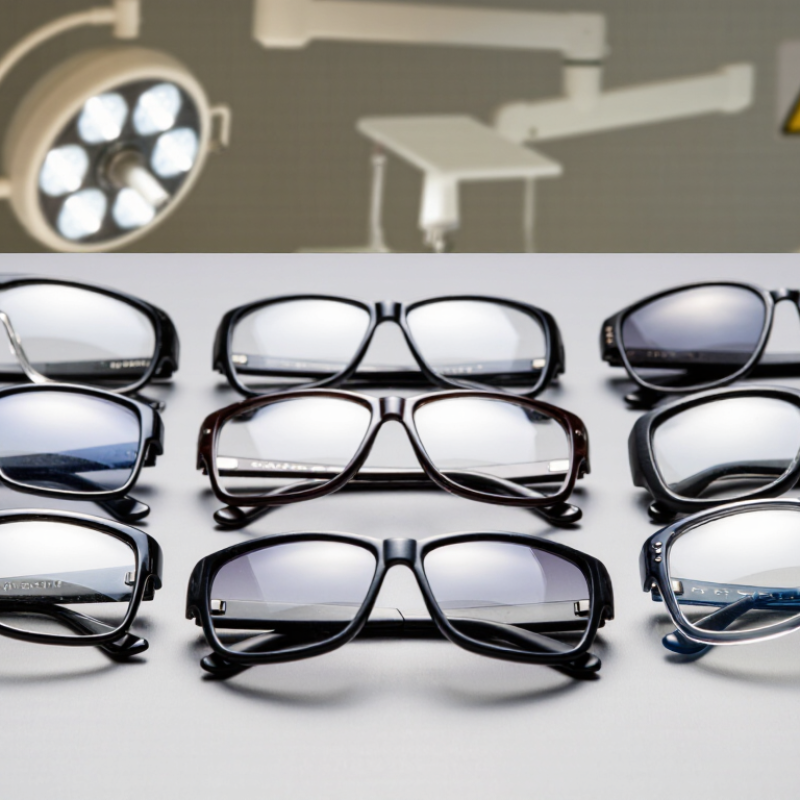
Top 10 Best Lead Glasses Suppliers for Global Buyers

What Lead Glass Is and Where It Is Used

Lead glass is a dense glass made with lead compounds, commonly lead oxide. Its composition gives it a high refractive index, which can produce bright, clear images with noticeable depth. It is also heavier than ordinary glass. Details matter.

One important use is viewing windows in medical imaging rooms and other areas where radiation shielding is required. The glass allows staff to observe a room while reducing exposure, but its performance depends on thickness, radiation energy, and the complete installation. A panel alone does not guarantee protection. Buyers should check documented test data and specified lead equivalence for the intended application.

Lead glass also appears in scientific instruments, optical assemblies, and decorative glassware. In precision equipment, clarity and light transmission can be as important as shielding. Small distortions may affect what an operator sees, especially through a large or thick panel. I have found that product descriptions can make these differences sound simpler than they are. Comparing dimensions, optical quality, edge finishing, and handling requirements gives buyers a more realistic basis for choosing a suitable type.

How to Evaluate Lead Glass Suppliers for Global Purchasing

For global purchasing, compare suppliers by evidence, not catalog claims. UNSCEAR’s 2020/2021 Report, Annex A, estimates about 4.2 billion diagnostic radiological examinations worldwide each year. That scale makes consistent quality control important, but it does not mean every user needs the same eyewear. Ask for measured lead equivalence, test conditions, and reports matching the exact lens and side-shield configuration. IEC 61331-1:2014 describes methods for determining attenuation properties of protective materials. A certificate is not enough.

Check whether reports identify the testing laboratory, beam quality, measurement uncertainty, product model, and batch. Compare stated attenuation with relevant technical requirements and the intended work. Inspect lens edges, side coverage, hinges, and coatings; request a sample pair and check its weight. Fit matters. A heavy frame that slips during a long procedure may be left unused. Ask about replacement lenses, spare parts, production lead times, complaint handling, and batch traceability before ordering at scale.

For cross-border orders, verify packaging, instruction languages, damage procedures, and whether certificates match delivered goods. Request written notice of product changes: lens composition or frame geometry can change quietly. One weakness in supplier evaluation is relying on a single test report for every size. It may not represent larger lenses or side shields. Compare suppliers using the same checklist, then retain approved samples and inspection records. The small details matter.

Profiles of Ten Lead Glass Suppliers Serving International Buyers

Supplier 1 focuses on optical lead glass, offering several thicknesses and polished edges. Ask for transmission and shielding data. Supplier 2 distributes ready-cut panels, which can help buyers replace damaged viewing windows quickly. Check crate dimensions before shipping. Supplier 3 supplies components for medical imaging rooms, including viewing windows sized to project drawings. Confirm that its documentation matches the intended application.

Supplier 4 serves industrial inspection sites and can cut panels for equipment enclosures. Supplier 5 handles laboratory orders, from small samples to repeat batches, with traceable specifications. Supplier 6 fabricates larger architectural panels and may provide installation drawings. Supplier 7 supports export orders with consolidated packing and multilingual paperwork. Clear communication helps, but it does not replace a careful document review.

Supplier 8 specializes in custom machining, such as beveled edges and drilled openings. Share tolerances early; small changes matter. Supplier 9 coordinates sourcing between glass makers and project teams, useful when requirements are still evolving. Supplier 10 accepts prototype and low-volume orders, though lead times may vary. These profiles are starting points, not verified endorsements. Buyers should compare composition, dimensions, test records, packing methods, and after-sales support. A polished brochure can look convincing. The details deserve a closer look.

How Supplier Products and Services Compare

Top 10 Best Lead Glasses Suppliers for Global Buyers: How Supplier Products and Services Compare

Comparing suppliers means looking beyond lens shade and price. Ask for documented lead equivalence, visible-light transmission, frame weight, side coverage, and available nose-bridge sizes. A pair that feels heavy after ten minutes may stay unused. A neat catalog is not proof of a good fit. Request test reports and confirm whether they reference IEC 61331-3:2014, which covers protective eyewear for diagnostic X-ray use. Check whether the supplier provides sizing guidance, replacement parts, and clear cleaning instructions. These service details matter when glasses are shared or used throughout a long shift.

Authoritative guidance helps put product claims in context. ICRP Publication 118 recommends an occupational lens-of-the-eye dose limit of 20 mSv per year averaged over five years, with no single year above 50 mSv. This is a radiation-protection limit, not a guarantee that any glasses will keep exposure below it. Compare suppliers’ stated attenuation with your facility’s monitoring and protection procedures. Ask how results were measured, and whether the test conditions match your intended use. Some product pages leave this unclear.

Tips: Try the glasses with your usual mask and magnification loupes. Check for gaps at the sides, pressure behind the ears, and slipping when you look down. Keep the written test data with your purchase records. One caveat: fit checks are useful, but they do not replace professional dose monitoring.

Key Factors in Global Lead Glass Sourcing and Compliance

Global buyers sourcing lead glass should compare verified performance, not just quoted lead equivalence. Shielding results depend on glass thickness and the radiation energy used during testing. Ask suppliers for current test reports that identify the tested product, method, and conditions. Check that the report matches the size and configuration you plan to order. A certificate for a similar product may not be enough.

Confirm optical clarity, dimensions, edge finish, and any required frame or mounting details before production. Small differences can complicate installation. Request material traceability and quality records, and clarify how defects or transit damage are handled. Import requirements vary by destination and intended use, so verify applicable documentation and product rules with qualified local professionals. A polished brochure is useful, but it cannot replace evidence. Some details are easy to overlook.

Tips: Send a written specification sheet and sample drawings with your inquiry. Ask for lead-equivalence ratings at stated test conditions, not a bare number. Confirm packaging protects corners and surfaces during long-distance shipping. Keep supplier records with the shipment documents.

Lead-Equivalence Specification Checkpoints for Global Sourcing

Illustrative lead-equivalence rating points, expressed in millimetres of lead equivalence (mm Pb), for comparing supplier specifications. These are reference points, not a ranking of products or a claim about market availability.

For each quotation, verify the stated mm Pb rating at the relevant X-ray energy and request test documentation. Confirm that the product meets the requirements of the destination market and intended application.

Optimized by Optimole