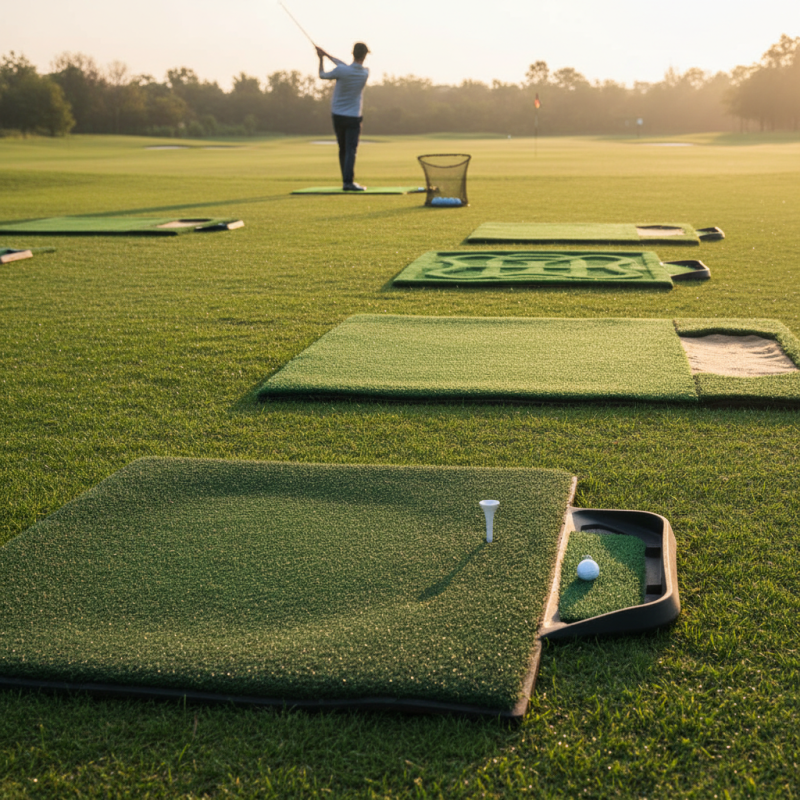
Best Forb Golf Mats for Every Golfer's Needs?
Choosing the right forb golf mats is crucial for every golfer. These mats impact your practice sessions and overall game. With various options available, it can be overwhelming.
Forb golf mats are designed to mimic real grass. They provide a consistent surface for teeing off and chipping. This consistency helps golfers refine their techniques. Some mats even offer features like turf simulation and shock absorption.
However, not all mats can meet every golfer's needs. Beginners may require something different than seasoned players. Investing in quality mats is essential, but it’s important to evaluate your specific requirements first. Finding the right balance can lead to improved performance. Each player has unique preferences, so explore what suits you best.
Understanding Different Types of Golf Mats Available on the Market
When selecting a golf mat, understanding the various types on the market is crucial. Different mats cater to different skill levels and needs. For instance, practice mats focus on simulating natural grass conditions. They improve swing mechanics by providing feedback on turf interaction. According to the National Golf Foundation, roughly 58% of golfers find mats beneficial for improving their game.
Another type is hitting mats, designed for durability and stability. These mats typically feature high-quality turf, mimicking fairway conditions. A recent report from the Golf Manufacturing Industry Association reveals that a well-constructed hitting mat can reduce equipment wear. Many players, however, struggle with the transition from mats to real grass. This inconsistency can hinder progress and requires additional practice time.
Lastly, portable golf mats are gaining popularity. They offer convenience for on-the-go training sessions. However, quality can vary widely across products. Some mats might not withstand frequent use. A survey conducted by PING Golf indicates that 72% of players prefer mats that offer both versatility and durability. The choice of mat should reflect personal goals and training routines. It’s essential to evaluate options based on these specifics to find the right fit.
Best Forb Golf Mats for Every Golfer's Needs
| Mats Type | Material | Size (ft) | Best For | Price Range |
| Standard Mat | Polyester | 4 x 5 | Beginners | $50 - $100 |
| Portable Mat | Rubber | 3 x 4 | Travelers | $30 - $70 |
| Artificial Turf Mat | Synthetic Grass | 5 x 5 | Golf Enthusiasts | $100 - $250 |
| Heavy-Duty Mat | High-Density Foam | 6 x 4 | Practice Range | $150 - $300 |
| Golf Simulator Mat | Fiberglass | 5 x 10 | Advanced Users | $200 - $500 |
Key Features to Consider When Choosing a Golf Mat
When selecting a golf mat, several key features should be considered. The material of the mat greatly affects performance. Look for mats made with durable materials that can withstand repeated use. Natural grass is appealing, but synthetic options offer consistency and ease of maintenance. Mats with high-density fibers can simulate real turf, providing a more authentic feel.
Another important feature is the thickness of the mat. A thicker mat absorbs impact better, which is essential for preventing injury. However, too much cushioning may hinder stability during swings. Consider the balance between softness and support. Portability is also a factor, especially for golfers on the go. Lightweight mats are easier to transport but may compromise durability.
Finally, the mat's traction is crucial. A non-slip base ensures it stays in place during swings. This stability enhances practice sessions and improves confidence. Measure available space before choosing a mat size. A mat that is too small may limit practice routines, while a very large mat can be unwieldy. Testing mats in-store, if possible, offers hands-on experience that can guide your decision.
Top Recommendations for Indoor Golf Mats for Home Practice
When selecting indoor golf mats for home practice, quality matters. A good mat should mimic the feel of real grass. Look for materials that offer durability, feedback, and a realistic surface. Beginners often struggle with their swing. A mat that allows for tee placement is a great choice. This feature helps in practicing various shots.
For those serious about improvement, some mats come with alignment guides. These guides help golfers develop their stance and swing consistency. Practicing indoors can be a challenge. Without proper feedback, errors can go unnoticed. Choosing a mat with built-in markings can help address this issue. It creates a more structured practice environment.
Consider the size and weight of the mat as well. A lighter mat can be easier to store but may not provide the stability desired during practice. Heavier mats tend to lie flat and offer a more solid surface. However, they can be cumbersome. Test different options to see what feels right. Be open to making adjustments to your practice routine based on your experiences. Each golfer has unique needs, and finding the right mat is a step toward improvement.
Best Outdoor Golf Mats for Various Weather Conditions
Choosing the right golf mat for outdoor use is essential for every golfer. Weather conditions can be unpredictable, affecting your practice routine. Some mats handle rain well, while others struggle when wet. Consider the durability of the material. Heavy-duty options resist wear-and-tear from extreme conditions. Light mats may be portable but can suffer in strong winds.
When it comes to cold weather, look for mats that stay flexible. Many mats become stiff in lower temperatures, impacting your swing. Look for traction as well. A mat that slips can lead to injury and frustration. Texture matters; rough surfaces can mimic real grass. However, too rough can damage your club's face.
It's also worth noting that some mats may not drain water effectively, leading to puddles. This can negate the benefits of practicing outdoors. Remember to check the dimensions as well. A mat too small may restrict your swing. If you often play on uneven terrain, a thicker mat can make a difference. Think about how each feature aligns with your specific needs. Your choice should enhance your practice, not hinder it.
How to Maintain and Care for Your Golf Mat for Longevity
Taking care of your golf mat is essential for its longevity. Regular maintenance ensures you can practice effectively without worrying about wear and tear. First, always keep your mat clean. After each use, use a brush or a vacuum to remove dirt and debris. This simple step prevents damage and preserves the surface quality.
Moisture can be a problem as well. If your mat is stored outdoors, consider bringing it inside during rainy or snowy conditions. Excess moisture can lead to mold and mildew growth, which greatly shortens the mat's lifespan. If your mat gets wet, dry it thoroughly before storing. A fan or air circulation can help speed up the drying process.
Inspect your mat for signs of wear. Look for frayed edges or faded areas. Over time, you'll notice certain spots where you'll hit more often. Rotating your mat can help even out wear. Regularly taking these steps will ensure your golf mat serves you well over the years. Don’t neglect these details; they can make a big difference in your practice experience.