Best Coaxial Attenuators Explained What You Need to Know?
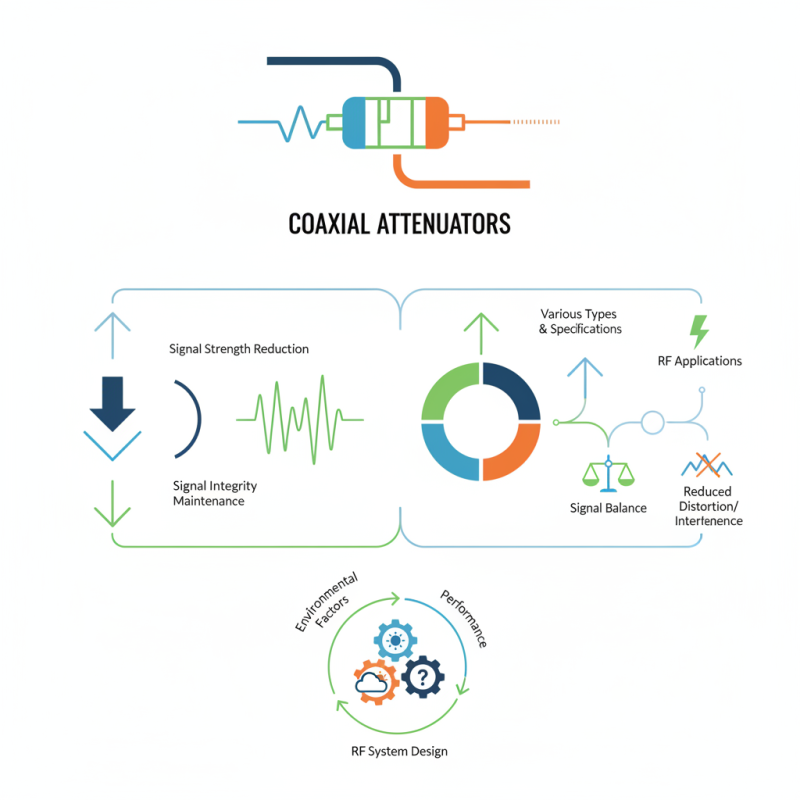
Understanding Coaxial Attenuators is essential for anyone working with radio frequency (RF) systems. A coaxial attenuator is a crucial component that reduces signal strength while maintaining signals' integrity. These devices come in various types and specifications, making it vital to choose the right one for specific needs.
In RF applications, signal loss can be a double-edged sword. It can improve performance or diminish signals significantly. A well-chosen coaxial attenuator delivers balance in these scenarios. However, selecting the wrong model may lead to unwanted distortion or interference.
Attenuators are not one-size-fits-all. Each application has unique challenges. Environmental factors play a significant role in performance. This complexity invites further exploration into types that might not perform as expected under certain conditions. Understanding these nuances is key to effective RF system design.
Understanding Coaxial Attenuators and Their Purpose
Coaxial attenuators play a crucial role in controlling signal strength. They are used extensively in telecommunications and audio applications. These devices help reduce the amplitude of signals without altering the waveform. This is essential for preventing distortion and ensuring clear communication.
Many reports indicate that signal distortion can degrade performance significantly. A study by the Electronic Industries Alliance showed that a mere 3 dB reduction can improve clarity in system performance by up to 60%. This makes understanding the specific uses of coaxial attenuators vital for technicians and engineers. They allow for precise adjustments, ensuring the integrity of the transmitted signal.
However, not all attenuators are created equal. Users often overlook factors like frequency response and power rating. A mismatch can lead to signal loss or damage. The right choice often comes down to specific applications, yet too many decisions are made based on guesswork. Reliable data and thorough analysis should guide these choices to avoid costly errors down the line.
Types of Coaxial Attenuators: A Comprehensive Overview
Coaxial attenuators play a critical role in various electronic applications. They help to control signal levels, ensuring optimal performance. There are a few main types of coaxial attenuators to consider. Understanding these can aid in selecting the right one for your needs.
Fixed attenuators are straightforward. They provide a predetermined level of attenuation. This means they cannot be adjusted after installation. They are typically used in situations where signal strength needs consistent management. Adjustable attenuators, on the other hand, allow for flexibility. Users can modify attenuation levels. This makes them useful for testing and varying conditions.
Terminating attenuators serve a specific purpose. They prevent reflections that can disrupt signals. By absorbing excess power, they maintain signal integrity. Each type of coaxial attenuator has its strengths and weaknesses. Consider your application carefully. A misstep here could lead to signal loss or interference. This is an area to reflect on if you want the best performance.
Best Coaxial Attenuators Explained - What You Need to Know
| Attenuator Type | Frequency Range | Power Rating | Insertion Loss | Common Applications |
| Fixed Attenuator | DC to 6 GHz | 1 W | 0.5 - 2 dB | Signal processing, RF testing |
| Variable Attenuator | DC to 18 GHz | 2 W | 1 - 25 dB | Leveling applications, power measuring |
| Step Attenuator | DC to 12 GHz | 0.5 W | 0.2 - 1.5 dB | Test equipment, signal attenuation |
| Attenuator Pad | DC to 25 GHz | 10 W | 0.1 - 3 dB | Networking, telecommunications |
How to Choose the Right Coaxial Attenuator for Your Needs
Choosing the right coaxial attenuator requires a clear understanding of your needs. Consider the frequency range first. Attenuators come in various designs, suitable for different frequencies. You'll want one that matches your specific application, whether it's audio or RF signals.
Next, think about the amount of attenuation required. Common values are 3dB, 6dB, 10dB, and 20dB. Knowing your signal strength helps determine this value. An attenuator that reduces signal too much can be counterproductive, resulting in weak performance and unwanted noise.
Installation is another crucial aspect. Ensure compatibility with your existing coaxial systems. Some connectors may not fit well, leading to signal loss. Also, don't overlook power handling capabilities. A device that can’t handle the power may break down quickly. Be mindful of these details to avoid challenges later.
Installation and Usage Guidelines for Coaxial Attenuators
When installing coaxial attenuators, it's vital to ensure proper connections. Begin by turning off all devices connected to your coaxial cables. This prevents electrical shocks and equipment damage. Inspect both ends of the cable for any visible damage. Such issues can lead to interference or signal loss.
Next, connect the attenuator to your coaxial cable. Make sure the connectors fit snugly. Loose connections can result in signal degradation. Use a wrench if needed, but avoid over-tightening. It’s important to maintain a secure yet gentle grip. After installation, power on your devices gradually. Monitor the signal levels during usage to identify any performance issues.
Regular checks are essential. Dust or dirt can accumulate, affecting the connections. Clean the connectors periodically with a soft cloth. This may seem tedious, but it helps in prolonging the lifespan of the equipment. During usage, be aware of the environmental factors affecting signal quality, such as humidity or electromagnetic interference. Keeping an eye on these details is crucial for maintaining optimal performance.
Common Applications and Benefits of Coaxial Attenuators
Coaxial attenuators are versatile components commonly used in various applications. These devices reduce signal strength, which is crucial in many settings. Reports show that in telecommunications, signal levels can vary widely. Attenuators help maintain optimal performance in such environments.
In laboratories, coaxial attenuators find significant usage. They ensure precise measurements by controlling signal levels. In fact, industry surveys indicate that up to 60% of lab setups utilize these tools for accurate testing. This applies equally in RF and microwave communication fields. Attenuators can prevent device damage due to high power levels.
While the benefits are clear, potential challenges exist. Users must select the appropriate attenuation level. An incorrect choice can lead to signal distortion or loss. Furthermore, the materials used can affect long-term durability. It’s essential to consider environmental factors, such as temperature and humidity. Understanding these elements aids in achieving better performance.