
What Is the Best Drone Motor Tester from China?

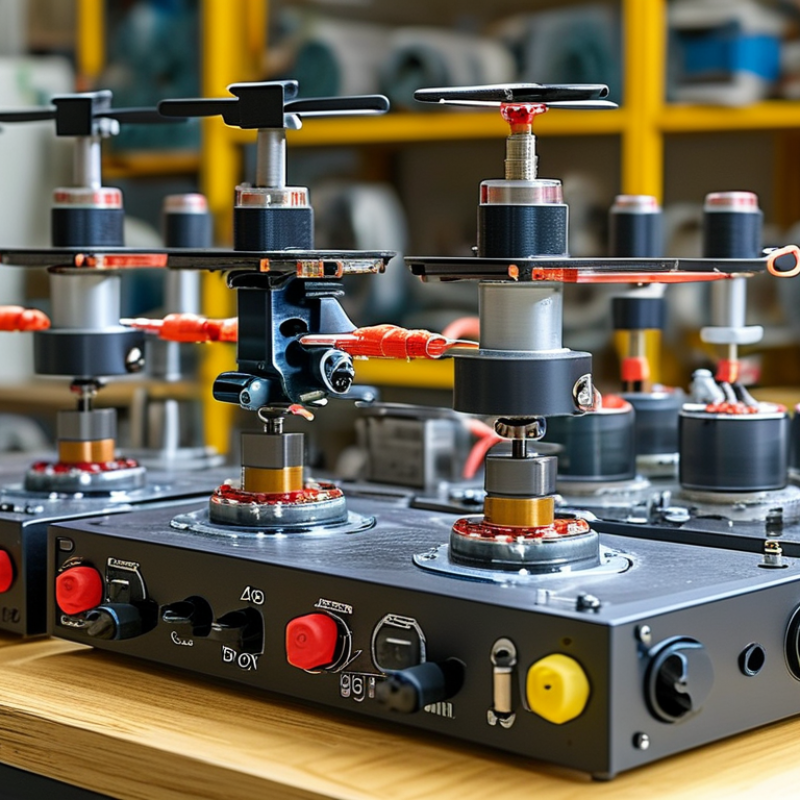
Choosing the best Drone motor tester from China is not simply a matter of comparing prices. A reliable tester must reveal how a motor behaves under real operating stress. It should measure rotational speed, current, voltage, thrust, temperature, and vibration with consistent accuracy. Those details matter when a motor runs at high speed beside a lightweight propeller.

Dr. Paul Pounds, a robotics and aerial vehicle researcher, has stated, “Reliable aerial robots depend on careful measurement, not assumptions.” This principle fits motor testing well. A factory may advertise impressive power figures, yet the tester should prove them under repeatable conditions. Look for stable calibration, clear data logging, overload protection, and compatibility with common ESC systems. A strong device should also handle different motor sizes without excessive setup time.

China offers many practical options, from compact workshop instruments to integrated thrust-test platforms. Some are excellent. Others appear polished but provide limited technical information. That is where buyers can make mistakes. A bright display does not guarantee accurate readings. Cheap current sensors may drift after repeated tests. I have also found that a tester can perform well while its software remains confusing.

This guide examines the most important selection points. It considers measurement accuracy, safety design, software usability, after-sales support, and testing efficiency. It also questions marketing claims instead of accepting them automatically. The best Drone motor tester is not always the most expensive model. It is the one that produces trustworthy data, protects the operator, and supports better engineering decisions.
What Is the Best Drone Motor Tester from China?

What Is a Drone Motor Tester? Measuring KV, RPM, Thrust, Current, and Voltage

What Is the Best Drone Motor Tester from China?

A drone motor tester measures the performance of a motor and propeller under load. It usually records KV, RPM, thrust, current, and voltage. KV indicates the motor’s theoretical speed per volt. RPM shows actual rotation speed. Thrust reveals lifting capability. Current and voltage expose power consumption and electrical stress. These readings help engineers match motors, propellers, batteries, and electronic speed controllers.

A reliable tester should include a calibrated load cell, optical RPM sensor, stable power supply, and clear data logging. It should also test motors at several throttle levels, not only at full power. Grand View Research estimates that the commercial drone market may reach about 54.6 billion US dollars by 2030. With this expansion, repeatable propulsion testing becomes more important for production quality and flight endurance. Small measurement errors can still create large design decisions.

For a China-made tester, check calibration records, sensor resolution, maximum current, voltage range, and software export options. A useful system should display watts and efficiency, such as thrust per watt. Safety shielding matters during high-speed propeller tests. It should also support replacement sensors and local technical service.

Cheap equipment may look attractive. However, unstable readings can waste more money than the original purchase. I have seen test results change after warming the motor, so temperature logging deserves attention. Even good testers need periodic verification. That part is easy to neglect.
Key Specifications: 0–60,000 RPM, ±0.5% Speed Accuracy, and 0–100 A

What Is the Best Drone Motor Tester from China?

A capable drone motor tester should measure more than spinning speed. It must reveal unstable current, delayed response, and hidden heat. The key range is 0–60,000 RPM, matching many high-speed propulsion systems used in compact aircraft. A 2024 commercial UAV industry report projected double-digit annual market growth through 2030. That trend increases demand for repeatable motor inspection, especially during production sampling and repair.

Speed accuracy of ±0.5% is a practical benchmark. At 40,000 RPM, the allowed error is about 200 RPM. That sounds acceptable, but it can hide vibration or timing problems. I prefer a tester with optical or magnetic sensing, adjustable sampling, and traceable calibration. IEC 60034-2-1 testing principles also emphasize controlled measurement conditions. Small setup errors matter.

Current measurement should cover 0–100 A. This range supports both small motors and heavier propulsion units without changing instruments. A 2024 electric aviation technology report identified power efficiency and thermal management as major development priorities. Therefore, the tester should record current, voltage, RPM, and temperature together. A basic display is not enough.

Bench testing is imperfect. Battery voltage may sag. Mounting can distort readings. An operator can also misread a brief current spike. I would verify the tester with a calibrated reference instrument before trusting production data. Safety shielding and secure motor fixtures remain essential during high-speed tests.

What Is the Best Drone Motor Tester from China? – Key Specifications: 0–60,000 RPM, ±0.5% Speed Accuracy, and 0–100 A
Specification Recommended Target Practical Testing Range Why It Matters for Drone Motors Selection Notes
Motor Speed Measurement 0–60,000 RPM Low-speed startup through high-speed brushless motor operation Supports testing of common multirotor motors across no-load and propeller-loaded conditions. The measurement method should remain stable at both very low speed and high electrical commutation frequency.
Speed Accuracy ±0.5% of reading or better Example: ±300 RPM at 60,000 RPM when specified as ±0.5% of reading Improves comparison of motor efficiency, propeller matching, and controller settings. Check whether the stated accuracy applies to the complete operating range or only to a calibrated test point.
Current Measurement 0–100 A DC Continuous and transient current monitoring, subject to the tester's duty cycle Allows evaluation of startup current, loaded thrust operation, and electronic speed controller demand. A 100 A rating should include suitable cables, connectors, shunts, and thermal protection.
Voltage Measurement At least 0–60 V DC Suitable for many 2S–12S battery test setups Enables simultaneous electrical power calculations during motor and ESC tests. The usable battery range depends on the tester's input protection and connector design.
Electrical Power Calculation Voltage × current displayed in watts Real-time input power monitoring Helps identify inefficient motors, unsuitable propellers, and excessive ESC loading. Power readings are most useful when voltage and current are sampled at the same time.
RPM Sensing Method Hall, optical, magnetic, or electrical pulse input Non-contact sensing is preferred for rotating assemblies Reduces mechanical interference and supports repeatable speed measurements. Optical sensors require a clear reflective mark; Hall sensors require a compatible magnetic target or signal source.
Measurement Resolution RPM resolution of 1 RPM or better at low speed Fine resolution for startup, idle, and low-throttle testing Useful for detecting unstable commutation, cogging, and small speed differences. Resolution and accuracy are different specifications; high displayed resolution does not guarantee high accuracy.
Sampling and Update Rate At least 10 readings per second for live display Faster internal sampling may be used for transient capture Provides responsive feedback when throttle, load, or battery voltage changes quickly. For propeller testing, data logging is more valuable than an unusually fast screen refresh rate alone.
Data Logging CSV export or USB data transfer Time, RPM, voltage, current, and calculated power Supports repeatable comparisons between motors, propellers, batteries, and ESC settings. Look for adjustable sample intervals and timestamped records for reliable test documentation.
Thrust Integration Optional load-cell input Common laboratory load-cell interfaces may support 0–5 V or bridge-sensor signals Combines rotational and electrical data with thrust to calculate efficiency. The load-cell capacity and calibration must match the motor-propeller test stand.
Measurement Categories RPM, voltage, current, power, and optional thrust Single-motor and ESC bench testing Provides a more complete view of motor performance than RPM measurement alone. Torque measurement normally requires a dedicated dynamometer or compatible torque sensor.
Safety Protection Overcurrent, overvoltage, overtemperature, and reverse-polarity protection Protection should be rated for the maximum connected battery and test current Reduces the risk of damage from wiring errors, stalled motors, and high-current transients. Protection features do not replace fuses, appropriate wire gauges, propeller guards, and safe test procedures.
Cooling and Duty Cycle Active cooling with a published continuous-current rating Short high-current tests and controlled continuous operation Maintains measurement stability during repeated motor runs. Confirm whether the 0–100 A figure is continuous, intermittent, or peak current.
Display Color display with simultaneous live values RPM, voltage, current, power, and status indicators Allows the operator to monitor the complete test condition without switching screens. A clear display with large numerical fields is preferable when the test stand is several meters away.
Calibration User-accessible calibration with reference verification Separate calibration procedures for RPM, voltage, and current Helps maintain accuracy after transport, connector replacement, or long-term use. Calibration should be performed with traceable reference instruments where measurement accuracy is critical.
Operating Environment Approximately 0–40°C for normal bench use Dry indoor laboratory or workshop conditions Temperature and humidity can influence sensors, shunts, wiring, and battery behavior. Always verify the actual environmental limits in the equipment documentation before field deployment.
Best-Fit Use Case Brushless drone motor and ESC performance testing Development, quality control, repair, and propeller selection Combines the key parameters required to compare motor systems under repeatable conditions. The best tester is the one whose calibrated range, current duty cycle, sensor compatibility, and logging functions match the test stand.

Test Bench Standards: 3-Phase BLDC, 2–6S LiPo, and IEC 60034-2-1

What Is the Best Drone Motor Tester from China?

A reliable drone motor tester should reproduce real flight conditions, not only display peak RPM. For a three-phase BLDC motor, the bench should measure phase current, voltage, torque, RPM, electrical input power, and mechanical output power. A 2S LiPo pack provides about 7.4 volts nominally, while a 6S pack provides about 22.2 volts. Fully charged values reach approximately 8.4 and 25.2 volts. The tester must handle both ranges without unstable readings.

IEC 60034-2-1 provides the key measurement framework for motor losses and efficiency. It emphasizes controlled input power, mechanical output, temperature, and repeatable test conditions. That matters because a small wiring loss can distort low-voltage results. The U.S. Department of Energy’s Motor Systems Market Assessment reports that motor-driven systems consume roughly 46% of global electricity. Small drone motors are not comparable in scale, but the measurement principle remains relevant: efficiency needs evidence, not marketing claims.

Keep the setup practical.

A useful Chinese test bench should include a calibrated torque sensor, optical or magnetic RPM sensing, current sampling above the motor’s peak demand, and data logging. A thermal probe near the stator helps reveal performance drift after several minutes. Drone Industry Insights’ Drone Market Report 2024 continues to identify expanding commercial drone activity, increasing the need for repeatable component testing. However, no tester is perfect. Sensor alignment, propeller choice, battery sag, and mounting vibration can change results. I would record uncertainty beside every efficiency figure, even when the number looks inconvenient.

How to Compare Chinese Testers: Power, Sensor Accuracy, Cooling, and Software

What Is the Best Drone Motor Tester from China?

When comparing Chinese drone motor testers, start with power headroom. A tester should safely handle the motor’s expected voltage and current, not merely display impressive maximum figures. For a 6S setup, verify voltage tolerance above 25.2 volts. Check continuous current, peak duration, and connector temperature. NIST Technical Note 1297 recommends reporting expanded measurement uncertainty with a coverage factor of k=2. This matters when comparing thrust, torque, and efficiency results. A large screen cannot fix poor calibration.

Sensor accuracy deserves closer inspection. Request a calibration certificate with traceability to an ISO/IEC 17025 laboratory. Compare voltage, current, rotational speed, thrust, and torque accuracy separately. One combined accuracy number is too vague. In practical bench testing, I record three repeated runs at the same throttle position. The spread should remain small. Sometimes it does not. That failure is useful, because it exposes vibration, loose mounts, or unstable sampling. IEC 60034-2-1 offers helpful motor-testing principles, although drone motors require application-specific interpretation.

Cooling is equally important during sustained tests. Look for ducted airflow, heat-sink contact, thermal cutoffs, and temperature logging. A tester that overheats after two minutes is not production-ready. Software should export raw CSV data, show live curves, store calibration dates, and support firmware updates. The 2024 Drone Industry Insights market analysis highlights expanding commercial drone deployment, increasing the value of repeatable component data. I would also inspect the software manually. Menus may look polished, yet missing timestamps or hidden filtering can weaken the report. Simple software often proves more reliable.

Best-Choice Checklist: ISO/IEC 17025 Calibration, Safety Limits, and Data Logging

The best drone motor tester from China is not the cheapest meter. It is the one that proves measurement quality. Look for calibration issued by an ISO/IEC 17025-accredited laboratory. This standard requires technical competence, traceability, and controlled uncertainty. A certificate without the laboratory’s scope is a weak signal.

Safety limits matter more than a bright screen. The tester should record voltage, current, rotational speed, thrust, temperature, and test duration. It should stop automatically at overcurrent, overspeed, overheating, or abnormal vibration. The 2024 Drone Industry Insights market report estimates continued growth in commercial drone operations, increasing demand for repeatable motor testing. Small errors can become expensive when many motors enter production.

Choose a system with timestamped logging and exportable CSV files. Compare no-load current, loaded efficiency, thrust-to-power ratio, and temperature rise. NIST Technical Note 1297 explains why measurement uncertainty must accompany reported results, not hide behind decimal places. Ask for calibration intervals and environmental limits. A tester may display 0.01 amps yet lack meaningful accuracy. That is easy to miss.

In practice, I would test the same motor three times and inspect the spread. Repeatability should be visible. The checklist is imperfect, though. Propeller condition, battery resistance, wiring, and mounting stiffness can distort results. Record those variables, too. Calibration is not a substitute for disciplined testing.

Best Drone Motor Tester from China: Engineering Checklist

Suggested evaluation weighting for ISO/IEC 17025 calibration, safety limits, and data logging

This reference model assigns the highest priority to calibration traceability and operator safety. A suitable tester should support documented calibration, configurable voltage and current protection, and exportable time-stamped measurements for repeatable motor and ESC testing. The percentages are a practical engineering checklist, not a rating of any specific company or brand.

Optimized by Optimole