
Top Auto Cell Phone Holder for Every Car?
Choosing the Top Auto Cell Phone Holder for Every Car sounds simple, but real dashboards rarely cooperate. A compact sedan may offer a smooth, flat surface, while an older SUV may have textured plastic, deep vents, or a curved console. In daily driving, I have found that stability depends on more than clamp strength. Heat, vibration, phone weight, charging cables, and viewing angle can quickly expose a weak design.
Safety gives this purchase a serious purpose. The National Highway Traffic Safety Administration reported 3,308 traffic fatalities involving distracted driving in 2022, alongside hundreds of thousands of related injuries. The AAA Foundation for Traffic Safety also continues to identify visual-manual phone interaction as a major distraction risk. These reports do not rank phone holders, but they support one practical conclusion: an Auto Cell Phone Holder should keep the device visible without encouraging constant handling.
The best choice varies by vehicle and driver. Vent mounts suit many modern cars, yet heavy phones can strain fragile louvers. Dashboard mounts may offer better stability, but adhesive pads can struggle in heat. CD-slot mounts feel secure, although they are unsuitable for cars without compatible players. Small details matter, including one-hand adjustment, a locking mechanism, unobstructed road visibility, and compatibility with thick cases. There is no universal winner. That is the uncomfortable part. A holder can be well-built and still fail on one dashboard. This guide compares mounting styles, materials, safety considerations, and real-world usability, using manufacturer specifications, automotive safety guidance, and careful product evaluation rather than attractive marketing claims.
What Makes a Car Cell Phone Holder Effective?
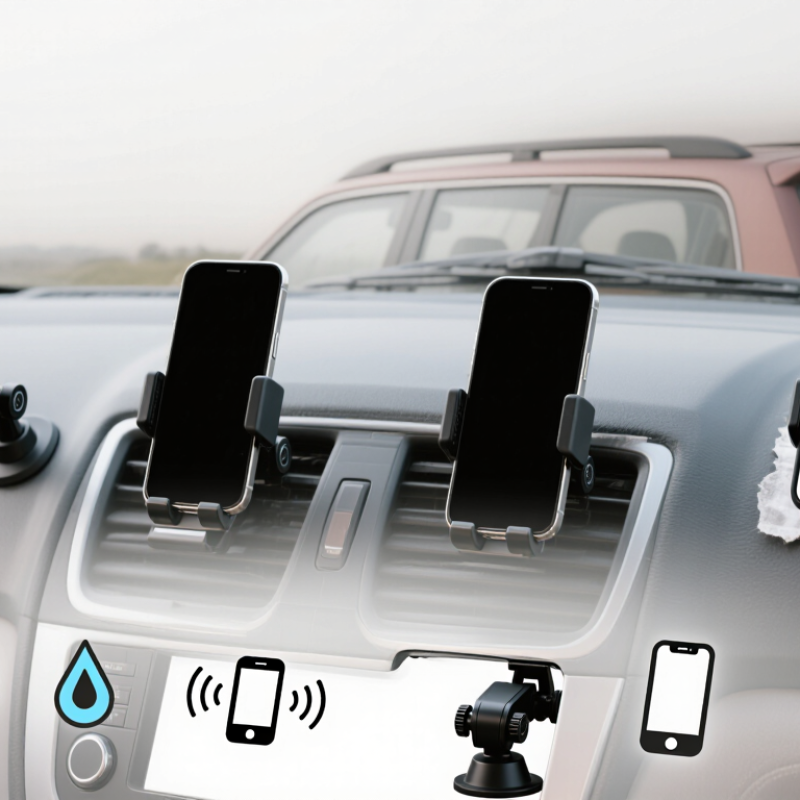
An effective car cell phone holder must keep the device stable without distracting the driver. A firm grip matters, especially on uneven roads or during sudden braking. The mounting base should resist movement, while the holder should fit different phone sizes. It should not block the windshield, air vents, dashboard controls, or the driver’s view.
A practical check begins with installation. The holder should attach securely with minimal force and release without damaging the surface. Adjustable arms are useful, but excessive flexibility can cause shaking. The best viewing angle places the screen near eye level, reducing unnecessary head movement. A smooth rotation mechanism also helps drivers adjust navigation before moving. Small details matter here.
Heat and vibration deserve attention. A phone placed above a strong vent may become too cold or hot, depending on the season. A holder with soft contact points can reduce scratches and slipping. However, soft materials may weaken over time, so durability should be checked after repeated use. It is easy to trust a holder after one short drive. That is not enough. Testing it on city streets, sharp turns, and rough pavement gives a more honest assessment. A reliable design supports safer, calmer driving without becoming another distraction.

Which Types of Car Phone Holders Are Available?
Choosing the right car phone holder depends on your dashboard, driving position, and phone size. A suction mount attaches to the windshield or a smooth dashboard. It offers flexible viewing angles and strong support, but heat and dust can weaken its grip. I once placed one on a textured dashboard, and it slowly leaned toward the steering wheel. That small failure changed my preference.
Air-vent holders are compact and easy to install. They keep the phone close to the driver, yet heavy devices may pull the vent downward.
Magnetic holders look clean and allow quick one-handed placement. They require a compatible plate or case, which can affect wireless charging.
Clamp-style holders grip the phone from both sides. They usually feel secure, although narrow clamps can press buttons accidentally. Check the fit carefully.
Some vehicles suit cup-holder mounts, especially when the dashboard has few flat surfaces. These models are stable, but they may place the screen too low for comfortable navigation.
Adhesive mounts provide a firm, permanent position. Removal can leave residue, and the adhesive may soften in direct sunlight.
I would test the location while parked, checking visibility, reach, and access to controls. A holder should not cover airbags, obstruct the road view, or encourage phone handling while driving.
My own setup is not perfect; the best angle changes when passengers or luggage alter the cabin.
How to Match a Phone Holder to Your Car
Top Auto Cell Phone Holder for Every Car?
How to Match a Phone Holder to Your Car
Choosing a phone holder starts with your car’s interior, not its appearance. Check the dashboard texture, vent shape, windshield angle, and available space. A smooth, flat dashboard may support an adhesive mount, while textured surfaces can reduce its grip. Vents vary too. Thin, weak slats may bend under a heavy phone. A wide clamp often works better on sturdy horizontal vents.
Your driving position matters. Place the phone near eye level, but never where it blocks the road, mirrors, or safety controls. Test the viewing angle while seated normally. A holder that feels perfect in a parked car may create glare during daytime driving. I once preferred a compact mount, then noticed it shook on uneven streets. That small detail changed my choice. Fit is not always obvious.
Tips: Measure before buying. Check your phone with its case attached. Try the release button with one hand. Avoid mounts that require excessive force. If the surface feels oily or dusty, clean it first. Recheck the mount after several drives. It may loosen slowly. Also, review local visibility and dashboard safety requirements, because practical fit must support responsible driving.
Top Auto Cell Phone Holder for Every Car? - How to Match a Phone Holder to Your Car
| Vehicle or Driving Condition | Recommended Mounting Type | Important Vehicle Measurement | Suitable Holder Specifications | Main Advantages | Potential Limitation |
|---|---|---|---|---|---|
| Dashboard with a flat, textured surface | Adhesive dashboard mount | At least 70 mm of relatively flat mounting area | Adjustable arm; adhesive base rated for interior temperatures; phone width range of approximately 60–90 mm | Stable viewing position and generally easy one-hand access | Adhesive may not bond well to dusty, oily, soft-touch, or heavily textured surfaces |
| Dashboard with a smooth surface | Suction-cup dashboard or windshield mount | Smooth area of about 70–100 mm for the suction cup | Locking suction cup, flexible arm, and a phone cradle with adjustable side grips | Can be repositioned without permanent adhesive | Heat, dust, and uneven surfaces can reduce suction performance |
| Horizontal air vent with strong, straight slats | Vent-clip mount | Slat thickness and spacing must fit the clip; allow roughly 8–15 mm of usable slat depth | Reinforced clip, adjustable ball joint, and a cradle that supports the phone at its lower edge | Compact installation and no adhesive residue | May block airflow or place the phone in the path of heated or cooled air |
| Round or vertical air vent | Adjustable vent mount or alternative dashboard mount | Vent diameter, slat direction, and resistance to rotation | Rotational locking clip or a mount with a stabilizing support foot | Works where standard horizontal vent clips cannot grip securely | Heavy phones may rotate the vent or cause the mount to sag |
| CD slot available and rarely used | CD-slot mount | Slot height commonly needs to accommodate an insert of approximately 3–6 mm | Adjustable expansion insert, locking knob, and a short support arm | Central position and good stability without covering the windshield | Not suitable if the slot is needed for discs or if the slot mechanism is delicate |
| Vehicle with a cup holder near the driver | Cup-holder base mount | Cup-holder diameter, depth, and clearance from the gear selector | Expandable base fitting approximately 65–95 mm cup-holder diameters; low-flex arm preferred | Does not attach to glass, vents, or dashboard surfaces | Can occupy a cup holder and may interfere with shifting or storage access |
| Large phone or phone with a thick protective case | Wide-grip cradle or magnetic mount with a compatible plate | Total phone-and-case width, thickness, and weight | Grip width of at least 85–100 mm or a load rating above the combined device weight | Reduces pressure on side buttons and accommodates bulky cases | Some cradles can obstruct side buttons, cameras, or charging ports |
| Frequent portrait and landscape use | 360-degree ball-joint mount | Required viewing angle and clearance from the steering wheel | Lockable ball joint, rotation range of approximately 360°, and a short adjustable arm | Allows navigation in either orientation | Long arms can increase vibration on uneven roads |
| Rough roads or frequent vibration | Short-arm dashboard, CD-slot, or reinforced vent mount | Distance from the mounting point to the phone’s center of gravity | Rigid base, locking joints, padded grips, and the shortest practical arm | Limits movement and helps keep the screen readable | A rigid mount may transfer more road vibration to the phone |
| Vehicle with wireless charging requirements | Charging cradle or wireless charging mount | Phone coil alignment, case thickness, and available power connection | Adjustable coil alignment, USB power input, over-temperature protection, and a case-compatible charging gap | Combines phone support and charging in one unit | Charging performance can be reduced by thick, metallic, or misaligned cases |
How to Install and Use a Car Phone Holder Safely
A reliable car phone holder should fit your vehicle, driving position, and daily routine. Installation begins with the mounting surface. Clean the dashboard, windshield, or air vent with a dry, lint-free cloth. Dust can weaken the grip. Let the surface dry completely.
Choose a position that keeps the screen near eye level without blocking the road. Never place the holder over an airbag panel or where it hides mirrors, signals, or gauges. Press the mount firmly, then test it with the phone installed. Drive over a quiet, uneven road before trusting it in busy traffic. It should remain steady, not wobble with every turn. I once positioned mine too low, and checking directions required an unsafe glance downward. That mistake changed my setup.
Before moving, connect the phone, select navigation, and enable hands-free controls. Do not adjust the holder while driving. Keep the charging cable away from pedals, steering controls, and the gear selector. Vent mounts need extra care because heavy phones may strain the vent slats. Adhesive mounts can also loosen in heat or cold, so inspect the base regularly. The holder is only one part of safe use. Local traffic rules may limit windshield placement, so check them before installation. A secure fit feels boring. That is usually a good sign.
Safe Car Phone Holder Installation and Use
Each bar represents a recommended safety practice. A value of 100 means the practice should always be followed; 0 means the action should be avoided.
How to Compare Stability, Accessibility, and Durability
Choosing the top auto cell phone holder requires more than checking its appearance. Stability should be tested on speed bumps, sharp turns, and uneven roads. A secure holder keeps the phone steady without blocking the driver’s view. I look for firm joints, a strong grip, and a base that does not slowly loosen. Small movements can become distracting during longer drives.
Accessibility matters just as much. The phone should be visible at eye level, but never cover essential controls or road visibility. One-hand placement is useful when parked safely. Check whether the holder fits different phone sizes and protective cases. A charging cable should reach the phone without bending sharply. Some designs look convenient but become awkward in tight dashboards. I have found that adjustable arms can improve viewing angles, though they may vibrate more.
Tips: Test the holder inside your actual car before judging it. Press each joint gently and watch for unwanted movement. Choose materials that tolerate heat, especially if the car sits in direct sunlight. Rubber contact points can protect surfaces, but they may collect dust. Clean them occasionally. Durability is not only about strong plastic; it also depends on hinges, springs, and repeated daily use. A holder may feel solid on day one, yet weaken after months. That possibility deserves attention.